Author: S. Brady Calhoun

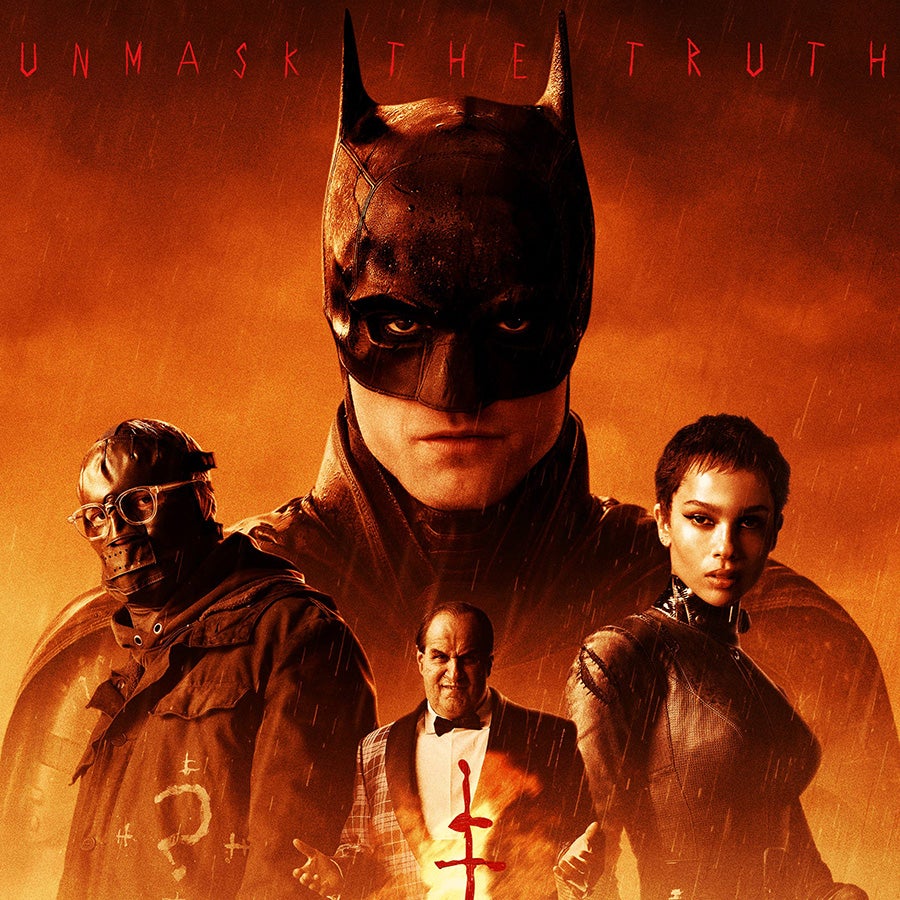
  • The Batman

    The Batman

    And suddenly Batman becomes a Rorschach test for directors. 

    Where James Bond is almost always James Bond and Spider-Man remains Spider-Man we now live in a world where each new director is allowed to reinterpret and reintroduce Batman to the masses. 

    Director Matt Reeves gives us Batman Year Two. With a caped crusader who really is The World’s Greatest Detective and pretty handy in a brawl. 

    The previous bat outings over the last two decades each had their moments but I had serious issues along the way. Nolan’s Batman was ‘realistic’ in a way that eliminated a lot of the fun comic-book action from the movies. I thought it was good and I even give high marks to the third one (the one everyone else seemed to dismiss) but there was not nearly enough Batman in any of those movies. 

    Snyder’s Batman was just The Punisher in a bat suit and extended his streak of seriously misunderstanding nearly every comic book character he ever touched. 

    Reeves Batman is Batman, he has a code against killing and guns. He puts fear in the hearts of criminals. He risks his life to save others. 

    But I have qualms here too.

    Reeves and Robert Pattinson envision a Bruce Wayne that is a reclusive mopey Kurt Cobainesque rockstar. That is certainly one way to go. And it’s not a take I have ever seen before. 

    But Bruce Wayne is barely in it. Alfred gets sidelined too. 

    But Paul Dano is puzzle perfect as The Riddler. John Turturro is a solid mob boss. And Colin Farrell’s Penguin is money all day. 

    Zoe Kravitz and Jeffery Wright do what they can as Batman’s sidekicks. 

    However, this thing is just too long. As the mechanics of the plot and the relationships get drilled out I just kept grabbing my hand rests and praying for another bit of Bat action. 

    Every time we got one they were amazing. The battles in a train station and a stadium stood out and a batmobile chase was one of the best things I saw at the movies last year. 

    Can we add a Robin next time? The Dark Knight needs some color and to, ever so slightly, crack a smile.

  • Cinema Speculation and Rolling Thunder

    Cinema Speculation and Rolling Thunder

    I’m reading Tarantino’s Cinema Speculation and for those of you who love Tarantino, this is a fascinating look at the movies he grew up with. 

    Not exactly an autobiography as much as an autofilmography of the flicks that shaped him. Most of them I’ve seen or have no interest in. 

    And then we got here, to something called Rolling Thunder. Originally written by Paul Schrader (Taxi Driver) but reworked by screenwriter Heywood Gould, Star William Devane, and director John Flynn. 

    Schrader hated the new direction but those of you who love revenge flicks are gonna have a blast.

    I decided I needed to see it before I read the chapter about it. And mannnnnn, this is it. 

    It’s seedy cheap 70s cinema at its finest. The first half is a character study of a POW returning home from Vietnam and completely works as that sort of movie. 

    And then we get an exceptional and exceptionally violent revenge picture. Young Tommy Lee Jones and Ed Devane look like gangsters in their sunglasses and dress uniforms. And you just know they are gonna burn something down when the time is right. 

    You will also probably, like me, cackle at how many things Tarantino has homaged out of this flick. I recognized every seedy bar in every Tarantino movie as coming directly out of this slice of the 70s. 

    Anyway, the book is great. The movie is hot fire.

    Tarantino says he’s going to make one more film and then get out of directing movies. The book mentions several directors who Tarantino believes should have quit when they were on top.

    If he does I hope we get more books like Cinema Speculation although, this time, I’m hoping he goes behind the behind-the-scenes of his own work.

    Screenwriter William Goldman’s Adventures in the Screen Trade and the sequel, Which Lie Did I Tell, More Adventures in the Screen Trade looms large in the area. Goldman’s first book was such a scandal that he was excommunicated (for a while) after it came out.

    Cinema Speculation is a nice warm-up and Tarantino doesn’t have any qualms about talking frankly about the stars, directors, and writers who made the movies he loved. He even takes Martin Scorcese to task for the interviews he did after Taxi Driver where the director claimed the rampage ending was not supposed to get audiences cheering.

    Tarantino calls bullshit on that.

    He also has apparently waited in the tall grass for 30 years to take down one particular critic of his work. Nobody can hold a grudge like an artist.

    However, I’d like Tarantino to tell us about his own work and the behind-the-scenes fights to get it on the screen. Those tantalizing details are just out of reach in this book.

    Tarantino probably has the stories to match Goldman and the guts to tell it all.

  • Doctor Strange in the Multiverse of Madness

    Doctor Strange in the Multiverse of Madness

    The multiverse is vast and full of possibilities.

    Small choices ripple across the time stream and little decisions can can change the world. On our earth Sam Raimi directed Spider-man 3 and it was a critical disaster leading the director to leave superheroes behind. 

    But on Earth 615 things turned out differently. 

    On this world, after the blockbuster success of the first Spider-Man the suits at Sony decide that they will keep their hands away from the actual creative people telling the story. With a free reign each Spider sequel in what becomes a tetralogy is more successful than the last helping making Sony the dominant creative force in the entertainment industry. 

    Raimi tells the Gwen Stacy story as it was meant to be and saves Venom for the fourth movie after successfully nailing The Sinister Six in the third flick. 

    Meanwhile, Marvel, fresh out of bankruptcy, begins making its own movies but just as production is set to begin on its first film Sony purchases Marvel in an all-cash deal. 

    Kevin Feige, frustrated with his experiences trying to get blockbusters off the ground sets up a small studio that helps first-time writers/directors make art films on a tight budget. Did you see The Green Knight? In this universe, it’s known as The Emerald Knight and Feige produced it. It won the Oscar for Best Picture. 

    Sony carves out a new division, Marvel Films, and sets Raimi up as the head of the studio. 

    First, he taps Quentin Tarantino who writes and directs George Clooney as Nick Fury in Sgt. Fury and his Howling Commandos

    “I want 50 Nazi Scalps,” Clooney says in a Southern accent early in the film. Also, Fury does not lose his eye to a cat/alien thing but instead while fighting a Nazi Captain (Christopher Waltz) on a sinking battleship shortly before jumping overboard to save the necklace he just purchased for his love, The Contessa. 

    Captain America (Brad Pitt) shows up late in the film and ends up in the ice again after stopping the Red Skull (Tim Roth). 

    Fury fights all the way to Berlin where he kills Hitler (Martin Wuttke) by punching him until his head explodes. 

    The movie is a monumental success. 

    Next, Raimi taps John Woo to direct Tom Cruise in Iron Man. Tony Stark is a spy in this and not an inventor. The suit is a creation of America’s non-specific enemies. And Tony does not suffer from alcoholism. Cruise didn’t want to play weak. 

    But, when he puts the suit on for the first time and blasts off as doves fly around him it is a sight to behold. Also, as Tony (Cruise) turns to Pepper Potts (Nicole Kidman) and says, “You complete me,” the audience weeps. 

    For his next trick, Raimi turns to a master, Martin Scorsese, and asks him to helm Daredevil. Scorcese turns it down. 

    “These things are just a carnival ride,” he says. “Don’t confuse them with cinema.” 

    But Raimi is persistent. He sends over Frank Miller’s Daredevil run and Scorcese, looking for his next project and a decent payday after Kundun accepts. 

    He recognizes, of course, not only how brilliant Miller’s work is but also how Miller’s passions mirror his own. Here is a man living in a world filled with mobsters seeking to stop evil while also living outside the law as a vigilante. 

    Where a child’s sacrificial act to save another causes him to live the rest of his life suffering in darkness. 

    A man who loses his father, a boxer, to violence because he won’t back down in the face of immense corruption. 

    Matt Murdoch is struggling with blindness while also struggling to live up to his Catholic faith.

    He is, clearly, the embodiment of a Scorsese protagonist. 

    They call it The Man Without Fear. In Martin’s hands, it is much more than a superhero movie. It is a manifesto on Faith, the power of love, the search for justice, and the struggle to be a good man in a fallen world. 

    It is 3 and a half hours long and most of the running time is spent in philosophical conversations between Murdock (Leo DiCaprio) and his trusty pal Foggy Nelson (Jeremy Renner). Electra (Gwen Stefani), Murdock’s lover and superhero partner in the comics, is barely in it and is only there to give Matt a girl to run to after his father dies. She is killed by Bullseye (Joe Pesci) midway through the movie but Matt doesn’t confront him, or even put on the suit, until another hour of discussion about his internal struggles with a priest (Harvey Keitel). 

    Daredevil doesn’t confront Kingpin (Robert Deniro) at all as Scorcese thinks that should be dealt with in a sequel. 

    The movie is a critical and commercial disaster. 

    Raimi, now dealing with worried executives from Sony, announces that he will go back to directing. 

    He will take the helm of Doctor Strange 2 in The Multiverse of Madness

    In this universe, the first Doctor Strange movie was directed by David Cronenberg. (It’s not all that different from the one you remember. Except Kaecilius keeps turning his victims into cockroaches. The transformation is very painful and umm there is a monumental amount of puss.) 

    Mysteriously, Doctor Strange 2, is exactly the same in this universe as it is in ours. In fact, Doctor Strange 2, like The Darkhold and the Book of Vishanti, is exactly the same in every universe. Even in the Dark Realm. 

    It is a fixed point in the multiverse. 

    So what kind of movie is it? 

    Well, it’s pretty strong with a decent amount of scares and that patented Raimi hyperactivity. The camera never slows down and the heroes never stop running. Long-time Raimi fans will enjoy the throwbacks to Evil Dead and Army of Darkness — including a scene where the point of view shot is a demonic creature that is stalking an innocent in her home. 

    It does, at times, feel like it could have been called It Came From the 90s. In other words, it feels like a movie that might have existed if Raimi had started making Doctor Strange films after the Spider-Man flicks. 

    The dialogue is weak (Illumiwhati?) at times but the story isn’t. Everything that is set up at the start (including a dead body buried by the heroes) is paid off at the end. 

    Also, anyone who tells you that this movie makes the end of WandaVision redundant didn’t pay attention to the end of WandaVision. 

    And thankfully, unlike some lesser superhero films, this doesn’t overstay its welcome. It tells its story, offers a few scares, a few laughs, and a giant eyeball monster wreaking havoc in New York City. 

    Anyone who was hoping for more than this will have to find a way to dream walk through the multiverse and watch a different version of Doctor Strange 2. 

    Unfortunately, for them, there are no other versions of this flick.

    It’s just Multiverse of Madness all the way down.

  • Everything, Everywhere, All At Once

    Everything, Everywhere, All At Once

    ‘If only,’ can hit you harder than a bullet.

    If only you had taken that job. If only you had gone to that school. If only you had asked them out. If only you had not taken that drink.

    Everything, Everywhere, All At Once is a sci-fi flick that uses the multiverse theory — that every decision we make leads to a new universe — as the backdrop for hi-jinks, comedy, and kung-fu action.

    But the heart of it is “if only.”

    Evelyn Wang (Michelle Yeoh) thinks her life would be better if only she had listened to her father and not married her husband, Waymond.

    Perhaps her days wouldn’t revolve around their middle-class laundry business and her taxes. Perhaps her relationship with her daughter, Joy (Stephanie Hsu), would be better. Perhaps she would have found success in one of her many hobbies.

    Instead, she’s in a marriage that’s teetering on the brink, she has a daughter she fails to appreciate, a father who is back in her life after decades of silence, and an IRS auditor (Jamie Lee Curtis) who seems to take sadistic pleasure in reaming people financially.

    The joy of this movie is that the multiverse plot allows it to be a ton of different movies simultaneously. It’s well named because it is, indeed, everything, everywhere all at once.

    For sci-fi reasons Evelyn — who we learn is the worst version of herself — has to connect with her multiverse counterparts. In one, she never marries and is a successful kung-fu action star, in another she’s a successful singer, there is one where humanity branched off in a strange way, and in another, she is a cook.

    Yeoh, Curtis and Ke Huy Quan get to have a lot of actor fun playing different versions of their characters. But Hsu is a real breakout, getting to change personalities with just a look and stealing a lot of the movie as a tragic figure who is fighting with her parents in every reality.

    The movie’s premise also allows it to insert several different movies, for a scene or two, inside the main narrative. So our characters get to play a high-class, fashion-conscious romance for a few scenes and then to do a wacky comedy moments later.

    I think what is most impressive is that nearly every little scene and mini-movie is excellent in its own right. A flick like this should have tone problems or be in danger of flying off the rails. But it never does.

    Everything feels right and everywhere the movie goes no matter how wild or wacky feels like home.

    It’s one of the best movies I’ve seen this year.

  • Avatar: The Way of Water

    Avatar: The Way of Water

    James Cameron went away for more than a decade to turn his U.S. Military versus eco-warrior aliens movie into a five-picture franchise.

    If I thought about this at all, it was only on a family vacation to Disney World and a visit to Avatar land inside Animal Kingdom. I did sometimes wonder why the guy who proved himself to be one of the most successful filmmakers of all time chose to dedicate decades to this particular story.

    As the film grew closer my Movie Friend (MF) kept telling me this was going to be one of the best movies of the year.

    I remained unconvinced and unmoved.

    “He’s cooking,” MF said.

    MF says a lot of things. He falls in and out of love with a lot of movies. He saw about 120 new releases this year and he calls it a slow year.

    But, one thing MF has is decent instincts and good taste. So even though I wasn’t planning on seeing Avatar 2 in the theater I broke down and went to an IMAX 3D showing with MF by my side.

    About 15 minutes into it, after the first battle and when Jake Sulley is trying to find a way to discipline his kids but sounds too much like a battle commander and not enough like a father I leaned over to MF and conceded.

    “Dang it, you were right,” I said.

    If we had bet on it I would have owed him money.

    Avatar is not Star Wars because few things in life can be among the very best that cinema and sci-fi have to offer. But Avatar: The Way of Water is close to Empire Strikes Back. It’s a movie that is so good that it retroactively improves on its predecessor and shows that Cameron’s bet on the Na’vi makes a lot of sense.

    Having done the hard work of setting up the science fiction world, the stakes and most of the major players in the first one, Cameron is free to spend three hours telling a story without a ton of exposition. The movie no longer needs to explain the Na’vi just as a new Star Wars thing no longer needs to explain a Jedi.

    As the movie opens the aliens of Pandora have lived in harmony for about 20 years without those pesky humans and Jake Sulley and his wife Neytiri have two sons, a daughter, an adopted daughter, and a human child that was left behind that they have also adopted.

    But the humans (sky-people among Pandora) return and the forest Na’vi are once again immediately outgunned and outmanned.

    Cameron and his team give everyone in this large cast reasonable issues, personalities, and motivations. He also brings back his Marine villain from the first movie in a unique way and gives the characters an excuse to discover a new portion of Pandora with a tribe that has a connection to the ocean in the same way the first movie was set in a forest.

    The running time was a very serious discussion before the flick was released but any experienced moviegoer knows that a bad movie is always too long and the running time on a great movie will be of no consequence. Avatar: The Way of Water finds the right balance between family drama and action, it never drags and it wraps up all of its storylines in mostly satisfying ways.

    It’s very much the second part of a multipart story though. In the same way that Empire ended on a cliffhanger, The Way of Water doesn’t so much end as come to a comfortable stopping point in the story.

    Once again, Avatar’s evil marine commander gets all the best lines.

    A marine can’t be defeated. You can kill us, but well just regroup in hell.

    Miles Quaritch

    But dialogue has never been Cameron’s strong suit and just like in the first movie what’s important to Cameron and his team is the visuals, the unique aliens, and the broad nature lovers vs. machines story.

    This is one of the best movies of the year and it justifies the time, hassle, and expense of seeing a movie in a theater. If you haven’t caught it yet and you enjoy sci-fi spectacle on a big screen then I can’t recommend it enough.

    At one point in the flick, one of the characters hangs out with the Na’vi version of a sentient whale. They have become friends and under a glorious sun, they float in the water together in what most cinema lovers would call a perfect shot.

    At that point, MF leaned over to me and smiled.

    “Movies man,” he said.

  • Apocalypse Na’vi

    Apocalypse Na’vi

    With James Cameron’s Avatar 2: The Way of Water waiting in the wings I decided to watch the first Avatar again. 

    I saw it for the first time in 2009, in IMAX 3D (did we have IMAX 3D back then? I saw it in 3D for sure.) on opening weekend. I enjoyed it then, for what it was, and then I never watched it again. 

    But for 13 years, we have all lived in a world where Cameron was working in secret, if not silence, to make four sequels to Avatar. Avatar land opened at Animal Kingdon in Disney World in less time than it has taken to make the first sequel. 

    And the question — for me at least — is what did Cameron see in this story he was telling, that enraptured him so much, that he’s going to spend a good part of his working life putting together a franchise? 

    Avatar is a broad and familiar story set in a science fiction universe. Jake Sully, a space marine, is in a wheelchair after being injured in an unseen conflict. He travels to Pandora and is given the ability to get into a virtual reality pod and mind-meld with a cloned suit that will make him one of the Na’vi. The Na’Vi are tall, blue, catlike creatures who can connect with animals on their homeworld via a genetic mutation in their tails. 

    Sully is supposed to work with a group of scientists to connect with the Na’vi and convince them to move away from their sacred tree so that the Space Marines and an evil corporation can mine for (I kid you not) unobtanium. 

    All of this plays out and looks like the opening of a video game. If you’ve played say Halo, and gone through the opening encounters where the game teaches you how the controllers work, then you have watched the opening of Avatar. 

    The rest of the movie hits every story beat exactly as you expect. Will Jake Sully fall in love with a Na’vi woman? Will this woman be the daughter of the chief? Will he betray the evil corporation and lead the Na’vi into battle against the bad humans? Will everything mostly work out in the end?

    I’m beating up on it more than I should. 

    It’s visually stunning. Everything Stephen Lang — as the evil head of the evil space marines — does proves he’s an incredible badass villain. He also gets all the best lines in both movies. 

    “If there is a Hell, you might wanna go there for some R & R after a tour on Pandora. Out there beyond that fence every living thing that crawls, flies, or squats in the mud wants to kill you and eat your eyes for jujubes.”

    Col. Quaritch

    And a story like this demands that it be broad and simple and be understood in multiple languages for those sweet foreign markets. 

    I never doubted how the first Avatar was going to end. Just as I never doubted that Thanos would ultimately be defeated in Endgame. 

    What I did doubt was that Cameron could take what he gave us in Avatar and then make a compelling sequel. And, having seen that sequel, wooo boy was I wrong.    

  • War Horse

    War Horse

    A master can take anything and make a masterpiece. 

    Picasso and his canvas, Willie Nelson in a studio or on a stage, Mamet preparing a play or Stephen King with a new story in mind. 

    Or Steven Spielberg making a movie. 

    After The Fabelman’s came out I looked through the Spielberg catalogue and wondered what I had missed. Most of what he’s done, good, bad or indifferent, I saw when it came out or shortly after.

    And some of it I wasn’t alive for but I’m mostly caught up.

    But War Horse looked hoky and so I let it pass by. I caught it this weekend as I moved through the list. 

    The first thing that struck me as it the end credits rolled was how much of this movie felt like classic Hollywood. That’s usually Speilberg’s thing but this was especially old school.

    I’m not sure any other filmmaker has the taste or the options that are available to Spielberg. At this stage of his career he can do pretty much whatever he wants. And it seems like what he wants to is to shoot for classics. 

    If you had told me War Horse was a lost movie from the 1950s the only thing that might have give me pause would be the digital color palette. 

    Spielberg, or at least the Spielberg of the last 20 years or so, tends to make movies that live in the legacy of the classic, classy filmmakers of his youth. 

    After War Horse he made Lincoln, Bridge of Spies, The BFG, The Post, Ready Player One, and a remake of West Side Story.

    I think Lincoln is one of the great movies in American Cinema and I think the rest are all good to great. (I’ve not seen the BFG or Ready Player One). 

    But I also think that Spielberg has clearly made a choice to make movies for everyone. 

    This is maybe the only war movie made in the last 40 years in which there is absolutely no blood. 

    That doesn’t mean it’s not good. They made classics for decades under the Hays Code. 

    But even as the director and the camera found another unique way to hide the violence I couldn’t help but be struck by just how good Spielberg is at this. 

    There is a shot where he uses a windmill to shield us from a shooting. And another where the audience learns the fate of a group of rides just by seeing the horses ride past a group a machine guns. The horse run free, their riders dead in the field behind them. 

    War Horse is, essentially, a series of vignettes about the war. We see life in the shire (kidding — it’s a farming community in England) before the war. 

    Then the movie moves through the lives of England’s mounted cavalry, German soldiers, a French farm and finally into the the horrors of trench warfare. 

    At several points I was amused by what can be done when you have, essentially, unlimited funds and massive manpower. 

    You can, essentially, send an army into No Man’s Land and have everything look absolutely realistic. 

    I don’t want you to think that I was wrong when I assumed this was a hoky movie 11 years ago and ignored it. 

    It is a hoky movie. And a hoky horse movie at that. 

    But Spielberg is still a master and watching this — seeing the warm heart and directors expertise at work — I couldn’t help but be swept along. 

    With fifty years of filmmaking behind him War Horse may not even make it into Spielberg’s top 10. 

    But it’s a fine work done by a master. It’s got his signature on it from the opening shot till the curtains come down.

  • Prey

    Prey

    You ever listen to AC/DC or say ZZ Top? In both cases you have rock bands that play these simple big riffs and never try to over complicate the boogie.

    And it seems so easy. Except that any musician would tell you that it is incredibly hard. It takes an amazing amount of work and practice to make something that looks so simple. 

    Prey is an AC/DC song hitting one or two riffs and playing them beautifully in a lean running time. 

    Here is action movie with a smart dog and a plucky heroine. 

    It lives and dies by it’s premise that a predator is stalking in the same area where a Comanche tribe is hunting for food. 

    A young woman is a smart hunter who wants to prove herself to her older brother and the men in her tribe. 

    These two hunters are on a direct course with one another. 

    Anddddd that’s it.

    No seriously, save for a small second act complication (that I don’t want to spoil) that is absolutely it. 

    Love it. Give it all the flowers.

    An action movie that knows what it is, doesn’t do more than it needs to and doesn’t overstay it’s welcome. 

    Do you know how hard that is? 

    It has a few small connections to the other movies but nothing that you need to know. In fact, this could be someone’s first predator movie and that would be absolutely fine. 

    The actual first one is a classic along with Conan and The Terminator is among the very best that Arnold ever did.

    And I have a soft spot for the second one cause Danny Glover is awesome and it has an Alien skull at the end of it.

    One of the characters in Prey says one of the classic lines from the original. And when it was said it was one of those, for me, ohhh yeahhh moments that great action movies can nail and bad action movies can ruin.

    Anyway, this movie gives you a ton of Predator fun and never slows down. 

    This is a good hunt indeed.

  • The Black Phone

    The Black Phone

    You know how old people talk about how tough it was being a child when they were young? 

    Not the thing about walking to school but about how tough and violent and poor everybody was. To be a child back then (whenever back then was) meant dealing with parents who would beat you for nothing and bullies who were out for blood. 

    The Black Phone transports us to idyllic 1978 (the year I was born) and examines, for a moment, life among a group of schoolchildren. 

    The movie looks great or maybe not great but it’s a look that yells “this is the 1970s
    at you. It’s the same type of lens trickery that happens when Americans in the movies travel to Mexico and suddenly everything is orange. Which is to say that the director made a choice to make the entire movie have a color and texture that is different from almost everything else. 

    So I can’t say it looks great because it’s not supposed to look great. But at least it isn’t filmed that flat Netflix/Marvel movie house style. 

    Finney and Gwen are siblings but are close and protective of one another. Finney won’t stand up for himself against the school bullies (plot point) or stop his father from physically abusing his sister (plot point). 

    Later he is captured by a deranged serial killer and starts getting calls on a phone in a basement that should not work. 

    Ethan Hawke is a fine serial killer and another character, played by The Wire alum James Ransone, does an awful lot with very little.

    Pity the plot calls for Hawke to wear a mask in nearly all of his scenes. There’s a reason why superhero movies demand that they keep taking off or losing their masks. We want to see these guys and gals emote. 

    The movie features two horrific scenes where kids fight with one another. On one hand, I want to suggest that they are so violent that someone should have died. Because in real life if you get punched in the face that much you are gonna have serious problems. But on the other hand, I once watched a girl bash another girl’s head into a brick wall when I was in high school and I’m pretty sure everybody was mostly fine when it was over. 

    There is a moment where two fighters are both injured and both slump down, out of the fray and next to one another on a chain link fence. I thought that moment, of two kids who should hate each other but are done fighting and just take a breather next to each other, was both interesting and poignant. 

    But, this one never completely soared for me. Its story is very slight and the movie avoids the most gruesome aspects of a serial killer story. 

    Of course, if it had shown those things there is a good chance I would have turned it off. Sometimes you can’t win no matter what road you take. 

    Two other things stood out. Finney’s sister, Gwen, talks to Jesus several times during the movie. And man, I felt those discussions. 

    Finally, the movie has a structure to it that leads to a satisfying conclusion. You will probably guess what’s going on before the end. It helps if you have already seen Signs

    The plot work made me smile though and I was satisfied that everyone had thought the whole story through.

  • The French Dispatch

    The French Dispatch

    This movie made me spend a lot of time thinking about Wes Anderson’s childhood. 

    Can you picture him? Sitting in his room surrounded by copies of The New Yorker and independent comics and smoking clove cigarettes. 

    His only friend, a weird kid like him that he kind of hates. His first love – an older gal pal of his mom who didn’t quite break his heart. 

    Can you imagine the dioramas? Do you wonder how many shows – both puppet and shadow – that his parents must have sat through? I bet their critiques were brutal. 

    I think that boy, who was the definition of too smart for his own good, must have been terribly lonely. 

    By the way, I have no idea what Anderson’s childhood was like. He could have been a star athlete who was voted class president. But his movies suggest something else. 

    Anderson’s adulthood begins with the movies Bottle Rocket and then Rushmore. Then we get The Royal Tenenbaums which becomes a roaring success. It’s such a success that Wes Anderson continues to make what can only be described as Wes Anderson movies. 

    Like the Coen Brothers, his movies are so distinctive they are essentially their own genre. 

    What’s a Wes Anderson movie? Sharp characters full of dry wit. Emotional people and emotionally damaged people almost never show any emotion. Beautiful and perfect sets and costumes.

    Twee. 

    I think he’s gotten better as he’s gone along and I think The French Dispatch may be his best work. 

    It’s set in France in a city called Ennui. That was a bit too twee for me but I’ll allow it.

    It’s about journalists who discover life itself and then report it out to the world. 

    It’s about Bill Murray who plays the editor of the New Yorker style magazine and the father figure to a group of brilliant writers. 

    He gets to say things like, “Don’t cry in my office!”

    And 

    “Just try to make it sound like you wrote it that way on purpose.”

    It may be Anderson’s funniest movie. It’s certainly his most star-packed movie.

    Everywhere you look another famous actor shows up to do something amazing and then gets off stage. I’m pretty sure there is one Oscar winner in it who has no lines. 

    Benicio Del Toro is in a lot of it but he mostly just growls. Tilda Swinton and Frances McDormand both get fun, meaty roles. And roles that you could only imagine being played by these two actresses. 

    Meanwhile, Jeffrey Wright plays a fictional version of James Baldwin and steals every scene he gets. 

    One warning. The movie spends a decent amount of time in a painter’s studio with a nude model. Those of you with kids or parents should be aware. 

    IMDB tells me this is Anderson’s ninth film with Murray, his eighth with Owen Wilson, and his seventh with Jason Schwartzman.

    Which seems to make it clear to me that while the boy may have been lonely the adult found his family.