Part two: Movies
When we get to movies in the streaming era, I think a good place to begin is with superhero fatigue. Superhero fatigue is a real problem … among critics who have been fatigued or claiming audiences are fatigued since at least the mid-2000s. And while I certainly would agree that audiences will no longer show up for every superhero thing in the numbers they once did, I must also point out that Deadpool and Wolverine was the number two highest-grossing movie at the box office last year. Three superhero movies (Spider-Man, GOTG, and Ant-Man) were in the top ten in 2023.
Superhero movies are always on the verge of dying until they don’t. Such is the conversation around movie theaters. Everyone is going to stay home. No one is going to the theater. The whole thing is going to flame out.
And then Oppenheimer and Barbie come out on the same weekend. Or Ryan Coogler makes a movie like Sinners, which everyone has to see in a 70 millimeter IMAX theater. And suddenly the theater works again.
I think a lot of movies would be better off with a theatrical run. And not just a theatrical run but a long theatrical run that forces the audience to go to a theater rather than sit on their hands for 90 days and maybe watch it when it goes to a streamer.
If I were in charge of the world, you would have no chance to see Sinners at home under any circumstances until next year. While that may not coincide with my original premise in my first take on the streaming landscape (that the internet should mean consumers can stream whatever movie or show they want as long as they pay for it) I think it mostly works.
You tell the audience this thing they want is available to them, they just have to leave their homes to see it. It’s fair, it’s honest, and it puts more money (I think) in the pockets of the filmmakers.
I would also send Sinners to Blu-ray first. Tell people that is the only way to get it for 90 days, and then send it to the pay streamers, and then finally to regular streaming. Take every bite out of the apple and only at the last possible moment give it to the wind.
By the way, if you recognize that strategy, congrats on being old because that is exactly how things worked in the ancient before times of, what, 2018?
It’s the way the world worked pre-COVID, and it was a win for the theaters and the movie studios. It is not a win for audience members who just want to watch something at home, but those folks now have other options.
Just because the audience wants something doesn’t mean you have to give it to them.
It’s true that the internet has mostly killed the Blu-ray market. People generally don’t buy those products anymore because they prefer the convenience of streaming. Also, movie studios chose an instant cash offer from Netflix and the other streamers versus trying to sell Blu-rays. Or the streamer produced the movie for its platform and has no reason to release it in other formats. Flowers of the Killer Moon really needs a Criterion release but Apple doesn’t seem to be willing.
I’m guessing for most movies, a streaming service as their final resting place makes total sense. I actually buy and rent movies on the Apple platform all the time, but I suspect I’m an outlier. I suspect most people wait for it to show up in their feeds.
But I do wonder how many Blu-rays movie studios would sell if they told their customers that it was the only way to get Oppenheimer or Sinners and would be the only way for a long time. Some people will certainly get it illegally online. But those people were going to do that anyway.
Also, you have only to look at what happens when a movie is released in theaters versus when it is released directly to a streamer to see which plan is better.
A movie theater movie demands and usually gets cultural attention. A streaming movie is the equivalent of what used to be known as a direct-to-DVD flick. When there is no difference in your work and a new offering from The Hallmark Channel, you have problems. It’s a basement where even the most successful examples will get ignored and counted out simply because of their release.
I don’t want to beat up on Netflix CEO Ted Sarandos (who will never read this and thus never be insulted), partly because I think a recent interview started with a crummy question. The interviewer asked him, “Have you destroyed Hollywood?”
Well shit, man, that’s not exactly friendly you know. But in defending himself, Sarandos said this about the recent lack of big box office returns.
“What does that say? What is the consumer trying to tell us? That they’d like to watch movies at home, thank you. The studios and the theaters are duking it out over trying to preserve this 45-day window that is completely out of step with the consumer experience of just loving a movie.”
On the one hand, some of that is true. Certainly, there is a segment of fandom that is not going to the theater no matter what and will wait till they can see it on their home screens. But there are plenty of people who want to go to the theater. And they will give you money for this.
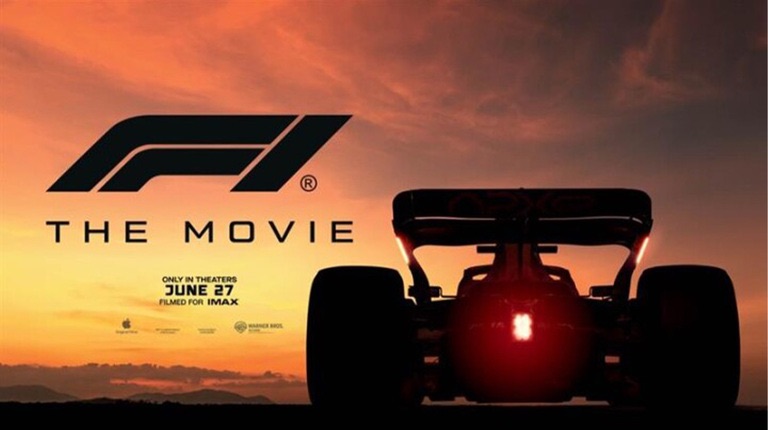
I think there is probably a distinction that needs to be made between movies that are events or spectacles and movies that aren’t. Movies filmed for IMAX have a great hook to convince the audience to check it out in a theater. Sinners is making a ton of its money in IMAX theaters and will do it all over again if the film is released in IMAX again later this year.
One of my favorite movies this year is Steven Soderbergh’s Black Bag. It’s a wonderful little black comedy about spies. Exactly my cup of tea. But I would be hard pressed to tell you why you should see it in a theater instead of at home. I think you would enjoy it is you see it in a theater but I also think you will enjoy it as much if you see it at home.
If you see Sinners for the first time on your iPad it will still be a great movie (if you like that kind of thing) but it will not be the experience a lot of us had when we saw it in a packed IMAX theater.
Even with that to consider I think a lot of what is going only to streaming ought to get a workout in a theater first.
Netflix has the sequels to the Ryan Johnson mystery series Knives Out. The first one made $312 million at the box office. What did the first sequel make? $13 million. Was it a bomb? Nope, Netflix owned it and didn’t show it in most theaters. The only place most people could see it was on Netflix.
Let me ask you. If you were a business owner, is there ever a situation where you would leave $300 million on the table?
I can only think of one. If I were trying to destroy a competitor, theaters, in hopes of being the biggest shark in the ocean. Given that, it’s probably better to think of Netflix as a tech company rather than an entertainment company. It seems to be following the tech company playbook. Come into an industry, rely on investors to prop you up while you make no money, offer your services (for Netflix, that’s entertainment, for Amazon, it was selling and shipping products, for Uber, it was taxi rides) at a loss. Then, when everyone else goes out of business, you can raise prices and own an entire section of the American economy.
Don’t worry, no government regulator will stop you.
Mostly, I don’t think Sarandos is out to destroy Hollywood or even theaters, despite my conspiracy theory rambling. But I do think he believes his business is streaming and he wants Netflix to be in the best place possible, and if that means theaters go out of business, then that’s just the breaks.
There is also one other reason why a movie should be sent to a theater instead of straight to a streamer. Once released in a theater, and only in a theater, a movie can stand tall.
Let’s take Rebel Moon. Netflix released Director Zack Snyder’s two-part science fiction opus on its platform in December of 2023. The company immediately declared it a hit.
“The science fantasy film was the most viewed title on Netflix following its debut on Thursday, December 21, with 23.9M views,” the company wrote a few days after it was released.
So it’s a hit, right? Netflix says it’s a hit, so it must be a hit.
Netflix released a second movie in the franchise the next year. Critics hated both films, but that doesn’t matter, right? Because millions of viewers watched the flicks, and that means something, right?
Nope.
The third one looks like it’s been cancelled. Or at least, no one seems to be confirming when the third one starts shooting or when it will be released. It’s possible it could just show up someday on the platform. But even if that’s the case, the mystery surrounding the future of the franchise does not suggest that Rebel Moon was a hit.
At a theater, a hit is a hit.
Oppenheimer was a near billion-dollar hit, and I can’t go to the entertainment newsosphere without hearing minute-by-minute updates on Christoper Nolan’s next film.
After Ryan Coogler’s Sinners came out, there was a weird headline from Variety that pointed to how much money it had made but also suggested the movie had a long way to go to be profitable. There will be no more pronouncements like that from the entertainment press, and not just because of the blowback.
At $316 million, Sinners is not only a profitable hit, but it is also one of the top 10 highest-grossing horror movies of all time.
Profitable doesn’t mean good. I think Sinners is great, but your mileage may vary. Conversely, Transformers and The Fast and the Furious have both made a ton of cash throughout the life of their franchises, and I would not pay for a ticket to see any one of them.
I could argue that those films are creatively bankrupt, but there is no way I could argue that they were financially bankrupt. They got the bag.
So what have we learned? Well, I think movie studios still have a hand to play with theaters, and home video outside of streaming. I think they ought to do their best to reinforce the idea that films have value and to sell those films for as long as possible before they give them away to streamers.
I also think its worth exploring sending the film and the filmmaker out to more theaters. Kevin Smith (who is atypical in a bunch of ways especially with his connection to his audience) is out touring Dogma. He made Dogma almost 30 years ago and because the rights changed hands he was able to take it on the road to AMC theaters. Every date is sold out at 50 bucks per seat.
Smith told my audience the project would bring in $500,000 or so.
A lot of filmmakers probably won’t do that. More of them may not be the sort of people who would attract an audience all over the country. Still, I bet in some cases the juice could be worth the squeeze. I will admit this little bit of business may be just a product of me hoping I can see Scorsese or Tarantino in Chicago some day more than anything else.
Finally, I’m not sure why the rest of the industry doesn’t operate like the horror part of the business. Studios (or someone I dunno) funds a horror movie at $10 or $20 million. They put another $10 million into marketing and the international horror audience almost always delivers back a $50 million box office run. That’s a profitable movie. Done and Done. And occasionally something catches fire like Longlegs and you add another $20 or $30 million to the take.
So why doesn’t someone, somewhere, offer young filmmakers $10 million or so to make a drama, a comedy or a crime flick? I know, again I’m arguing with myself because earlier I pointed out that Black Bag was probably never going to be a hit in theaters.
But, Anora was a hit. And the Brutalist was a hit. And nobody knows anything anyway so why not swing for the fences or at least offer the audience some solid base hits at the multiplex.
It’s possible that we have reached a point where a $10 million or $20 million movie is just no longer feasible. Especially now that in the current environment actors want all their money up front because there is no back end on most movies because the back end that used to come from home video sales is sucked up by streamers.
But still, I do sometimes dream that I’ll look at what’s playing at a theater on any given weekend and see more than one movie I’m excited about.
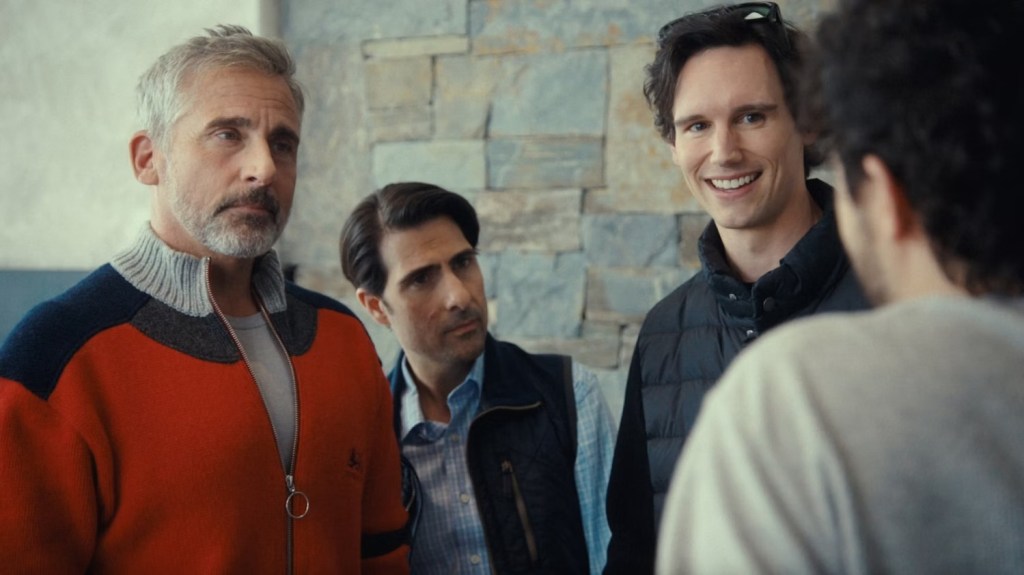
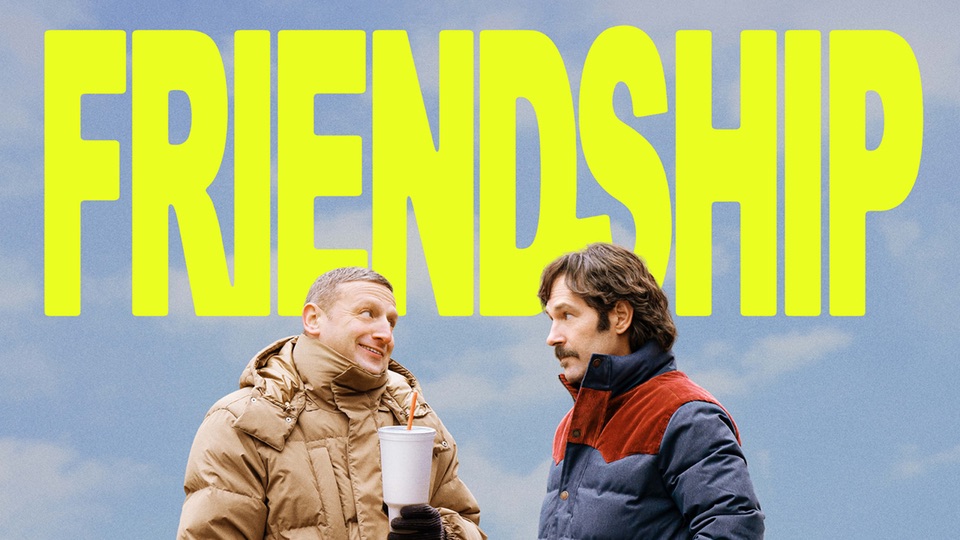
This weekend it’s Mission Impossible. But I’m also going to try and see the comedy Friendship.
And hey, if next week, one of y’all wanted to release a cool little crime movie, well, I think that would be swell.