Category: Movies

  • Mission Impossible: The Final Reckoning

    Mission Impossible: The Final Reckoning

    I think it would be an impossible mission to review this thing without spoilers so you have been warned. 

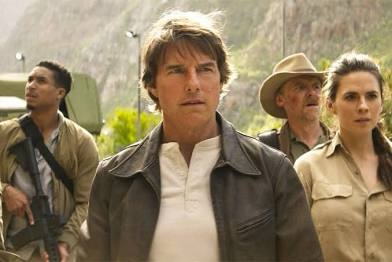
    Fans of the Mission Impossible franchise will recognize a lot of proceedings in the final installment. Is there a scene where the team discusses a crazy mission that only Ethan Hunt can perform? Where every member of the team explains how what Ethan is planning is beyond the capability of a human being? That he’s going to get himself killed. 

    There’s like four of them and they all made me chortle. 

    Is there a scene where Ethan says he’s going to do exactly what the villian wants him to do, the thing that will threaten everyone on earth, but somehow the team will still win? Indeed. 

    Are there stunts that might make little sense in relation to the plot and are seemingly designed to put Tom Cruise in as much peril as possible? Oh my yes. 

    Is it great? That probably depends on you. I loved it as a reward for mission impossible fans like me. As a movie it’s got some flaws. But if you are going to the final Mission Impossible movie hoping for something that stands alone you have headed to the wrong place. 

    Now in the spirit of this movie let’s do a flashback. 

    We’ll start with an encounter I had somewhere in the mid 2000s with an older co-worker when I was excitedly yapping about whichever Mission Impossible film was about to come out. 

    “Jim Phelps is not the bad guy in Mission Impossible,” he barked. 

    He was still angry a decade or two later over what Tom Cruise had done to the franchise. If you don’t know, in the show Phelps was the team leader and the hero of the whole enterprise. 

    But when Cruise took over the thing and took it to the movies he and writers decided that not only would Hunt be the star but that Phelps would be a traitor to his country and the big bad of the movie. Imagine if when they got to the films Sulu because captain of the Enterprise after Kirk betrayed the federation to the Klingons. 

    Impossible you might say. 

    Not only that, but the IMF team that dies in the first movie was supposed to be the original cast members and I think they even went to the original Phelps to ask him to play the villian. There was much yelling in the press about that arrogant twerp Tom Cruise. 

    Of course, as a movie star who wanted to be a movie star forever we know that Cruise was absolutely correct. A movie star is not a member of a team he is the big damn hero of the whole thing. He doesn’t have a boss and he doesn’t have partners. He has amusing sidekicks. 

    So, in this final mission  we learn that the honest lawman played by Shea Whiggum is actually Jim Phelps’ son. Name? Jim Phelps Jr. 

    It’s twist that comes out of nowhere but I was not offended. 

    I suspect Cruise or his writers felt they owed it to the fans of the original tv show to leave an honest Jim Phelps alive and kicking in the world of Mission Impossible

    Now, that storyline doesn’t work and doesn’t add anything to the movie and in this final go round there are lots of little things that don’t work. 

    In particular, the constant small flashbacks during nearly every exposition scene drag the procedure down. I didn’t mind the flashbacks to previous movies. This is the final bite at the apple and those made sense. But the movie just constantly shows you things that happened in the last movie and in the movie you are currently watching! 

    It may well be the first movie edited with the TikTok generation in mind. 

    And at three hours there is at least a half hour, all in the first sixty minutes that could have been cut without hurting anything. 

    This is not a great movie if you judge it like a standalone movie. But if you judge it the way you are meant to, as the final send off to a 30 year film franchise it’s a four star banger. 

    This movie takes a minor character with a joke ending (quite literally one of the biggest laughs in the first flick) brings him back, allows him to be awesome, redeem his fictional life and forgive Ethan Hunt. 

    That sounds crazy when you say it out loud but it is true and it is glorious. 

    They take a throwaway macguffin from the third movie and not only make it relevant but also make Ethan’s decision to save his wife at any cost into the driving force that may destroy the world. 

    Ludicrous? You bet! Wonderful when you are watching it unfold? I thought so. 

    The action set pieces are stunning. Somewhere along the way we moved Tom Cruise from Sean Connery’s 007 to Roger Moore’s 007 but it is still a sight to behold. 

    While I’m here I think I want to pinpoint that we moved into Roger Moore territory when Henry Cavill “loaded” his guns during the bathroom fist fight in Fallout

    Anyway, the action scenes are thrilling and breathtaking and everything you want in a Mission Impossible movie. Cruise and company don’t leave a stone unturned and always find a way to ratchet up the tension and spectacle. 

    Cruise assembles not only his heavy hitters from the previous franchises but also a trove of tv star day players and they all make a meal out of the exposition scenes and the side quests. 

    And Tramell Tillman has it. Every director in Hollywood should lock him up for the next decade or two. 

    If you walked out saying to yourself, “man that thing had problems.”

    I get it. 

    But if you watch it again or you see it for the first time even after reading this review just remember, this isn’t a movie, it’s a well-earned victory lap.

  • The Things We Learned from the Streaming Wars

    The Things We Learned from the Streaming Wars

    Part two: Movies

    When we get to movies in the streaming era, I think a good place to begin is with superhero fatigue. Superhero fatigue is a real problem … among critics who have been fatigued or claiming audiences are fatigued since at least the mid-2000s. And while I certainly would agree that audiences will no longer show up for every superhero thing in the numbers they once did, I must also point out that Deadpool and Wolverine was the number two highest-grossing movie at the box office last year. Three superhero movies (Spider-Man, GOTG, and Ant-Man) were in the top ten in 2023. 

    Superhero movies are always on the verge of dying until they don’t. Such is the conversation around movie theaters. Everyone is going to stay home. No one is going to the theater. The whole thing is going to flame out.

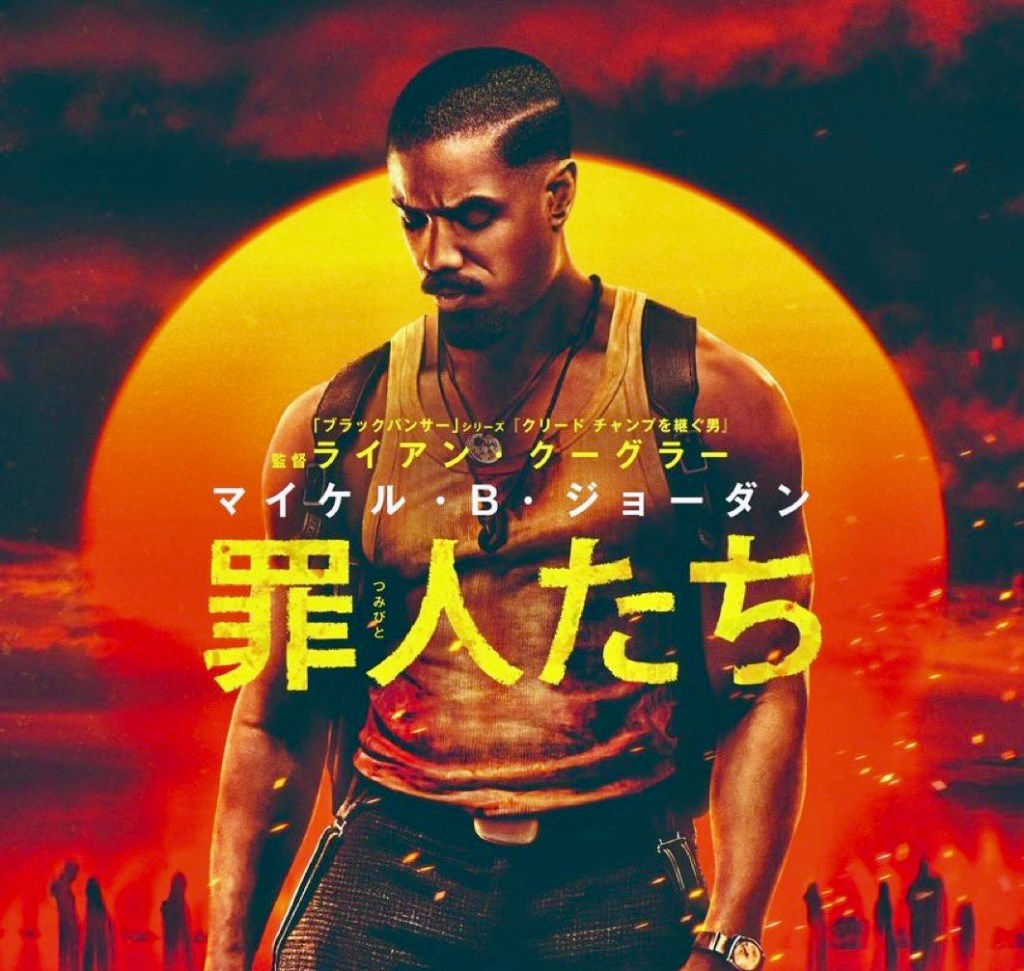
    And then Oppenheimer and Barbie come out on the same weekend. Or Ryan Coogler makes a movie like Sinners, which everyone has to see in a 70 millimeter IMAX theater. And suddenly the theater works again. 

    I think a lot of movies would be better off with a theatrical run. And not just a theatrical run but a long theatrical run that forces the audience to go to a theater rather than sit on their hands for 90 days and maybe watch it when it goes to a streamer. 

    If I were in charge of the world, you would have no chance to see Sinners at home under any circumstances until next year. While that may not coincide with my original premise in my first take on the streaming landscape (that the internet should mean consumers can stream whatever movie or show they want as long as they pay for it) I think it mostly works. 

    You tell the audience this thing they want is available to them, they just have to leave their homes to see it. It’s fair, it’s honest, and it puts more money (I think) in the pockets of the filmmakers. 

    I would also send Sinners to Blu-ray first. Tell people that is the only way to get it for 90 days, and then send it to the pay streamers, and then finally to regular streaming. Take every bite out of the apple and only at the last possible moment give it to the wind. 

    By the way, if you recognize that strategy, congrats on being old because that is exactly how things worked in the ancient before times of, what, 2018? 

    It’s the way the world worked pre-COVID, and it was a win for the theaters and the movie studios. It is not a win for audience members who just want to watch something at home, but those folks now have other options. 

    Just because the audience wants something doesn’t mean you have to give it to them. 

    It’s true that the internet has mostly killed the Blu-ray market. People generally don’t buy those products anymore because they prefer the convenience of streaming. Also, movie studios chose an instant cash offer from Netflix and the other streamers versus trying to sell Blu-rays. Or the streamer produced the movie for its platform and has no reason to release it in other formats. Flowers of the Killer Moon really needs a Criterion release but Apple doesn’t seem to be willing.

    I’m guessing for most movies, a streaming service as their final resting place makes total sense. I actually buy and rent movies on the Apple platform all the time, but I suspect I’m an outlier. I suspect most people wait for it to show up in their feeds. 

    But I do wonder how many Blu-rays movie studios would sell if they told their customers that it was the only way to get Oppenheimer or Sinners and would be the only way for a long time. Some people will certainly get it illegally online. But those people were going to do that anyway.  

    Also, you have only to look at what happens when a movie is released in theaters versus when it is released directly to a streamer to see which plan is better. 

    A movie theater movie demands and usually gets cultural attention. A streaming movie is the equivalent of what used to be known as a direct-to-DVD flick. When there is no difference in your work and a new offering from The Hallmark Channel, you have problems. It’s a basement where even the most successful examples will get ignored and counted out simply because of their release.   

    I don’t want to beat up on Netflix CEO Ted Sarandos (who will never read this and thus never be insulted), partly because I think a recent interview started with a crummy question. The interviewer asked him, “Have you destroyed Hollywood?” 

    Well shit, man, that’s not exactly friendly you know. But in defending himself, Sarandos said this about the recent lack of big box office returns. 

    “What does that say? What is the consumer trying to tell us? That they’d like to watch movies at home, thank you. The studios and the theaters are duking it out over trying to preserve this 45-day window that is completely out of step with the consumer experience of just loving a movie.”  

    On the one hand, some of that is true. Certainly, there is a segment of fandom that is not going to the theater no matter what and will wait till they can see it on their home screens. But there are plenty of people who want to go to the theater. And they will give you money for this.

    I think there is probably a distinction that needs to be made between movies that are events or spectacles and movies that aren’t. Movies filmed for IMAX have a great hook to convince the audience to check it out in a theater. Sinners is making a ton of its money in IMAX theaters and will do it all over again if the film is released in IMAX again later this year. 

    One of my favorite movies this year is Steven Soderbergh’s Black Bag. It’s a wonderful little black comedy about spies. Exactly my cup of tea. But I would be hard pressed to tell you why you should see it in a theater instead of at home. I think you would enjoy it is you see it in a theater but I also think you will enjoy it as much if you see it at home. 

    If you see Sinners for the first time on your iPad it will still be a great movie (if you like that kind of thing) but it will not be the experience a lot of us had when we saw it in a packed IMAX theater.   

    Even with that to consider I think a lot of what is going only to streaming ought to get a workout in a theater first. 

    Netflix has the sequels to the Ryan Johnson mystery series Knives Out. The first one made $312 million at the box office. What did the first sequel make? $13 million. Was it a bomb? Nope, Netflix owned it and didn’t show it in most theaters. The only place most people could see it was on Netflix. 

    Let me ask you. If you were a business owner, is there ever a situation where you would leave $300 million on the table? 

    I can only think of one. If I were trying to destroy a competitor, theaters, in hopes of being the biggest shark in the ocean. Given that, it’s probably better to think of Netflix as a tech company rather than an entertainment company. It seems to be following the tech company playbook. Come into an industry, rely on investors to prop you up while you make no money, offer your services (for Netflix, that’s entertainment, for Amazon, it was selling and shipping products, for Uber, it was taxi rides) at a loss. Then, when everyone else goes out of business, you can raise prices and own an entire section of the American economy. 

    Don’t worry, no government regulator will stop you. 

    Mostly, I don’t think Sarandos is out to destroy Hollywood or even theaters, despite my conspiracy theory rambling. But I do think he believes his business is streaming and he wants Netflix to be in the best place possible, and if that means theaters go out of business, then that’s just the breaks. 

    There is also one other reason why a movie should be sent to a theater instead of straight to a streamer. Once released in a theater, and only in a theater, a movie can stand tall. 

    Let’s take Rebel Moon. Netflix released Director Zack Snyder’s two-part science fiction opus on its platform in December of 2023. The company immediately declared it a hit. 

    “The science fantasy film was the most viewed title on Netflix following its debut on Thursday, December 21, with 23.9M views,” the company wrote a few days after it was released. 

    So it’s a hit, right? Netflix says it’s a hit, so it must be a hit. 

    Netflix released a second movie in the franchise the next year. Critics hated both films, but that doesn’t matter, right? Because millions of viewers watched the flicks, and that means something, right? 

    Nope. 

    The third one looks like it’s been cancelled. Or at least, no one seems to be confirming when the third one starts shooting or when it will be released. It’s possible it could just show up someday on the platform. But even if that’s the case, the mystery surrounding the future of the franchise does not suggest that Rebel Moon was a hit. 

    At a theater, a hit is a hit. 

    Oppenheimer was a near billion-dollar hit, and I can’t go to the entertainment newsosphere without hearing minute-by-minute updates on Christoper Nolan’s next film. 

    After Ryan Coogler’s Sinners came out, there was a weird headline from Variety that pointed to how much money it had made but also suggested the movie had a long way to go to be profitable. There will be no more pronouncements like that from the entertainment press, and not just because of the blowback. 

    At $316 million, Sinners is not only a profitable hit, but it is also one of the top 10 highest-grossing horror movies of all time. 

    Profitable doesn’t mean good. I think Sinners is great, but your mileage may vary. Conversely, Transformers and The Fast and the Furious have both made a ton of cash throughout the life of their franchises, and I would not pay for a ticket to see any one of them. 

    I could argue that those films are creatively bankrupt, but there is no way I could argue that they were financially bankrupt. They got the bag. 

    So what have we learned? Well, I think movie studios still have a hand to play with theaters, and home video outside of streaming. I think they ought to do their best to reinforce the idea that films have value and to sell those films for as long as possible before they give them away to streamers. 

    I also think its worth exploring sending the film and the filmmaker out to more theaters. Kevin Smith (who is atypical in a bunch of ways especially with his connection to his audience) is out touring Dogma. He made Dogma almost 30 years ago and because the rights changed hands he was able to take it on the road to AMC theaters. Every date is sold out at 50 bucks per seat.

    Smith told my audience the project would bring in $500,000 or so. 

    A lot of filmmakers probably won’t do that. More of them may not be the sort of people who would attract an audience all over the country. Still, I bet in some cases the juice could be worth the squeeze. I will admit this little bit of business may be just a product of me hoping I can see Scorsese or Tarantino in Chicago some day more than anything else. 

    Finally, I’m not sure why the rest of the industry doesn’t operate like the horror part of the business. Studios (or someone I dunno) funds a horror movie at $10 or $20 million. They put another $10 million into marketing and the international horror audience almost always delivers back a $50 million box office run. That’s a profitable movie. Done and Done. And occasionally something catches fire like Longlegs and you add another $20 or $30 million to the take.

    So why doesn’t someone, somewhere, offer young filmmakers $10 million or so to make a drama, a comedy or a crime flick? I know, again I’m arguing with myself because earlier I pointed out that Black Bag was probably never going to be a hit in theaters. 

    But, Anora was a hit. And the Brutalist was a hit. And nobody knows anything anyway so why not swing for the fences or at least offer the audience some solid base hits at the multiplex. 

    It’s possible that we have reached a point where a $10 million or $20 million movie is just no longer feasible. Especially now that in the current environment actors want all their money up front because there is no back end on most movies because the back end that used to come from home video sales is sucked up by streamers. 

    But still, I do sometimes dream that I’ll look at what’s playing at a theater on any given weekend and see more than one movie I’m excited about. 

    This weekend it’s Mission Impossible. But I’m also going to try and see the comedy Friendship.

    And hey, if next week, one of y’all wanted to release a cool little crime movie, well, I think that would be swell. 
  • Nosferatu

    Nosferatu

    A co-worker once visited Rome and described The Eternal City as a place that astonished him. 

    Everywhere he turned there was a statute, or architecture, or art that was among the greatest mankind had ever achieved. 

    “You would turn around, see something else amazing and go ‘holy shirtballs.’”

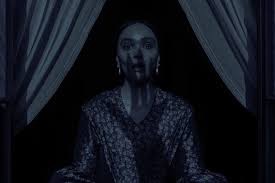
    He might have said something a little more crude. Robert Eggers Nosferatu is not afraid of being crude, or bloody, or sexual. 

    But never mind all that because every single shot, every camera movement and practically every moment had me saying ‘holy shirtballs.’ 

    Eggers has directed three other films and each of them are painterly and perfect.

    As I watched Nosferatu I kept thinking of Steven Spielberg because each scene had that touch of a master craftsman. There’s a moment in War Horse (of all things) where you see a farmhouse and a barn and everything is in just the right place and it seems wonderful and impossible. Everything in the frame is just so right. 

    Eggers summons not only the past but a precise vision of what a gothic horror movie should look like. Images that seem torn from a Mike Mignola comic book or a Universal horror film. A nightmare come to life. 

    If it has a failing it is probably that Nosferatu is not particularly scary. Rembrandt paintings aren’t scary either.

    Nosferatu is a presentation of Dracula and mostly follows the familiar beats of Bram Stoker’s most famous work. One other thought I had is that this will pair nicely with Director Francis Ford Coppola’s version of Dracula. Both movies are visually stunning and seem to understand, at their core, the sex and violence of the vampire myth. 

    Bill Skarsgard somehow transforms into the monster. And Lily-Rose Depp becomes the troubled, insane woman who can’t defeat her own longings or her tragic past. 

    I miss the show The Great but Nicholas Hoult makes it clear he’s a movie star and can do things no one else could pull off.

    Also, the real victim in this movie is Aaron Taylor Johnson’s Fredrick. He’s just trying to be a good friend and he ends up with two insane houseguests who won’t leave and then must face a deeper tragedy. 

    Lastly, I grinned everytime Willem Dafoe said, “Nosferatu.”

  • Juror 2

    Juror 2

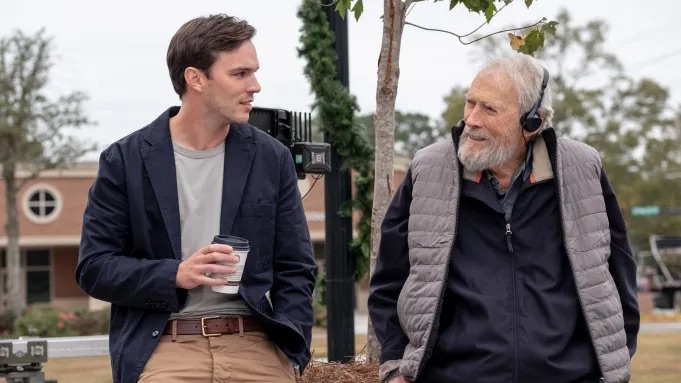
    In his final years Clint Eastwood directs movies the way Ernest Hemingway wrote novels — straight, true and unadorned. 

    There is nothing in Juror #2 that anyone might mistake for a director showing off. Maybe J.K.Simmons’ hat. 

    Nor is there anything in the writing that gilds the lily. The ‘just the facts’ and ‘just what we need per scene’ could be mistaken for boring. And, given what a fan I am of more showy writing I can tell you that this style does test my patience. 

    But there are very few movies I watched this year that set a deep pit in my gut and did not let go. And great writing is sometimes a lot more or a lot less than great dialogue. 

    If you have seen the trailer you know Nicholous Hoult’s Justin Kemp is called for jury duty for a murder and discovers that he accidentally killed a woman in a car accident. Now, with an innocent man’s life on the line he faces a moral crisis about whether to come forward, stop the trial and confess. 

    The movie does a nice job of giving you a bit of everything from an update on 12 Angry Men to a normal courtroom drama and some realistic investigative work. 

    As a reporter I spent years hanging out with homicide detectives and covering trials and a lot of the time I can’t sit through these kinds of stories. 

    If you know how it actually works you find that nearly every murder mystery movie, detective show or lawyer novel is not just unrealistic, it’s pure fantasy. What happens in Mordor is more true to life than what happens in the fictional jury box. 

    But this one — despite a few left turns — rings true. 

    What the movie is concerned with, mostly, is an ethical test. It sets the challenge to Hoult’s Kemp and then watches what he does. 

    The story does everything it can to present Kemp as a sympathetic and decent man who, if he had known what he had done when it happened would almost assuredly  have reacted the right way. But the movie makes it clear that Kemp is now faced with an almost certain condemnation and a prison sentence because of past mistakes. So he looks for a way to save himself and — if he can — save the innocent man on trial. 

    Eastwood and writer Jonathan Abrams fill the flick with little moments that show where Kemp’s priorities lie as he comes to a final test. At one point he ducks in the jury box so a witness won’t recognize him. At another he stymies a juror who is getting too close to the truth. 

    Rescue the innocent man? Sure, Kemp says to himself, as he convinces half the jury that they should acquit. But only if he can keep his own head out of the noose. 

    Despite these incidents the movie reserves judgement until its final shot. 

    I don’t want to give it away. 

    But we find that just like Kemp another character in this story was facing a critical moral test. 

    In the end, only one of them comes out upright and righteous. 

  • Black Panther: Wakanda Forever

    As a comic book fan since childhood, it is hard to express just how much I love the Marvel Cinematic Universe. Although it is occasionally shaky the MCU has done what many of us thought impossible, take a comic book universe and bring it to live-action life.

    It did this by respecting the artists and writers who built the thing and by building a fictional world that chooses to make its heroes and villains realistic, where possible, but is just as willing to throw out realism when necessary.

    So what we get is a best-of-both-worlds situation where the characters look and act right, there are consequences to their actions and the amazing visuals that look stunning on a comic page are brought to life.

    The MCU doesn’t blink at giving you a celestial, or Thanos, or Asgard. And after an early emphasis to explain away everything with science the MCU wisely pivoted to do, just what the comics do, and say that magic, gods, monsters, and a host of other things simply exist in the world and that no explanation is needed.

    It’s also a place, for me at least, full of joy and hope. Maybe the last decade or so has been great for you. I certainly wish you blessings. But for me, these have been trying times. And I got through them with my faith, my family, and, honestly, a Marvel movie a couple of times each year.

    These things are fun and I have fun every time I go to one.

    And if you were to ask me, what am I most looking forward to about the MCU I would tell you that it is an organic and changing thing. Because these are real actors who age and at times decide to move on Kevin Feige and the Marvel team face choices every few years.

    What it seems like they have chosen, and what makes it riveting, is that the heroes of this world, unlike the comics) will grow old and die and be replaced by new characters.

    Marvel sets Thanos up in Avengers and then wisely didn’t pay it off until Infinity War and Endgame 7 years later. Compare that with the fact that Batman has faced off with the Joker and the Riddler twice since the 1990s and will likely battle him again before Matt Reeves is done with the caped crusader.

    And unless the James Gunn administration changes things, Bruce Wayne will forever be about 30 and forever fighting the same three or four villains.

    Meanwhile, unless the MCU really backtracks, Tony Stark is dead, Steve Rogers’s story is probably done and I fully expect Peter Parker to be replaced by Miles Morales before the 2020s end. Here’s hoping Sony understands why that’s a great thing and plays along.

    And yet, the thing that makes me the most excited about the MCU, was what made Black Panther: Wakanda Forever a radically different experience than most Marvel movies. In the real world, the great Chadwick Boseman died from cancer. That left Ryan Coogler considering how to move a movie franchise forward without the title character. Coogler said he honestly considered not making a sequel and also leaving his career behind as well. Such was the pain he felt after losing his friend.

    What he ultimately decided was that Black Panther: Wakanda Forever would be made as a tribute to Boseman and that in the fictional world of the MCU Boseman’s character, T’Challa, will be dead as the movie opens.

    What we have then, as a viewer, is a Marvel movie that is also a wake for a beloved actor and a way for Marvel to continue moving the fictional world of Wakanda forward in its own group of movies and television shows.

    It’s heavy man. It’s a lot for any movie to carry much less a movie with superhero shenanigans that must be employed.

    T’Challa’s kid sister Shuri, played with heart and humor by Letitia Wright, essentially goes through the five stages of grief on screen. The movie introduces both Ironheart, (Dominique Thorne) a new genius with a supersuit in the Iron Man mold, and Namor, who is played by Tenoch Huerta as something more than a supervillain.

    This line, performed by the great Winston Duke as M’Baku, rang in my head all weekend: His people do not call him general or king. They call him K’uk’ulkan, the feather serpent god. Killing him will risk eternal war.

    If you want to know what kind of comic book person I am, after I cried for a while at the first Wakanda Forever trailer I spotted that Namor has wings on his ankles, just as he does in the comics. And I was both excited and nervous. Because how can a comic book concept as weird as wings on ankles look good on screen?

    If Sony or Fox had introduced Namor in the bad old days the very first thing to go would have been the ankle wings.

    But the MCU embraces comics and finds a way, most of the time, to make these things fly.

    The wings didn’t just work in Wakanda Forever they were both amazing and terrifying. They made him, in flight, seem like a rattlesnake ready to strike at any given moment. He was that serpent god.

    Angela Bassett as Queen Ramonda once again shows you who she is and how wonderful she can be in any role. Danai Gurira once again steals nearly every scene with just a look.

    Anyway, this film hit its targets and managed to do much more than your average movie. There were several subplots that could have been avoided. I like seeing Martin Freeman in anything but his Everett Ross had nothing to do except set up future things.

    Most of the time I leave a Marvel movie jazzed about what I’ve seen and excited about what is to come. This time, of course, was a much different experience.

    I left the theater feeling at least some of the grief that Coogler, Wright, and Boseman’s friends and co-workers feel. This is what the filmmakers intended. It’s a stirring tribute to Boseman and it resonates with real emotion.

    Those of us who grieve know that the pain endures.

    But joy comes in the morning.