Category: Uncategorized

  • Oscar Nominations are out and I have homework

    Oscar Nominations are out and I have homework

    Me right now: How could you have watched 100 movies last year and still have not seen four of the Best Picture nominees?

    Anyway, I like to at least see all the nominees before the Oscar cast (if I can) and I now have homework.

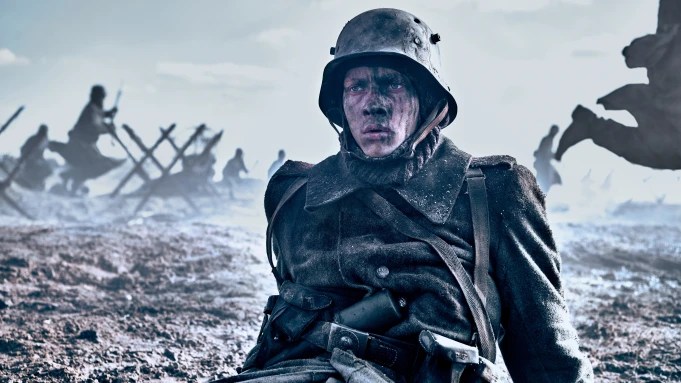
    The movies I need to watch just to see all the best picture nominees: All Quiet on the Western Front, Tár, Triangle of Sadness, and Women Talking. And, of course, there are flicks where an actor or actress gets nominated that I may want to check out just to be able to fairly judge the category.

    I have reviewed most of the other best picture nominees:

    Avatar: The Way of Water
    The Banshees of Inisherin
    Elvis
    Everything Everywhere All at Once
    The Fabelmans

    I have seen and enjoyed Top Gun: Maverick but never had more than a sentence or two to say about it. I wrote on Letterboxd: This isn’t a movie it’s a victory lap. And yeah, I stand by that.

    Of the things that got snubbed, I’m probably most upset over RRR. I don’t think it was the best movie of last year but I do think it should be in the conversation and should have been nominated in that category.

    A friend and I were just going down the list and I was amused by how many of these nominations I would give to Babylon. I have real problems with several things in Babylon and I’m sick of Hollywood movies about Hollywood. But I can’t argue that the score, the cinematography, and the costume design are all deserving of Oscar nominations if not wins.

    Anyway, I’m going to go do some more homework and maybe do a post picking and predicting the winners after I have seen everything. In the meantime, here’s the full list.

    Best supporting actress

    – Angela Bassett, “Black Panther: Wakanda Forever”
    – Hong Chau, “The Whale”
    – Kerry Condon, “The Banshees of Inisherin”
    – Jamie Lee Curtis, “Everything Everywhere All at Once”
    – Stephanie Hsu, “Everything Everywhere All at Once”

    Best costume design

    – “Babylon”
    – “Black Panther: Wakanda Forever”
    – “Elvis”
    – “Everything Everywhere All at Once”
    – “Mrs. Harris Goes to Paris”

    Best sound

    – “All Quiet on the Western Front”
    – “Avatar: The Way of Water”
    – “The Batman”
    – “Elvis”
    – “Top Gun: Maverick”

    Best original score

    – “All Quiet on the Western Front”
    – “Babylon”
    – “The Banshees of Inisherin”
    – “Everything Everywhere All at Once”
    – “The Fabelmans”

    Best original screenplay

    – “The Banshees of Inisherin,” Martin McDonagh
    – “Everything Everywhere All at Once,” Daniel Kwan and Daniel Scheinert
    – “The Fabelmans,” Tony Kushner and Steven Spielberg
    – “Tár,” Todd Field
    – “Triangle of Sadness,” Ruben Östlund

    Best live action short film

    – “An Irish Goodbye”
    – “Ivalu”
    – “Le Pupille”
    – “Night Ride”
    – “The Red Suitcase”

    Best animated short film

    – “The Boy, the Mole, the Fox and the Horse”
    – “The Flying Sailor”
    – “Ice Merchants”
    – “My Year of D*cks”
    – “An Ostrich Told Me the World Is Fake and I Think I Believe It”

    Best supporting actor

    – Brendan Gleeson, “The Banshees of Inisherin”
    – Brian Tyree Henry, “Causeway”
    – Judd Hirsch, “The Fabelmans”
    – Barry Keoghan, “The Banshees of Inisherin”
    – Ke Huy Quan, “Everything Everywhere All at Once”

    Best adapted screenplay

    – “All Quiet on the Western Front,” Edward Berger, Lesley Paterson and Ian Stokell
    – “Glass Onion: A Knives Out Mystery,” Rian Johnson
    – “Living,” Kazuo Ishiguro
    – “Top Gun: Maverick,” Ehren Kruger, Eric Warren Singer and Christopher McQuarrie, story by Peter Craig and Justin Marks
    – “Women Talking,” Sarah Polley

    Best original song

    – “Applause” from “Tell It like a Woman”
    – “Hold My Hand” from “Top Gun: Maverick”
    – “Lift Me Up” from “Black Panther: Wakanda Forever”
    – “Naatu Naatu” from “RRR”
    – “This Is A Life” from “Everything Everywhere All at Once”

    Best documentary feature film

    – “All That Breathes”
    – “All the Beauty and the Bloodshed”
    – “Fire of Love”
    – “A House Made of Splinters”
    – “Navalny”

    Best documentary short film

    – “The Elephant Whisperers”
    – “Haulout”
    – “How Do You Measure a Year?”
    – “The Martha Mitchell Effect”
    – “Stranger at the Gate”

    Best international feature film

    – “All Quiet on the Western Front” (Germany)
    – “Argentina, 1985” (Argentina)
    – “Close” (Belgium)
    – “EO” (Poland)
    – “The Quiet Girl” (Ireland)

    Best animated feature film

    – “Guillermo del Toro’s Pinocchio”
    – “Marcel the Shell with Shoes On”
    – “Puss in Boots: The Last Wish”
    – “The Sea Beast”
    – “Turning Red”

    Best makeup and hairstyling

    – “All Quiet on the Western Front”
    – “The Batman”
    – “Black Panther: Wakanda Forever”
    – “Elvis”
    – “The Whale”

    Best production design

    – “All Quiet on the Western Front”
    – “Avatar: The Way of Water”
    – “Babylon”
    – “Elvis”
    – “The Fabelmans”

    Best film editing

    – “The Banshees of Inisherin”
    – “Elvis”
    – “Everything Everywhere All at Once”
    – “Tár”
    – “Top Gun: Maverick”

    Best cinematography

    – “All Quiet on the Western Front”
    – “Bardo, False Chronicle of a Handful of Truths”
    – “Elvis”
    – “Empire of Light”
    – “Tár”

    Best visual effects

    – “All Quiet on the Western Front”
    – “Avatar: The Way of Water”
    – “The Batman”
    – “Black Panther: Wakanda Forever”
    – “Top Gun: Maverick”

    Best actor

    – Austin Butler, “Elvis”
    – Colin Farrell, “The Banshees of Inisherin”
    – Brendan Fraser, “The Whale”
    – Paul Mescal, “Aftersun”
    – Bill Nighy, “Living”

    Best actress

    – Cate Blanchett, “Tár”
    – Ana de Armas, “Blonde”
    – Andrea Riseborough, “To Leslie”
    – Michelle Williams, “The Fabelmans”
    – Michelle Yeoh, “Everything Everywhere All at Once”

    Best director

    – Martin McDonagh, “The Banshees of Inisherin”
    – Daniel Kwan and Daniel Scheinert, “Everything Everywhere All at Once”
    – Steven Spielberg, “The Fabelmans”
    – Todd Field, “Tár”
    – Ruben Östlund, “Triangle of Sadness”

    Best picture

    – “All Quiet on the Western Front”
    – “Avatar: The Way of Water”
    – “The Banshees of Inisherin”
    – “Elvis”
    – “Everything Everywhere All at Once”
    – “The Fabelmans”
    – “Tár”
    – “Top Gun: Maverick”
    – “Triangle of Sadness”
    – “Women Talking”

  • The Hunt for Red October

    The Hunt for Red October

    Jack Ryan was dreamed up by an insurance agent.

    I read it somewhere, and forgive me, I can’t remember where, that Jack Ryan was essentially a 1980s cubicle dad. He’s an analyst — not a field agent — for the CIA. And when confronted with a problem he has to outsmart both the villains and his bureaucratic bosses.

    It’s no surprise that Tom Clancy’s hero then turned into a sensation among the reading public and spawned several successful movies.

    I’ve never been able to get through the books. But I bet I would love them now, in my middle age. Clancy was my mom’s favorite author. However, I watched all the Jack Ryan movies and just finished three seasons of the Amazon Jack Ryan TV show and nothing ever quite gets to the highs of Red October.

    For what it’s worth the second season of the TV show included one of my favorite Jack Ryan tropes. Ryan figures out that an American politician has sold out the country and he takes him down.

    In Patriot Games, the scuzzy politician he takes down is The President. On the show he gets a senator with a tape recording.

    I’m not necessarily saying these other things are bad, but it is hard to live up to Red October. Harder still when the point of Red October is that Jack Ryan is very much not an action hero.

    The movie sets up three strong plots and follows them through with precision, action, and wit until it gets to a splendid action movie conclusion.

    First Jack Ryan (Alec Baldwin) goes to Washington because he is concerned about spy images of a Russian submarine that can move quietly and deliver a nuclear payload to Washington D.C. without any warning.

    Second, Capt. Marko Ramius (Sean Connery) and his officers aboard the Red October are planning to defect and deliver this high-tech submarine to America for fear that Russia really will start World War 3.

    And finally, the very competent officers in an American sub are tracking the Red October after a radio officer (Courtney B. Vance) figures out that the Russians must have some new secret engine that convinced his computer that he’s hearing earthquakes instead of what he knows is a 198 meter long, 50,000-ton horseman of the apocalypse.

    The best part about all of this is that for most of the movie, Jack Ryan doesn’t do much of anything that you would consider Action Hero stuff.

    First, he figures out that something is up with the sub. Then he figures out that Ramius wants to defect. And then in the movie’s best scene, he convinces no-nonsense Capt. Bart Mancuso (Scott Glenn) not to destroy the Red October during a confrontation when neither side can be certain of the other’s intentions.

    It’s not exactly a movie full of shoot outs at the OK Corral.

    Jack Ryan one of those characters that books can do really well that usually transition terribly to film and television. The guy making the decision, whether it’s a president or a CIA analyst, or a Medieval King will almost certainly not be the guy carrying out the action.

    In a book, you have plenty of pages to let others carry the action. In a movie, you must keep everything moving and usually, that means just one hero facing off against a world of bad guys.

    IMDB claims that Harrison Ford turned down Jack Ryan because he would have to share half the movie with Connery. Also, Indiana Jones doesn’t get talked down to by every other character actor in his next movie. To be fair to Ford, I’m not sure audiences would have enjoyed him playing this version of Jack Ryan anyway.

    There is a reason the character always skews young and is usually played by men in their late 20s and early 30s. Or at least, by men who audiences will believe are in their late 20s and early 30s.

    The producers got Ford to take over the franchise when Alec Baldwin asked for more money and that version of Jack Ryan is almost always in the middle of a fight.

    The Die Hard movies have similar problem. In the first one, he’s a normal human being who happens to be a cop but is both terrified and brave as he tries to survive an extraordinary and deadly situation.

    They try to tamp it down in the second and third movies but by the fourth go round John McLane is Superman with a badge.

    And even in Clancy’s novels it became impossible not to move the CIA analyst into bigger and wilder adventures. Clancy kept upping the stakes for Ryan and increasing his status until, with nowhere else to go, Clancy made him the president. A more realistic career would probably be that Ryan returned to his cubicle after Red October, worked for 20 more years without ever leaving that cubicle, and then drifted off into a quiet retirement.

    I doubt audiences would have enjoyed doddering old Jack Ryan puttering around his garden and talking to his plants about that time he hung out with a Russian submarine captain with a Scottish accent but that’s a heck of a lot closer to reality than Jack Ryan gets targeted by the IRA for reasons and then Jack Ryan takes down the Columbian drug cartels and the American president.

    Screenwriters Larry Ferguson and Donald E. Stewart and Director John McTiernan do just about everything right in this flick. Including switching over early in the film so that all of the Russians are speaking English. Now, they are not actually speaking English but in the movie shorthand, McTiernan lets us know that the Russian parts will all be in English.

    And when that happens Connery just speaks in his Scottish accent. The people who enjoy a good nitpick really enjoy this particular nitpick but it never bothered me on this or any other viewing. At one point, Ryan points out that Connery’s character is not actually Russian but is from Lithuania and I think my brain just accepts that Lithuanians — when speaking English — sound Scottish.

    McTiernan also picks his spots with great action beats followed by unrelenting tension in the submarine command decks as the crazy Russian captain tries to escape his countrymen who want to kill him and figure out how to connect with the Americans without getting shot by some buckaroo.

    This movie is a great example of how there are no bit parts. Every character actor gets to make a meal of the one of two scenes they receive.

    So you get Fred Thompson as an admiral who gets to convey to the audience how Russians evacuate their bowels and how dangerous this situation is getting and a little bit of Ryan’s backstory.

    Russians don’t take a dump, son, without a plan.

    Adm. Painter (Fred Thompson)

    James Earl Jones is having too much fun as Ryan’s CIA boss.

    I told you to speak your mind Jack, but Jesus …

    Admiral James Greer

    Richard Jordan is just wonderful as a man who knows his place in the world.

    Listen, I’m a politician, which means I’m a cheat and a liar, and when I’m not kissing babies, I’m stealing their lollipops. But it also means I keep my options open.

    Jeffrey Pelt

    This movie also gets a bunch of joy from Tim Curry playing the clueless Dr. Petrov who never, ever figures out that Ramius is taking him for a ride.

     You will receive the Order of Lenin for this, Captain!

    Dr. Petrov

    Along with being the height of Alec Baldwin as a leading man Hunt for Red October capped off a tremendous run for Director John McTiernan. In 1987 he directed Predator, he followed that with Die Hard in 1988 and then The Hunt for Red October in 1990.

    Things went south quickly after that as McTiernan directed Connery in Medicine Man and Arnold Schwarzenegger in Last Action Hero. He then made another classic in 1995 with Die Hard with a Vengeance.

    And then, and then, … well IMDB states that he was the director of the 1999 remake of The Thomas Crown Affair, the 13th Warrior, and Rollerball. When things go south in Hollywood it happens fast.

    But man, what a run. Three stone classics and the only good sequel to Die Hard. I would have liked to see what McTiernan and Baldwin could have cooked up for the Jack Ryan sequels.

    Ah well, it wasn’t to be. It will have to live on in my dreams along with the other life I want to live, somewhere in Montana.

  • The Raid

    The Raid

    Have you ever seen The Simpsons bit about The Fireworks Factory? 

    Basically everyone on a field trip is forced to slog through the most boring factories in the world while one of the kids laments, “When are we going to get to the fireworks factory?”

    Movie lovers, this whole damn flick is the fireworks factory. 

    The set up (a large SWAT team is ambushed in a building full of criminals out to kill them) has just enough story to let you enjoy the action scenes and care about the handful of characters you are supposed to care about. It does this quickly and with a sharpshooter’s precision. 

    Within, 10 minutes or so, everyone is introduced and the stakes are explained. And then BOOM.  

    Boom, boom, boom. 

    Director and writer Garett Evans sets the movie in one building and the tight script allows us focus on the things that matter (insane action scenes) without blowing the budget.

    While most of this is ridiculous it’s the best kind of movie ridiculous. This is a movie that leaves realism back at the station. But you won’t stop and think about how all this is implausible because your adrenaline will be pumping and you will be gripping your chair. 

    One example of ridiculous. A bad guy with a gun does a stand off with a good guy with a knife. The bad guy doesn’t pull the trigger. Instead, he brings him at gunpoint into a room and puts the gun down and gives a speech about how he prefers to kill with his bare hands. 

    Real life don’t work the way. But in a great movie, that bit of business not only works but it feels like everyone involved just called their shot.

    The fight, as you might imagine, is glorious and brutal. 

    Anyway, I felt about this the way I felt when I discovered John Woo’s The Killers and Hard Boiled. Which is, I want to watch everything else this guy made and I can’t believe action cinema can be this good.

  • Nobody

    There is this thing Quintin Tarantino said in an interview that I think about a lot. 

    It was essentially, that movie violence is cool and real violence is abhorrent. And there is a ton of pretty great movie violence in Nobody. 

    To the point where this is almost a Looney Tunes cartoon. Which is to say it was incredibly cool and fun. 

    I didn’t believe a second of it but I had a blast watching Bob Odenkirk of all people pretend to be a super special forces soldier who picks a fight with the world and a particularly nasty band of Russian mobsters because he’s a bored family man. 

    We’ve all been there guy. I feel you. 

    The best way I know to describe it is that the movie takes place in action hero fantasy world. The place where 40 or 50 well trained bad guys can never hit their target (except a non deadly shoulder shot or a knife wound to the fleshy part of the thigh) and the good guys never miss. 

    Also, every good guy trap nails at least three or four bad guys and the bad guys keep marching forward regardless of how many of their comrades go down.

    There is a part early in the movie where the hero basically begs God to give him a reason to commit all the violence he wants to commit. And I couldn’t help but feel that he was also us, the audience, begging the movie to unleash the action. Don’t worry, I think this scene takes place 20 minutes in and you have been well entertained by the time we get there. 

    Nobody knows that the magic is partly keeping everything lean and at a brisk pace. 

    At one point Odenkirk winks at the camera, essentially, after giving the bad guy an option to walk away and let everything end without another round of madness. 

    When the bad guy starts chasing him again and the final fight begins Odenkirk smiles at us. 

    That smile lets you now that the movie gods will deliver 30 more minutes of insanity. 

    Ok let me explain it one more way.

    If Odenkirk had been replaced by Sylvester Stallone or Arnold Schwarzenegger back when they could play a man in his late 30s or 40s then this movie would not have changed in any conceivable way. Also, Macruber could have been in it and it would not have changed in any conceivable way. 

    Salud!

  • The Outfit

    The Outfit

    This is a classic bit of crime cinema that hits all its marks and makes all the right moves. I enjoyed it, at least once the plot kicked in and the stakes kept getting ever higher.

    Mark Rylance plays Leonard Burling, an English tailor who has set up shop in Chicago in the 1950s. Burling calls himself a cutter (he makes suits, he doesn’t just sew buttons) and never lets us forget that he was trained on the famous Savile Row.

    His clients are gangsters who he seems happy enough to serve and he has an employee, young Mable Shaun (Zoey Deutch), who he watches with just a bit too much interest.

    And then, bad things begin to happen and Leonard will spend a very long night navigating and negotiating with killers who, for their own reasons, need him alive. Well, they need him alive until they no longer need him.

    I thought the first 20 minutes of this was a tough road, I knew it was setting itself up and getting all the pieces on the board for its eventual game but there was a decent moment there when I thought of turning it off.

    I’m glad I didn’t because the rest of the movie is a thrilling crime chess match as Leonard attempts to get everything he wants out of a group of people who are either too stupid or too trusting to see what’s really going on.

    There are about five solid twists in the game and enough is left to chance that when one character states that everything was part of the master plan I scoffed. Perhaps some of this went to plan but a lot of it seemed like a coat of many colors — pieces and plots come along and they get added to the plan but there was no way to predict each move on the way.

    In other words, there may have been one or two twists too many, but each was good for a jolt and the action and the tension simmering.

    Crime movies come in and out of fashion. This one reminded me of three other great films, A History of Violence, Eastern Promises, and Miller’s Crossing. Each one has characters playing their own game for their own reasons and each pays off spectacularly.

    You can add this to the canon.

    At one point a character in The Outfit considers the concept of perfection.

    It’s at the finishings that you must come to terms with the idea that perfection is a necessary goal, precisely because it is unattainable. If you don’t aim for perfection, you cannot make anything great. And yet true perfection is impossible.

    – The Outfit

    Is writer/director Graham Moore talking about his own movie here?

    It’s certainly not perfect. And again, some of the twists require characters to do just the right thing for the plan to fall into place and for the audience and the protagonist to walk out satisfied. Occasionally, you can feel the screenwriter’s thumb on the proceedings.

    You can also get a sense of the budget as nearly every scene is in the tailor’s shop. My guess is they’ll be teaching this one in film schools as a lesson in how to make a stylish thriller with not that much money.

    Regardless, when the final hand is played, and our tailor rolls up his sleeves to get to work, you’ll see that everything really does fit.

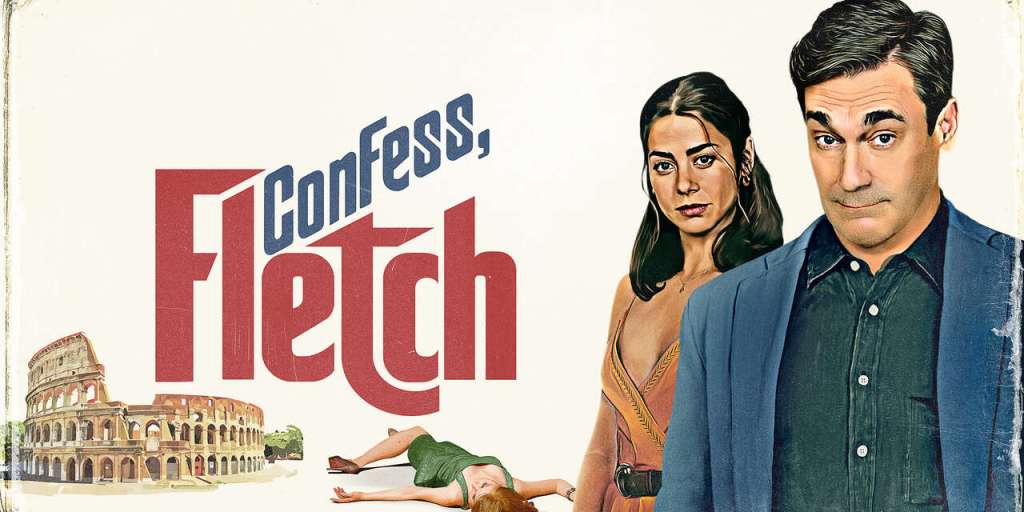
  • Confess, Fletch

    Confess, Fletch

    Irwin M. Fletcher has an answer for everything and is unflappable in the face of danger.

    When he comes back from a trip and finds a woman murdered in his rental he calls the police non-emergency line.

    “Send the homicide guys,” he says. “They love this stuff.”

    Fletch, as he prefers to be called, tells everyone that he used to be an investigative reporter of some renown. Chevy Chase made two movies playing the title character and everyone mostly seems to agree that they were Chevy Chase movies more than they were the Fletch of the Gregory Mcdonald books.

    Jon Hamm plays the title character in this outing and he’s smugly perfect as a guy working very hard and looking like he’s not doing much at all.

    Each little scene is a nice slice of comedy and mystery that winds its way to a satisfying, low-stakes, ending. There is also a solid running gag and a clever turn of phrase in nearly every scene.

    I think the only special effects in the thing involve actual fireworks. It’s not a movie that needs special effects

    It’s a fun cross between a hang-out movie and a character study. If only all the characters in your life were as fun, sexy, and witty as these folks.

    Extra credit should go to Marcia Gay Harden who got laughs from me every time she said the title character’s name in her outrageously fake Italian accent: “Flessh.”

    Clearly, it’s no secret of what’s on her mind.

    Hamm plays Fletch with the confidence that Idris Elba once showed when he guest starred on The Office. In a line, I still quote today (it’s not true for me but I still like to say it) Elba announced, “I’m aware of my effect on women.”

    The movie has several mysteries in the air at once and gives us two competent, annoyed police detectives, who try to follow Fletch around and work to solve the murder.

    As someone who spent decades watching cops and courts work I can confirm that most of what happens in this movie would not happen in real life. At one point, one of the characters is arrested and charged with murder and then released on bail. Please just know that if you are ever arrested and charged with murder you will not get bail. They will keep you in jail until the trial.

    But the movie couldn’t get to its ending if that little bit of reality was injected into the plot. And honestly, I was having so much fun by then that I didn’t mind.

    Mysteries have made a comeback, of sorts, in the cinema. We have Kenneth Branagh playing Hercule Poirot and Writer/Director Ryan Johnson’s Benoit Blanc flicks.

    I think the world could use a couple more of these snarky-yet-charming features. If any fictional character could con his way back onto the screen it’s Fletch.

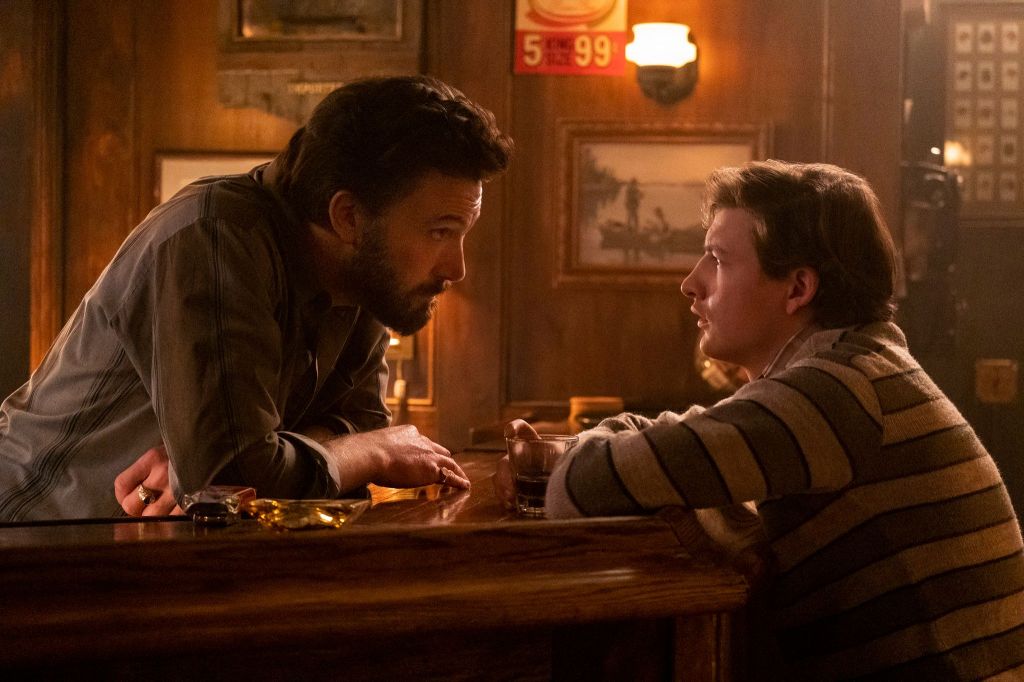
  • The Tender Bar

    The Tender Bar

    An easygoing movie based on a true story about a kid who needs a father and a kindly uncle who steps in to teach him how to be a man. 

    It’s not overly ambitious but it hits every pitch and understands what it’s like to grow up poor, with an absent alcoholic father. 

    I connected with it given that I too was a kid who wanted to grow up to be a writer who had an alcoholic father. 

    In my case, the father played the dual role of also being the parent who demanded I go to college and supported my dream of being a writer. 

    People are big and they contain multitudes. 

    But there is a scene late in the movie where the alcoholic father is being mildly abusive and I have seen that one play out in real life. 

    Given my own past, I strongly connected with this. It might not hit you as hard. 

    Ben Affleck is really good here. And everyone else is game. George Clooney directs it with confidence though it probably won’t win any awards for style. 

    Not too long, doesn’t ask too much of you, and nearly every scene works on its own terms. The movie equivalent of seeing your minor league team win a close one on a nice summer night.

  • Bullet Train

    Bullet Train

    Bullet Train is no The Taking of Pelham One Two Three (1974) but it is worlds better than The Taking of Pelham 123 (2009).

    Which is to say that it’s on the same level of Snowpiercer (2013) and way better than the Snowpiercer tv show.

    Ultimately, it’s a movie that wants to please you and never wants you to take too much of its movie violence or its super killers on a train action plot too seriously.

    Brad Pitt plays an assassin who describes himself as having monumental bad luck and talks like he just finished three or four self-help books. As an actor, it’s clear that he’s having a lot of fun bumming around and pretending to be Jackie Chan.

    Pitt delivering “That’s a shit deal,” made me cackle.

    Brian Tyree Henry once again owns every scene, this time as a hitman who is obsessed with Thomas the Train. Why? Cause it’s a story on a train and the Thomas mythos is flexible enough for the plot and the actors to give you a giggle. One killer calling another killer “a Diesel” as a way to describe the depths of their evil will either make you smile or it won’t.

    Everyone else gets to show up for a scene or two, play kill or be killed, and get off the train.

    Director David Leitch and screenwriter Zak Olkeqicz keep everything rolling along so that you won’t think about all the ways none of this makes sense. One of my favorite running bits is that the movie just switches tracks every few minutes or so to explain some bit of backstory that you are going to need to understand the next action sequence.

    It might be too much digression, and I can’t argue that it might have taken the joke exactly one water bottle too far. But there is a decent, over-the-top revenge story here too.

    Bullet Train is based on a novel by Kōtarō Isaka but when I saw it was based on a book I assumed it would be a Manga because Bullet Train has the colorful look and feel of a Japanese comic. Ignore the fact that most Manga is in black and white and go with me here.

    It looks good, though there is perhaps a bit too much neon because that’s how the movies color code modern Japan.

    One of my favorite little movie trivia things is that there are two Quentin Tarantino movie universes. There is the “real world” (Reservoir Dogs, Pulp Fiction) and there is the “movie world” (Kill Bill, Inglorious Basterds). The movie world is made up of films that Tarantino’s other characters would go watch on a Friday night at the cinema.

    And Bullet Train is a movie Tarantino’s characters would enjoy and then dissect over coffee and pie.

    Mr. Brown: Let me tell you what Bullet Train is about.

    Mr. White: Is that the one with Mathau?

    Mr. Brown: That’s Pelham 123.

    Mr. Blonde: Robert Shaw is perfect in that.

    Mr. White: Best bad guy outside of Lee Marvin.

    Mr. Brown: That’s not what we’re talking about.

    Mr. White: What were we talking about?

    Mr. Blonde: I was telling you about Bullet Train.

    Mr. White: The Brad Pitt thing?

    Mr. Blonde: Yeah.

    Mr. White: I seen it. I give it a B.

  • Elvis

    Elvis

    This movie has the wrong title. 

    This isn’t ELVIS but instead, Col. Tom Parker Presents: Elvis. 

    The flick opens with 10 minutes of what I can only describe as Director Baz Lurhmann doing a Luhrmann.

    Crazy moving cameras, twisty shots, breaking up the screen into multiple images to give you a sense of several things happening at the same time. If you are familiar with Lurhmann you know what this is like. 

    I think it worked in Moulin Rouge. 

    But I almost didn’t make it to the other side this in Elvis. The crazy camera moves nearly gave me motion sickness. 

    Thankfully the whole thing calms down and Lurhmann seems content to mostly tell you a straitforward story about Elvis Presley. 

    But here we have our second problem. This straightforward story is told from the perspective of Parker, Elvis’ manager who exploited him, stole from him and possibly caused his death by hooking him up with a quack doctor who gave him the pills that led to his death at 44. 

    Of all the characters to tell this story he’s not the one I want to hear from. And then Tom Hanks decided to do the whole thing in a weird accent that I presume is meant to be Dutch but is a cross between a fantasy Italian immigrant and Jar Jar Binks. 

    “He’s got ta doa the songa about Santi Claas,” is a line a co-worker keeps saying to me. 

    Anyway, in real life, Parker apparently spoke with a southern accent. All I can think is that Hanks still has scars from playing Foghorn Leghorn in one of the worst Coen Brothers movies and didn’t want to do that again. 

    Since this is a movie and not a documentary I don’t know why Hanks just didn’t do it in his normal voice. Maybe he thought no one would believe the villain was a villain if he sounded like normal Hanks? 

    Aside from villain voice, I have only a few other small complaints. Please join me while I list them in no particular order. 

    Luhrmann depicts the musical influences that created Elvis by having him literally running from a juke joint to a church revival as a child. And I know it’s movie symbolism but it just made me throw up my hands and yell, “nonsense” to the heavens. 

    Another moment is when Elvis has a creative meeting about leaving Hollywood and refocusing on his music career under the decaying Hollywood sign. 

    “See, he’s leaving Hollywood! Get it!” 

    Ugh. 

    Finally, I know Elvis wasn’t a songwriter but the movie skips all of those scenes where the young artist perfects their music, writes their songs, gets ready for the big fight, etc. 

    Instead of Ray Charles writing a tune or Johnny Cash baring his soul in the studio we get Elvis on stage being told the girls are losing it because he is shaking his hips. 

    That’s a big part of the story. I can’t deny it. His motion below the ocean was scandalous at the time and a white guy doing “black music” in the way Elvis did it scared every racist adult in the country.

    But, I dunno man, he was also one of the greatest singers and bandleaders of all time. Was there nothing there we could also showcase? 

    There’s one small moment where he and the band are preparing for the Vegas shows and it hits some familiar sounds and that gave me chills. 

    But the tragedy of this movie is that may be the only moment like that in a two-and-a-half-hour flick. Instead, there is a ton of focus on Tom Parker.

    Elvis affectionately calls him the Snowman because he is the master of The Snow Job. Which the movie explains is when a carnival barker makes a bunch of money and the audience leaves happy even if they were kinda, sorta, conned. 

    And yeah, Elvis had more than a few snow jobs in his career. The movie claims that Parker sold both “I love Elvis” and “I hate Elvis” buttons. And it shows a ton of Elvis merchandise that Parker apparently got going. 

    At times the movie and Elvis praise Parker for his deal-making skills. Elvis clearly never lacked for anything even if Parker was taking half of the proceeds most of the time. 

    And the movie shows that Elvis, for whatever reason, couldn’t break away from Parker and be adult enough to take control of his finances and his health. 

    Elvis fans like to blame Parker for some of the bad creative and life choices Elvis made.

    This movie suggests that Elvis would have spoken up against segregation and institutional racism if Parker had not been around. Elvis wanted to be James Dean but Parker put him in the silly sing-along flicks. 

    And it seems his greatest sin, according to Luhrmann, was keeping Elvis out of A Star is Born. I have to agree that might have been great. It also might have been a bomb with Elvis instead of Kris Kristofferson. Nobody knows anything. 

    One of the biggest conflicts is Elvis’ desire to go on an international tour. But Parker blocks it with a Vegas residency that lasts years. The movie tells us that Parker can’t get a passport and that’s why he shuts the tour down. 

    But all I could think was, “This is a grown man with a family who can’t tell his manager he’s going to do what he wants?” 

    It might be true but it isn’t where I wanted to spend my time. 

    Anyway, Austin Butler is amazing as The King. Despite all my gripes, the movie races along with a decent and fun bio-story and the songs are all classics. 

    This movie isn’t a snow job but it should have been a masterpiece. Sadly, this is a long residency in Vegas instead of an International Tour.

  • Nightmare Alley

    Nightmare Alley

    Consider the doomed man. The man who is fated for tragedy. The man who is the protagonist, though not a hero – never a hero – of the noir story. 

    Director Guillermo del Toro knows just such a man. Having found him in a book by William Lindsay Gresham. The great director also has a personal connection to this man, who becomes, eventually, a medium who preys upon the grief of the wealthy. 

    Del Toro apparently had an encounter with mediums when his father was kidnapped. The director kicked two of them out of his mother’s house. But he had a first-hand look at the pain those who prey on love and grief can create. 

    In a way, this movie is about a director taking vengeance on a certain type of person. It reminded me of how Fargo was created in part because the Coen Brothers didn’t like a used car salesmen. 

    Nightmare Alley also has a murderer’s row of great actors. Bradley Cooper is the lead. Cate Blanchett is the femme fatale. Willam Dafoe plays the wily ringmaster, and Richard Jenkins is a powerful madman. Rooney Mara is the ingenue and David Strathairn is the washed-up keeper of a deeper magic. 

    I really could spend a lot of this review talking about how great this cast is but for the record Strathairn really stands out and Mary Steenburgen moves mountains with just a few looks in a bit part. 

    It’s visually stunning but it’s visually stunning in a way that suggests what you are watching doesn’t take place in what you or I would recognize as objective reality. We are in the land of fable and myth and film noir. It’s a little too perfect and at times it’s like it crosses the uncanny valley for me. 

    Sometimes they attacked the Coen Brothers too because their films could recreate the exact look of the genre they were working in. 

    I can see how some might view that as a great musician playing someone else’s hits. But if the music moves you then where is the harm? 

    The look of Nightmare Alley is perfect so if it was a bit too perfect at times it’s still mostly perfect. 

    Another thought about the works of another great director as it relates to Nightmare Alley. Quentin Tarantino has two movie universes. One that takes place in ‘the real world’ and the other that takes place in movie fantasy land. For instance, Kill Bill is the movie that the characters in Pulp Fiction watch when they go the movies. 

    We aren’t meant, I think, to mistake any of this for the real world. And when you watch it in that way it works on its own terms and in its own way. 

    I do have a few bones I must chew on. A line late in the movie about sex as the main couple falls apart rings hollow. 

    There were few, if any surprises, a scene early in the movie tells you everything you need to know about how the movie will end. 

    On the one hand, that’s fantastic storytelling but on the other hand, maybe I didn’t need my hand held this much. 

    Cooper is great but the movie never bothers to answer why we should care about him or explain how a woman could ever believe she should marry him. I suppose that it helps that he’s one of the most handsome men in the world. 

    I did enjoy that every step along the way characters keep telling Stan that if he follows a dark path it will lead to a dark end. Perhaps I would have cared more if he had at least tried to avoid his fate at some point. Perhaps I would have felt some sympathy for him when he eventually reached the long, dark night. 

    But it plays out like fate and if Stan ever stopped to question his role in the destruction of his own life it’s not on screen. 

    It was something that bugged me when my head hit the pillow an hour or two after watching Nightmare Alley. I always find it a good sign when a movie is still running through the corners of my mind hours, days or weeks later. It could be a bad thing if it leaves you with questions that should have been answered that remain unknown. 

    But as I drifted off I felt like I got it. What bothered me was that Stanton Carlisle gets what he wants or what he says he wants out of life midway through the movie. He has a woman who loves him. He has a successful career that he has built. He has money, if not wealth, he’s clearly doing better than most of his contemporaries. 

    Why then does he risk his whole life doing something that multiple characters have warned him will lead to destruction? 

    It’s a question that has been on my mind a lot these days as I watch some people basically self-immolate for what seems to me to be no reason.

    Here’s the answer I think the movie gives. This story takes place after Stanton Carlisle committed a great crime. The crime is suggested early and then presented in its entirety near the end. 

    And so when I thought about what Stanton wanted I thought about this crime and it hit me. 

    What Stanton Carlisle wants most in the world is to be punished. 

    And in film noir one truth is absolute: Evil men must pay for their sins. 

    The final shot of the film is a close-up of Stanton Carlisle as the door closes on his life. A wave of powerful emotion rolls over him and Bradley Cooper is magnificent at making you live in this moment with him. And I can’t tell you what to see in his face. 

    But I can tell you what I saw the moment judgment was handed down.

    It looked like relief.