“We’re designed more for public than for private.”
This reminds me of professional wrestling. The thing about wrestling is that for decades people were satisfied to take it mostly at face value. Not so much that the audience believed it to be real but that they enjoyed it for the stage show production that it was.
A simple morality play, more or less, about a little guy (like you) who stands up and usually defeats a bully.
But in the 1990s real life and the internet intruded into the proceedings and the audiences and the performers started co-existing in a different way. With winks and nods from the performers fans were asked to believe that while other parts of the show were fake this storyline was real.
Stone Cold was fighting his real life boss (Vince McMahon really did own the WWE) and backstage politics really were holding some of the wrestlers at WCW back.
This played out in major storylines that purported to be real.
Of course, the thing about wrestling watching a wrestling show, a movie or reality TV is that it’s all a work. It’s all fake and even the stuff that has a kernel of truth is just grist for the mill.
It was a thought that never left me as I watched Postcards From The Edge. The movie is based on a novel written by Carrie Fisher, about her life as a movie star and a drug addict. The film centers on Fisher’s relationship with her famous mother, Debbie Reynolds.
Here’s a key line:
“You don’t want me to be a singer. You’re the singer. You’re the performer. I can’t possibly compete with you. What if somebody won?”
So the movie purports to show us life as a Hollywood actress with an overbearing movie star mom. Much of this, I didn’t really believe.
Some of it, surely, comes from real life events and conversations. The mom being accosted by fans while trying to visit the daughter in rehab has got to be a true story. Right?
However, drug addiction has never seemed so mild and alcoholism so controlled. OD’s don’t usually look that good when they arrive at the hospital.
Fisher’s love life is a disaster and her mother is crazy but at the end everyone comes to an understanding and there is a handsome doctor waiting in the wings.
It has this sheen of being too cute. Some scenes feel like they are required by the rules of screenwriting, the executive producer or the test audience.
Which, again, is nonsense. Because I have no idea what’s real and what isn’t. It’s just that some of it feels real and some of it doesn’t.
One little fact I enjoy is that Fisher’s book, apparently, hardly featured her famous mom at all.
And yet, Debbie Reynolds — movie star — would not be denied.
In 1996 and 1997, I was a senior in high school and working in a movie theater.
Life was good. I had no idea how good life can be when you are in high school or how hard life can get once you leave. You can’t tell any 17-year-old that stuff. They just have to find it out on their own. They have to live it.
I watched everything that came in and out of the Carmike Cinema in Panama City, Florida for those two years. Fargo, Mission: Impossible, L.A Confidential, and Twister, among many others. The theater did a friends and family only midnight showing of Independence Day with the sound turned up to ear-splitting levels. It was a helluva thing.
Again, you have no idea how good life can be sometimes.
Chasing Amy came out in 1997. Chasing Amy is a movie about young people trying to navigate adult sexual relationships while also dealing with their own inadequacies, fears, frustrations, and religious upbringing.
“I am not used to this sort of thing,” one character says about the sexual exploits of his girlfriend at one point. “I mean, I was raised Catholic, for God’s sake.”
It was a personal story that writer-director Kevin Smith had written about his own failed relationship. It is both incredibly frank about sex and also sweet and romantic in its own weird way. It’s one of the best movies of the 1990s and a personal favorite.
Kevin Smith speaking at a Dogma screening in Chicago.
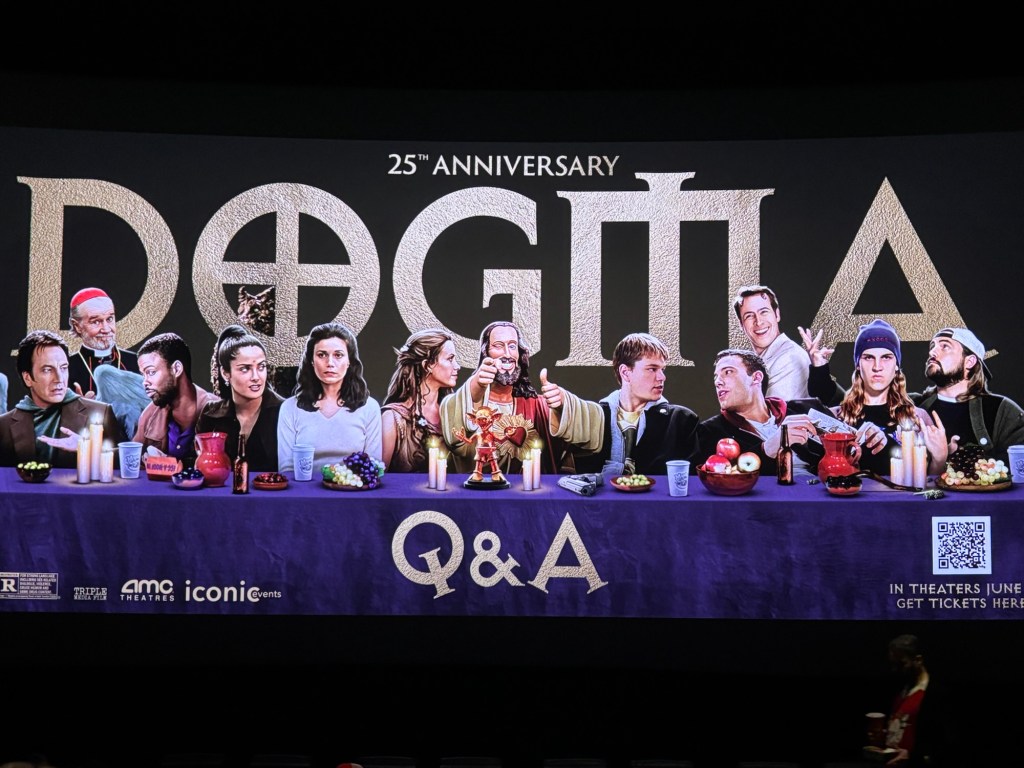
Smith followed Chasing Amy with Dogma. A movie about how the Catholic Church is going to accidentally wipe out all of existence, at least in part, because they want to appeal to young people with a new, hipper version of the faith.
In the opening scene, George Carlin, playing Cardinal Glick, explains that “Holy Mother Church” has decided to retire images of Christ hanging on the cross and replace them with a friendly version of the Savior. This one has a big smile and is giving the world a wink and a giant thumbs up.
“Christ didn’t come to earth to give us the willies. He was a booster.” Glick said. “I give you the buddy Christ. … Look at it, doesn’t it pop.”
I’m giggling a little bit, just now, thinking about that scene.
If Chasing Amy was everything Smith had to say about relationships, then Dogma featured his thoughts on religion and, in particular, the Catholic church of his alter boy youth. It was made by a guy who, at the time, still believed, and while it certainly takes the church to task, (and will go anywhere in pursuit of a laugh), it doesn’t waiver from the idea that there is a real God up there who loves his (her) children.
Despite its tough subject matter, a huge protest campaign from the Catholic League, and several legitimate death threats, Dogma was a hit.
Smith had been working with an unknown actor named Ben Affleck since Mallrats in 1995. He gave him the lead role of Chasing Amy in 1997.
Then, when another actor bowed out of a role, he was able to pair up Affleck with his lifelong pal Matt Damon as rogue angels trying to return to Heaven. Only a year after the duo broke through together on Good Will Hunting.
These were still early days for Matt and Ben, but you can see on screen why they were both going to be massive stars.
For reasons that Smith will recount to you in other places, Dogma has been unavailable anywhere since its initial run on home video. It never made it to the streaming services, and the rights to get it back out did not stay with Smith. However, recently, a company acquired it and asked Smith what he wanted to do with it.
So he’s taking it on the road to AMC theaters and doing a Q and A after the screenings.
If you haven’t seen him, Smith is as good on the mic as any comic. His director career is almost secondary to a podcast career and a series of personal appearances that are essentially Hollywood tell-all, stand-ups.
I saw him, and a lot of other interesting folks, at a sold-out screening in Chicago this weekend. It was a crowd full of both young people and those of us who were around for the initial run of Dogma.
During the Q and A I asked him a poorly worded question about Affleck and Damon and got a hilarious response about how Damon always talked about how he sucked in every scene no matter how transcendent the acting was. Meanwhile, Affleck was the only actor who would come to the run-through of dailies and would sit there making comments about how thoroughly awesome his work had been that day.
“Look at that guy. Pimp,” was Affleck’s assessment of himself according to Smith.
You might recoil at that, and Smith was just telling a funny little story, but also, it’s true. Affleck is correct when Affleck tells you he’s awesome.
He and Damon nail every scene, no matter how ridiculous, and while other parts of the movie might waiver, anytime the flick moves back to the angels, it delivers another miraculously funny bit.
It’s nearly 30 years later, but there is still a chance that I might randomly yell at someone, “You didn’t say God bless you when I sneezed!”
Hopefully someone who has seen Dogma, but maybe not. I’m quirky that way.
Dogma has a lot of other things going for it besides the Affleck and Damon partnership. Kevin Smith can craft a solid joke:
Cardinal Glick: Fill them pews, people, that’s the key. Grab the little ones as well. Hook ’em while they’re young.
Rufus: Kind of like the tobacco industry?
Cardinal Glick: Christ, if only we had their numbers.
Among his other talents, Smith can also pay off a setup. At the end of the film, Jay tries to call in a promise from one of the opening scenes, and it’s a huge laugh every time.
And getting George Carlin to play a Cardinal, Alan Rickman to play the voice of God and Chris Rock to be Rufus, the 13th Apostle (who was left out of the bible because he was black) is perfect casting.
Meanwhile, Linda Fiorentino has to thread a really tight needle of taking on all the sincere parts of a story. Bethany, still recovering from a divorce because she couldn’t have children, finds out that she is the last living connection to Jesus Christ, and must go on a holy mission to stop the end of existence. She is also required to be the straight woman to the Jay (Jason Mewes) and Silent Bob joke machine.
Sometimes you return to a movie and you realize how young you were when you saw it and it doesn’t hold up, Some comedies fail on the second or third viewing because the jokes just fall flat. You can only be surprised once
But it wasn’t that way for me with Dogma. It’s still really funny. It has some interesting things to say about religion. I disagree on some points and agree on others; your mileage and faith may vary. And beyond its dissertation about organized religion, I think Dogma has some real insights about human nature and about the God that Kevin Smith grew up believing in.
As a writer, Smith is up there with David Mamet, Aaron Sorkin, and Quentin Tarantino. He’s someone you can recognize just by listening to their dialogue. As a director, he’s usually worked on shoestring budgets, doing what he must to tell the story and not much more than that.
Dogma has several moments where Smith plays with a bigger canvas, including the havoc of a near armageddon. It also has a giant fight scene with a poop monster that happens off camera because there was no money to film it.
When it comes to his fans, Smith continues to work hard to make them happy. After the movie, he did a lengthy Q and A. He answered one question from nearly everyone in the sold-out theater and did selfies with cosplayers.
I want to tell you some of the amusing anecdotes, but I’m afraid I’ll drain the life out of them. The stories are funny when Kevin Smith tells them, but probably less so when I’m dryly regurgitating them.
But I’ll leave you with one.
Apparently, Buddy Christ has started to pop up in actual church campaigns from actual churches. Proving, I think, when you send something out in the world, you never know what will become of it.
When Jason Mewes saw it, he turned to Kevin and said, “We should sue.”
To which Kevin replied, “We don’t own Jesus, man.”
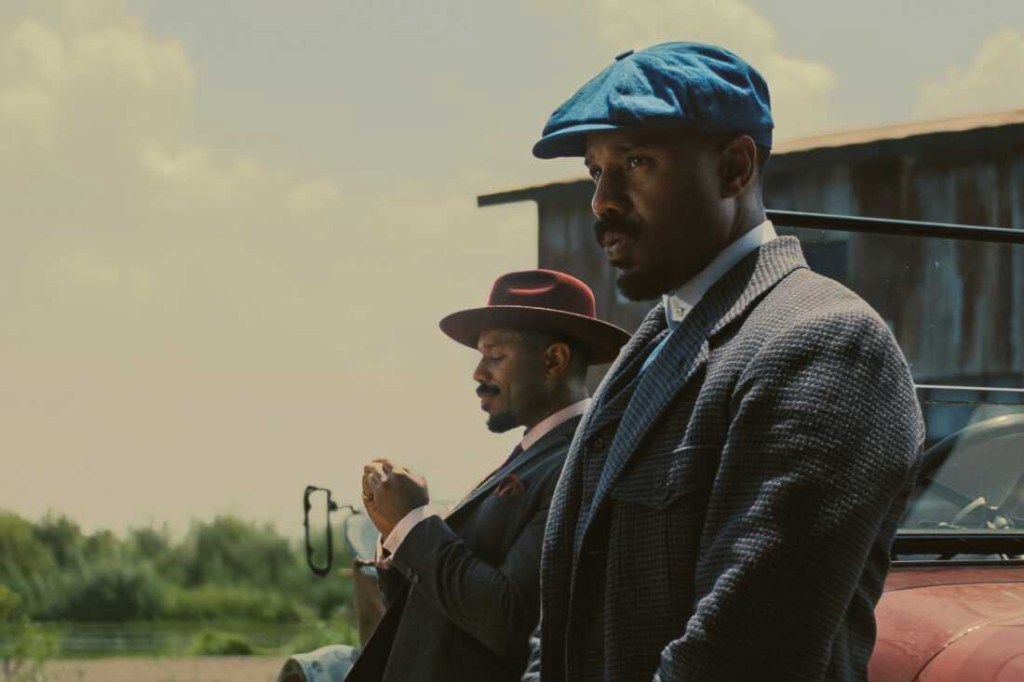
Sinners features a sequence that is either the most ridiculous thing I have ever seen a director do or the bravest.
A perfect encapsulation of what you can do in film if are willing to trust your gut and acknowledge that there are no rules in this thing. Great films have only creators following their particular muse towards glory or crushing failure.
As you can see, when it comes to it, I’m leaning toward the bravest thing I have ever seen.
Whatever else Sinners might be, horror, action or gangster picture, it is ultimately a vampire musical.
Like the works of The Coen Brothers or Quentin Tarantino — O Brother Where Art Thou and From Dusk Til Dawn are both touchstones for this extravaganza — filmmaker Ryan Coogler mostly just wants to entertain you.
That means the music is rollicking and the action is kinetic, horrible and beautiful. This is also pretty much everything you want in a vampire flick and it’s instantly among the greats including Dusk Til Dawn, Near Dark, various Draculas and The Lost Boys.
It is also, as is appropriate for a vampire flick, intensely romantic, sexual and haunting.
The movie is great but the marketing hurt it by letting us know about two characters who get turned into vampires.
And there is a bit of a build and set up before we get to the fireworks factory. But all that is worth it once we get to the killing and the singing and dancing.
I saw it in IMAX 70 millimeter. And I’m not telling you that for any reason other than to brag.
A woman is hovering over the body of her freshly dead husband staring up at his murderer.
“Damn you. Why’d you have to kill him?” She says.
“He owed me money,” the killer replies.
And I cackled, gloriously, for a good while after that.
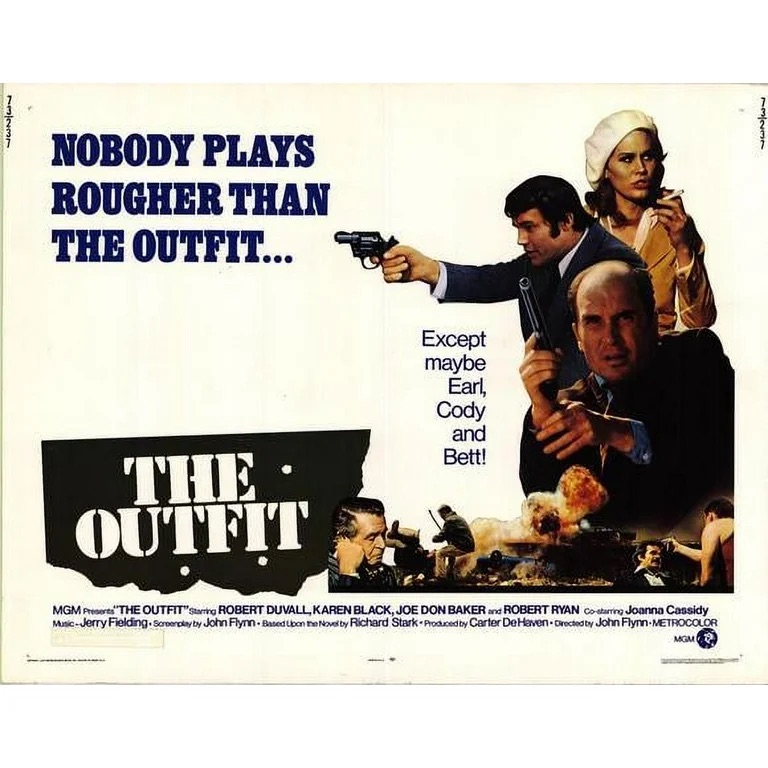
Here try another one. Delivered by Robert Duvall playing Donald Westlake’s cool professional Parker (he’s called Macklin here because Westlake wouldn’t let the movie guys use the Parker name.)
In this instance a man is claiming he doesn’t have the combination to the safe.
“Take off your shoes. Every time I tell you to open that safe and you say “no,” I’m going to shoot off one of your toes.”
If you’re not sold by now you don’t like crime movies. You got no heart kid.
Which is not to say that The Outfit is head and shoulders above the other 60s and 70s crime revenge thrillers. Cause it’s not. But it is, absolutely, on par with the best of the genre.
Now, I promise you, you have seen this movie before. Hollywood has made 10 or 20 versions of this particular Donald Westlake story. Parker is betrayed, gets out of prison (or the hospital) and tracks down the bastards who betrayed him killing a bunch of bad guys till he either kills the top guy or goes out in a blaze of glory or both.
In this particular version he’s called Macklin and the gangsters kill his brother Ed who was living a quiet life after the robbery went wrong.
Late in the movie Macklin’s wife begs him to stop this crazy killing spree and go live the quiet life.
“We can escape.” She says
“Ed tried that.”
A man’s gotta do what a man’s gotta do baby.
The Outfit has one thing that most of those other movies lack, the great Joe Don Baker as Macklin’s pal Cody. And Robert Duvall is very good though it’s strange seeing someone so unconventional looking playing this particular role. In this time in his life you would have expected Duvall to be one of the random gangsters or a friendly lawyer.
He does not, under any circumstances, look like an action hero. The 1970s were a weird time though and Duvall is a great actor regardless of the role.
This is what I love about chasing down old movies. Sometimes you open Al Copone’s vault and there’s nothing there and sometimes you find a bag full of stolen money, a getaway car and a couple of tough guys having too much fun on a big screen.
Always fun to go through a directors filmography and find the eccentric flick in the bunch.
It’s kind of like discovering the crazy uncle in your family that no one talks about.
IMDB claims that star Ellen Burstyn got the power to make anything she wanted after she starred in The Exorcist and she picked a script about a woman who’s life is upended after her husband dies and hits the road with her adolescent son.
When she went looking for a director she reached out to Francis Ford Coppola who sent her to Marty. And this scene of the alleged meeting between the two of them is as good as anything in the movie:
“While impressed with Scorsese’s talent after viewing Mean Streets (1973), Burstyn still hesitated to hire the director, fearing he could only direct men. When she asked Scorsese what he knew about women, Scorsese replied, “Nothing, but I’d like to learn.” Satisfied with his enthusiasm, Burstyn immediately hired Scorsese.”
Marty is not just the best director in the best generation of filmmakers but he is, and always has been, a hell of a salesman.
How’s the movie? Great in spots, dull in others. Not funny enough to be a comedy and not dramatic enough to stick with you after the credits roll.
Burstyn won an Oscar for this and she deserved it.
I liked the ending and I like Kristofferson as the hunk with a heart of gold. But this is very early Kristofferson and proto-Scorsese.
Ask him about it and Scorsese will tell you it was a nice little picture and he got to have his first real movie set built for $85,000.
There’s a Harvey Keitel scene where he holds someone at knifepoint and is so violent and scary that you fear he might come off the screen and slash you.
Exactly the wrong thing for this mostly sweet movie but Marty is gonna be Marty man.
Burstyn apparently wanted a gritty, realistic portrait of a woman struggling in America. But this material is Hallmark up and down the line. Scorsese does what he can with it but this is a movie where the final boyfriend is a cowboy who owns a small ranch. It was never gonna be Jeanne Dielman.
Ultimately, it was exactly the kind of film I expected and is just not the type of thing I seek out very often. When I’m in the mood for something like this I would probably watch Sweet Magnolias again.
Anyway, someday I’ll finish off the Scorsese filmography. New York, New York is out there … waiting.
When I was in college I got into a fight with a fellow student about The Spanish Prisoner. She hated it and I, being me, adored it.
“It’s so dull,” she shrieked.
And, honestly, I’ve seen David Mamet’s little crime movie three or four times now and she wasn’t wrong. I think it pays off if you pay careful attention and see how several little throwaway things turn into important moments later in the film. Once you see the full picture you understand why the pieces were placed down in each exact location.
I think the word I would use is not dull but bloodless. For whatever reason, on a scale of one to ten everyone is emotionally at a five. Or less. And the main character, Joe Ross (Campbell Scott) an engineer who has invented “the process” stays there even when he comes across a murdered friend or finds himself running for his life.
On the one hand, you might say, “Your whole life is on the line pal, show some emotion!”
But there are those who don’t let things slip in public, no matter what is happening around us. Engineers are not generally thought of as founts of emotion.\
Also, a lot of the people in this movie are pretending to be something while in actuality they are professional criminals.
Professionals don’t show you their cards or let emotions get in the way of the job. Am I overly defensive of the lack of emotion in a 30 year-old movie that no one but me ever liked?
Maybe. Shut up.
Initially, I thought, given its bloodless ways, that perhaps this was early in Mamet’s career as a director. But no, this was movie number five. Next, he will adapt Terence Rattigan’s The Winslow Boy which is full of emotion but alas all the characters in it are British so the emotion is buried deep under waistcoats and manners.
What you are seeing in The Spanish Prisoner is exactly what Mamet wants you to see exactly as he intended. I do imagine there were some tough budget constraints especially given how a knifing and a shooting are handled late in the picture. Both strike me as events that are shown this way because there wasn’t money enough to do it differently.
Ultimately, I think, Mamet is most interested in presenting the con. Here’s the game. Now you try to figure out who is in on it and why. Elaborate con games were almost always at the center of Mamet’s movies. Too elaborate some of you might say. At one point you have to wonder how many people are involved in this given the comings and goings of various people in various scenes.
Someone on IMDB described this as a heist movie since it is decidedly not the actual Spanish Prisoner con.
They are wrong.
If I break into your office and steal your things then I have committed a heist. If I fool you into giving me your valuables then I have conned you. And that is what happens here.
The Spanish Prisoner is now more commonly known as The Nigerian Prince scam. That scam is this: I need some money to get my money (or myself) out of a hostile foreign country, if you will send me some cash you will be greatly rewarded when I am free.
In the movie the scam is not that Steve Martin’s Jimmy Dell is a conman it’s that nearly everyone around Ross is in on the con and they all, working together, convince him to do something stupid.
Your immediate reaction might be, “I would never do that.”
The terse review I read from a friend was, “Campbell Scott’s character might be one of the dumbest protagonists I’ve ever seen in a movie.”
I think my friend is unfair. First, you know you are watching a movie about a con because you read the description of the movie. But Joe Ross doesn’t know that. He’s not on the lookout for hijinks. If a shady character told you (or Joe) to do something dumb you would probably say no. But if someone you believed to be an FBI agent told you to do it, I suspect you would obey orders without requesting a second opinion.
Ok. In no particular order here are some of the things I love about The Spanish Prisoner.
During one scene a group of business people are told how much money their company will make if they institute the process. The number is written on a chalkboard so that the men can see the number and show us that they are impressed by the figure.
The audience, however, never sees how much money is involved. A million? 10 million? A billion? You get the information you need to know and not a tiny bit more. Also, no matter how inflation affects the viewer 30 years later, that imaginary number is always impressive.
I had a hearty laugh at that.
Mamet dialogue delivered by Steve Martin.
“Good people, bad people, they generally look like what they are.”
Martin never quite makes his villain work and he never played a villain again (at least as far as I can tell), but it’s fun to see Martin do something different. He should have played a few more criminals in the latter half of his movie career instead of starring in Bowfinger or The Pink Panther.
Ricky Jay. Anytime Ricky Jay shows up I’m having a good time. Consider this line as given in Ricky’s world-weary, “I have no more copulations with which to give,” tone.
“We must never forget that we are human, and as humans we dream, and when we dream, we dream of money.”
That’s not quite as good as my favorite Mamet line of all time, “Everybody needs money that’s why they call it money!”
But it is razor close.
I like when two characters are done pretending and one of them gleefully tells the other to kill Joe. It can be exhausting pretending to like the mark of an elaborate scam.
How wonderful when the masks can finally come off.
Finally, there is, in fact, two other heists in this flick. Mamet steals from Shakespeare, “I put a thief in my mouth to steal my brain.”
And from Henry David Thoreau, “Beware of all enterprises which require new clothes.”
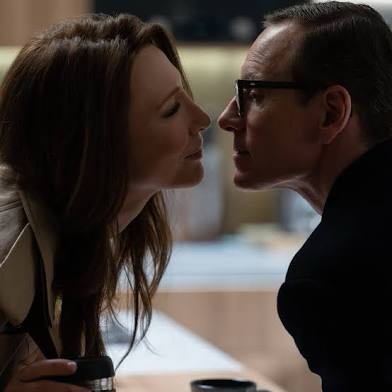
The thing rolling around in my head since seeing Black Bag is how hard it must be to make something that feels as effortlessly cool as this.
Steven Soderbergh is maybe not the best director currently working.
That’s probably Christopher Nolan or Ryan Coogler or David Fincher or Spike Lee or Steven Spielberg or Martin Scorsese or Greta Gerwig or Kathryn Bigelow or … or fill in your favorite.
But Soderbergh is the director who makes the absolute coolest movies around.
Sort of like how Elvis Costello was the coolest rock star of his generation. Other people had bigger hits or connected better but that guy was cool.
No I can’t define it or explain it or defend it. It just is.
Soderbergh’s credits are full of ups and downs and things I sometimes ignored. I really should watch The Knick someday.
But check out Kimi and Logan Lucky for recent examples of this. And then go back to Ocean’s Eleven. They shouldn’t have ever made a sequel but the first one is incredible.
Check out The Limey and Traffic and for my money the coolest crime movie ever made, Out of Sight.
Soderbergh remains one of the few directors to properly translate an Elmore Leonard novel for the big screen.
With Black Bag Soderbergh and Writer David Koepp hit the target in every scene.
For the record, do not go in expecting spy thriller action. This is much closer to John le Carre than James Bond. Or, actually, it’s Agatha Christie but with spies.
Tight, stylish and thrilling and capped by two exceptional scenes of intimate dinners where where the guests reveal too much.
Smooth with a lot of talk but in each conversation everyone is working an angle and trying to see where to slip in the knife.
I loved nearly every second of it and I love that it will pay off again with a repeat viewing.
That’s because when we get to the end all the secrets are revealed there are one or two moments where I’m going to have to reconsider Michael Fassbender’s performance. What did he know and when did he know it?
There is a moment three quarters of the way in where he seems devastated. Was he? Or was that an act?
The rest of the cast simmers and shines with Cate Blanchett settling in somewhere between amused and dangerous for most of the flick.
The main group of spies Rege-Jean Page, Naomi Harris, Tom Burke and Marisa Abela each bring a particular bit of strength to the film.
Abela already proved her skills on HBO’s Industry and you can see why she got pulled in here. She’s playing a different flavor of that kind of character. I hope she’s not upset at being typecast cause I would watch her do this particular thing again and again.
Also, and I really can’t stress this enough it’s a tight 93 minutes.
Get in, shoot your shot, and get out.
And if anyone causes a problem they might just end up in the trunk of a car.
There is a brief discussion early in this flick about Hellboy’s striking appearance and whether or not he looks like the devil.
One character is certain he knows the truth.
“I met that son of a bitch. He don’t look nothing like you.”
Ahh if only the rest of the movie had been that good. Fans of Hellboy comics know that it is a genius work that melds horror and superheroes and folklore from all over the world.
Creator Mike Mignola has never been satisfied with the filmed versions of his singular creations. The original Hellboy movie from 2003 was excellent and it was one of those movies (5 years before Iron Man) that proved that comic book movies that were faithful to the source material could really work.
It looked right and Ron Perlman was the perfect person to play him.
We got a second Hellboy movie a few years later with diminishing returns (still pretty great though) and the studio wouldn’t fund a third to cap it off with a proper trilogy.
Mignola tried a reboot in 2019, starring David Harbor and contradicting at least one big thing that happened in the first movie.
It failed.
And now this. A smaller bite at the apple, that faithfully recreates a three issue comic The Crooked Man written by Mignola and drawn by the late Richard Corbin.
This movie is so faithful to the comic it even sticks in a one page gag about the creation of withballs that was done using a character similar to The Crone from EC Comics.
Sadly, the path from page to screen is fraught with problems and devils on all sides.
Most of this just doesn’t work. The soundtrack is meant to be scary, I suppose, but it’s just generic and annoying.
Jack Kesy does what he can but he’s just not the right guy for this character.
And even at one hour and forty minutes this is way too long. I have long said that the perfect Hellboy movie would be a series of vignettes. You could take Mignola’s 20 page stories (sometimes much shorter sometimes a little longer) and just string the best of them together into an excellent film.
Of course, I realized today that what I’m actually describing is television.
Maybe someday, someone will look at the brilliant comic and come up with the budget and actors who can turn it into the X–Filesesque show it could be for a new generation.
Bela Lugosi is about to wrestle with a giant, stolen, cloth octopus in freezing water.
His friend and director Ed Wood forgot the motor that makes the creature’s limbs work. So, Lugosi will, in a moment, through his old body on the ground and flap around to make it seem like he’s fighting for his life.
But first, he needs to rant.
“After I did Dracula, the studio offered me Frankenstein! But I turned it down, the part wasn’t sexy enough. It was too degrading for a big star like me,” Bela moans.
Knowing that this could go on for some time, and will probably include a section on how Boris Karloff was a no talent hack, Wood gently chides his star.
“Bela, I’ve got twenty-five scenes to shoot tonight,” Wood says.
“Don’t let me slow you down,” Lugosi replies.
It is a perfect scene in a perfect movie about people who don’t give up even when they get dashed on the rocks of life. People who don’t give up, even when maybe they should.
Tim Burton’s film, Ed Wood, is ostensibly about the infamous writer, director, and producer of notoriously bad movies, but while Wood drives the action, Burton clearly wants us to sit with aging, drug addicted, and lonely Bela Lugosi.
Lugosi, having been a movie titan, is washed up, broke and in the final stages of his life. Wood is a fan and a wannabe director who believes that Lugosi can give him a shot at Hollywood success. Their friendship gives Lugosi a chance to act and to dream again.
And Lugosi props up a guy who, very famously, does not have what it takes.
“At Universal, they shot two scenes a day. Eddie can knock off twenty or thirty! He’s incredible,” Lugosi says.
Ed Wood was the last of the Tim Burton movies that I wished to see but still had not seen. If it’s not his best (my father wasn’t an actor but my father was very much the guy from Big Fish, so I’m particularly partial to that one) it’s near the top of the list.
Ed Wood is amusing, though, rarely laugh out loud funny. Except, when I went back and read the script I started laughing out loud at the dialogue.
Late in the movie Bela’s stand-in is doing an impression of him and it is the standard, “I vant to suck your blood.”
Bill Murray, playing one of Bela and Ed’s close friends, Bunny Breckinridge, has a better suggestion.
“Let’s hear you call Boris Karloff a cocksucker.”
Ok, I howled at that one in the movie and I am howling now thinking about it. It’s interesting to me that the script is funnier than the movie, but I think there’s some genius of Burton and his actors in there. These aren’t caricatures, they are real people who lived and loved and died trying. They are funny people, but you want to laugh with them (not at them) even when they probably deserve to be laughed at.
So in the hands of Martin Landau, Bela Lugosi is frail and sad and funny. He may be a joke to most of the world but to his friend Eddie he’s still a giant of the silver screen.
The acting from everyone is great all the way down the line except for Johnny Depp as Ed Wood.
Depp plays him like an alien who is trying his best to pretend to be a human. I don’t know if that is in any way how the real Ed Wood behaved in real life. But in this great flick about bad movies it’s note perfect.
One more scene that moved me was Wood meeting his director hero Orson Welles.
Seeing them together I was reminded that Welles had one of the greatest screenwriters, Herman J. Mankiewicz, and one of the greatest cinematographers, Gregg Toland, of his time by his side when he made Citizen Kane. His editor was Robert Wise, who would go on to direct 20 or 30 classics of his own including West Side Story and The Sound of Music.
I certainly don’t mean to demean Welles but it does make me wonder what Eddie could have done with a little support. My immediate thought is, “probably not much.” But I hate to be cynical about people who were out there giving it their all.
In their chance encounter, Wood finds he has a lot in common with the great auteur. Both of them are dealing with producers who want to change their movies, force them to hire people who are wrong for the parts, and generally get in the way.
Sure, Ed is making schlock in 5 shooting days for almost no money and Welles is spending millions on studio pictures but it doesn’t matter. They’re both filmmakers.
I am tempted to describe the plot of American Buffalo for you but I fear that the description won’t do it justice and will ruin your experience if you ever give this a try.
A lot of the fun, in a work like this, is coming to terms with the plot through what is revealed in the dialogue.
So rather than walk that road let us try another path. This is a David Mamet play turned into a movie about three guys discussing a burglary.
At this point you either know who David Mamet is and you are in or you know who he is and you are all the way out.
But suppose you don’t know Mamet.
I can say some things. Yes there are things that can be said.
He is a playwright and director who won a Pulitzer Prize for Glengarry Glenn Ross. That play, later turned into a firecracker of a movie, was about real estate dealers trying to con and or seduce their customers and each other. It is colloquially known as Death of a Fucking Salesman and it is one of the greatest plays ever written.
Mamet’s character speak in particular ways. Ways that could shock you. Yes, they could be shocking. Ways that are cryptic and almost always highly entertaining.
A lot of folks can make a movie with billions in special effects or millions in interesting shots and movie violence. I love those too. But only a handful of great writers can take a couple of great actors and turn an hour and a half of discussions and dissertations into an entertaining work of art.
Ok, let me say this. I will say just this much and no more about the plot.
American Buffalo is about Don, small time businessman/low level criminal, who is worried he was taken for a fool by one of his customers.
He enlists his gopher Bobby to help him plan a robbery and his friend Teach to carry it out.
Don and Teach spend their day in what might be best described as a verbal boxing match and then as the robbery grows closer the tension and suspicion grow beyond reason and it all leads to a … well that would be telling wouldn’t it.
Anyway, if you are a particular kind of movie viewer who can live within the confines of what amounts to a stage play filmed with movie cameras then this is for you.
If you need more than that visually, or action set pieces, then it’s ok, I give you permission to move along.
Finally, I should note that there are three amazing actors (and only three) in this thing. Dustin Hoffman, Dennis Franz, and Sean Nelson. The quality of the work is not in question.
I am, sad, just a bit knowing that Al Pacino played Teach for years on Broadway but didn’t have time in his schedule for it when the producers got ready to make the film.
Now, should they have waited for Pacino? I know my answer.
But as a Mamet character might say, “friendship, loyalty, these are nice things. Yes. But we are men of business. We do not wait.”





 Dark Highways