Category: Uncategorized

  • Batman: The Caped Crusader

    Batman: The Caped Crusader

    There is the one true Batman and then there is everything else.

    The one true Batman? He’s the Bruce Wayne you grew up with, the one from the comics that you read at just the right time, or the TV show you watched when you were a kid. 

    For me that puts him squarely in the 1990s with Michael Keaton on the big screen and Kevin Conroy in Batman: The Animated Series. This is the perfect Batman, and anybody who says differently is wrong. 

    However, plenty of people connected with Christopher Nolan’s battrilogy, and some people really liked Affleck in Zack Snyder’s update. The Snyder kids aren’t that vocal about it, you would have to ask them cause they are so shy. 

    I have a friend who is old enough that he had no idea that Adam West’s Batman was meant to be a joke. It wasn’t a joke in his childhood chum. 

    I loved Batman: The Brave and The Bold because I’m always down for a fun take. But it’s funny that I’m starting to see love for the show out in the wilds of the Internet. And I looked back and sure enough it’s about 10 years old which means that the 7-10-year-olds who found it and embraced it are making memes of it as they navigate their last years of high school and first years of college. 

    Ultimately, when I encounter something like The Caped Crusader I think of it as an Elseworld title. That’s DC’s brand for stories outside the regular comics world. 

    Batman becomes a vampire! Superman’s capsule lands in Russia! Wonder Woman fights for humanity long after all the other heroes have died!

    The fun of those things most of the time is to see a slightly different take not only on the hero but on the supporting cast. I’m pretty sure in one of these things they made Jim Gordan, Jack The Ripper. But maybe I dreamed that up?

    All the side characters get reimagined or injected into the narrative in cute little ways. But it gets lazy too. You hear a character’s name and you have an immediate reaction to that character not because of any writing or voice acting or directing but because you have a years or decades-long connection with that character from past stories. 

    I was amused when Jim Corrigan showed up in The Caped Crusader but as the first season of the show ends Corrigan and several other characters are just hanging around — unfired guns hanging on Chekov’s wall. 

    Given that Bruce Timm was involved I  thought, or maybe just hoped, that it would be a continuation of The Animated Series. It is very much not that and that’s probably the right call. 

    There is a 15-year span of stories from the first episode of Batman The Animated Series until the last episode in that world in Justice League Unlimited. Every permutation was examined and adventures were had and we all probably shouldn’t go home again. 

    So what is this? It has a lot of strong elements from the Batman incarnation as he originally appeared in the 1930s. The suit and design work feels very much like the Golden Age of comics. It also uses a trope from the animated series where the technology everyone uses seems dated, especially phones. 

    It’s also a bit mean, or perhaps deadly. Characters get killed here in ways I don’t remember happening in other Battoons. I think death did happen in the animated series too but it didn’t seem like such a possibility for all the characters like it does here. 

    The show has a main story and an ongoing arc that culminates in the finale. Ultimately, it feels a little stingy with the rollout of Batvillians. We get new takes on Harley Quinn, the Penguin, a classic (I assume) take on Clayface, and a throwaway called Firebug. 

    Gangster Rupert Thorne is around and the Gotham PD are presented as corrupt as they were in Frank Miller and David Mazzucchelli’s Batman Year One.  

    There is a tease at the end for you know who but it’s next season’s problem. The show spends most of its energy telling another origin of Two-Face. But this origin is so similar to every other origin of the character I frankly don’t understand why the creators put all their chips in on that bet.    

    The tragedy of Two-Face, or the modern take on the character, is that he is close with Bruce Wayne and Jim Gordan, and Batman. As a district attorney, he joins the secret fight against crime and corruption in the early days of the Batman, Gordan partnership. 

    And then he becomes the victim of a crime and then the good guys lose him to madness. It’s a heck of a strong Batman story (the best version is in Batman: The Long Halloween by Tim Sale and Jeph Loeb) but it doesn’t quite work here.

    This Harvey Dent is a little too slimy and this Batman is a little too aloof to pull off the pathos. 

    You could argue, I suppose, that the shock is in how the series resolves the Two-Face story but it was a long way to go without much of a reward. 

    What I found funny — about my own reaction to this material — is that the change that upset me the most was the presentation of Harvey Bullock. You wouldn’t think it would bother me as Bullock was presented as a straight-up bad guy/corrupt cop in Burton’s first Batman movie. 

    But in the animated series, he’s not corrupt, or maybe not as corrupt as the other cops. And while he has no love for “the freak” (those are his words and not mine) he’s still a good cop and one of Gordon’s trusted partners. 

    And here? Well, he’s just one of the bad guys. I wonder if it’s because he and I share a body type that I was left so disturbed by this.

    Ahh, but it’s just an Elseworlds you know. They’ll do something else with old Lt. Bullock next time. 

    And this version of The Bat is an unusual take with decent little bat stories. I killed it in a weekend and despite all my yammering and complaining I had a good time. 

    What more could you want? 

    In 5 or 10 years everyone will get together and do something else. I surely would enjoy an ongoing Gotham by Gaslight Batman in the 1800s. Think of how cool the Court of Owls would be in that time period? Or maybe a Batman Beyond Beyond. Terry McGiniss’s kids are probably out there somewhere ready to fight the good fight.  

  • The Pope’s Exorcist

    The Pope’s Exorcist

    The secret to genre fiction is delivering unique characters.

    The Pope’s Exorcist has three credited writers and some flashy direction from Julius Avery.  

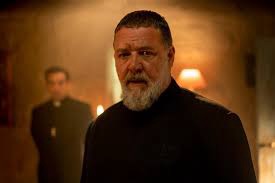
    It’s not scary but the key here is how much fun we all have hanging out with Russell Crowe’s Father Gabriel Amorth. 

    Do I want to watch a random mystery movie? Eh maybe. Do I want to watch Daniel Craig as Benoit Blanc solve another mystery? You bet!

    The movie immediately gives you a quick pop exorcism, then shows Father Amorth railing for eternal justice against a group of no nothing Catholic bureaucrats and finally sends him on his big mission. 

    If this doesn’t exactly sound like horror to you (the bureaucrat scene is a direct descendent of 50 years of cop movies) that is very much by design. 

    The special effects and humor are post Marvel, the light comedy has some zing, and the director says he was going for Indiana Jones. 

    I gotta comment on the Marvel thing for a second. If the folks at Marvel decided they wanted to make exorcism movies this is really, really close to what they would make.

    Down to the end of the movie setting up a franchise. It was so Marvel I waited a few minutes through the end credits on the off chance there would be a special scene.

    Avery’s other big influence feels like a comic book artist and writer Mike Mignola, the creator of Hellboy.

    The way it looks, the symbolism in the architecture and the feel of it as a little scary but it’s ok cause there is a superhuman good guy or in this case an almost superhuman priest fighting the forces of darkness.

    There are two sets where corpses are still sitting in their locations (including a Mignolaesque throne) waiting for our adventurers to find them. 

    A scene like that is Indy, Mignola and a host of other fun movies and comics from the past. 

    As I said earlier Crowe is a delight as a priest who claims the devil hates jokes and struggles with his arrogance and past mistakes.

    He’s found a unique take on the normally dour priest character. You would want to have an espresso with him someday and hear his stories.

    The acting from everyone else serviceable. They put that kid through the makeup ringer though.

    And Franco Nero get a bunch of fun scenes as the pope. There’s actually too much pope in this, way beyond anything that makes sense but I bet everyone wanted to get their money’s worth from Nero. I think he delivers. 

    This movie was part two of a Russell Crowe double feature for me. Part one was Land of Bad. And Crowe is suddenly having a career renaissance. Yeah he’s kind of Nic Cage slumming it but he’s also delivering quality work on roles where he could just phone the thing in. 

    It’s not his fault they didn’t make five Master and Commander movies or a Nice Guy’s sequel. 

    Hey, there’s still time. 

    But in the meantime watching him carry a slight horror flick with not much more than easy charm and a Vespa is a good time.

  • Trap

    Trap

    Two and a half decades after he broke out M. Night Shyamalan delivers exactly the kind of movie I wanted from him at this stage of the game.

    Is it a return to form? I’m not sure he ever wasn’t in fighting shape but a tense little flick filled with jokes and subtle winks at the camera just hit the spot.

    As one IMDB contributor pointed out, the serial killer in Trap is being hunted by by an FBI profiler played by the star of the original Parent Trap, Hayley Mills.

    That’s a fourth level dad joke.

    I don’t think I can tell you how much I liked this without going through my experience with the Shyamalan filmography so forgive me but let’s take a look.

    In 1999, I was in college and I leaned over to my friend, who had already seen it, and dragged me to it and started to whisper, “he’s a ghost.”

    She cut me off. As if, ‘no you did not figure it out, and if you did you need to shut up about it.’

    She didn’t believe me when I told her later that I had, in fact, spotted the signs and seen where this was going.

    It didn’t ruin anything about the movie. The Sixth Sense introduced us to this unique writer/director and we all couldn’t wait for the next one.

    Unbreakable has rightfully grown in movie critic esteem but at the time I can recall people being disappointed with the twist. As a giant comic book fan I was of course overjoyed with it. It’s hard to explain to a society that has grown up with the MCU completely dominating cinema and movie culture but in the bad old days this is as close as we could get in any year to a good super hero movie.

    I think Signs is his best film and I will accept none of your complaints about alien vulnerabilities.

    Complaining about that is the critical equivalent of, “WhY DiDnt the EAglEs FLy tHEm to MOrdOr.”

    Get thee behind me Satan.

    I pretty much tapped out after The Village. It doesn’t deserve its reputation as a bad Shyamalan movie but it is a middling affair.

    You get older. You think you have seen everything a director has and there just isn’t the time there used to be.

    Also, you live by the Twilight Zonesque twist and you will die by the twist. Especially when the audience spends all their time looking for it instead of just sitting back and enjoying the story.

    But I came back for Split cause I really wanted a sequel to Unbreakable. Split is pretty good on its own but Glass turned my two decade long hope for a sequel into a monkey’s paw sort of wish.

    Old is exactly the kind of movie I don’t want to watch and so I never have.

    I think I might like Knock at the Cabin but it’s one of those that’s on the list that I just never actually watch. Going to try it soon though, maybe after I’m done writing this review.

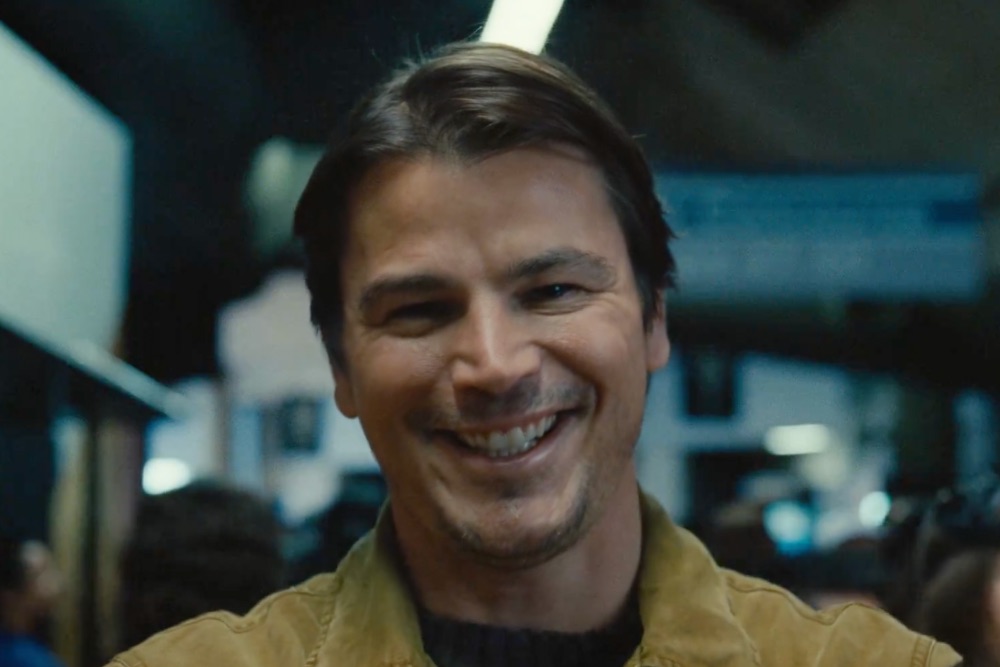
    What I’m trying to say — long winded as always — is that for me Trap doesn’t just exist as a fun little Josh Hartnett thriller.

    As someone once said we exist in the context of all that came before us. Because I have this decades long connection with Shyamalan’s movies this one jumped out at me.

    You see the trailer and you go, “I think he’s gonna do the very particular thing I want him to do.”

    It doesn’t reach the heights of his original films but what athlete is as great as they were in their 20s when they hit 40s or their 50s? Also, once you have seen a director’s tricks and affectations it’s nearly impossible for them to really surprise you.

    But, I had way more fun with this than I really hoped for. It’s clear that Shyamalan handed Hartnett the ball and he carried it with fun and professionalism.

    It’s not Olivier but Hartnett finds a nice groove where he can be both the loving, cringe-inducing dad and the evil serial killer. In the movie he switches between them with a look.

    It’s not quite the Clark Kent into Superman transition that Christopher Reeve once pulled off but it’s close. And it’s impressive.

    Shyamalan’s camerawork remains top notch. Yes, it’s formal and mannered and maybe heavy handed (no one will ever accuse Shyamalan of having a documentary style) but those little camera placements and moves are both part of deal you make when you watch his flicks and a big part of the vibe.

    There’s a shot where the camera looks down on two characters in between a stack of boxes in a storage closet. Why is it there? I suspect just because Shyamalan thought it would look cool.

    The same thing with a reflection in a tea kettle.

    Movies are just cool sometimes.

    Some corners of the internet have come for Shyamalan’s dialogue. And as a huge story and dialogue guy I can’t argue with them.

    But for the most part I don’t mind it. It’s stilted, I suppose, but what it really is is serviceable. Everything that happens here is in service to the plot.

    Consider this, while he is in the concert, Hartnett steals a police radio and manages to listen in on the FBI and the cops. And, of course, every single time he turns it on he learns an important piece of information.

    In the real world there would minutes or hours of our killer hearing the donut orders and idle chatter.

    Does the real world work that way? Nope.

    No one in the movies ever wastes time telling a driver their address or actually sharing their phone numbers or other details someone might need for a future meeting.

    It’s just, let’s get coffee sometime and the boom next scene coffee.

    Movies and, in particular, lean thrillers like this have to work that way to keep the story rolling and the audience engaged.

    By the end of this thing every motivation, escape and moment is discussed and explained.

    Realistic? Not at all. Fun in the moment or necessary so the audience will stay with the movie? Absolutely.

    Shyamalan cast his daughter as the pop star that is the center of the giant concert where most of the movie takes place. Did this bit of nepotism bug me? Nah.

    Good for him, good for them, if you succeed in life you ought to do things like that for your family.

    I mean, I hated the music, but there was literally no pop star who could have done this that I would have liked. It would have to have been a jam band or a dad rock concert for me to enjoy the songs and that obviously would not have worked.

    Shyamalan’s daughter is asked to carry the last act of the movie. If the rest of the movie is unrealistic the last act (a series of unbelievable escapes and twists) leaves the natural world behind.

    But by then I was enjoying myself so much I did not care at all.

    In that act Shyamalan does this thing, he’s been doing it since I was in college, where one character is trapped behind a door and something bad is happening on the other side.

    And the audience is trapped with the character and can hear the terror but we can’t see it.

    And folks, when it happened, I cackled like I had seen feet in a Quentin Tarantino movie.
  • Deadpool & Wolverine

    Here is the only review you need if you are for some reason on the fence about whether or not to go see Deadpool & Wolverine

    Did you see the first two Deadpool movies? Did you think the jokes and cameos were funny? 

    If yes, go see this. 

    If no, then don’t. 

    And one more thing. How upset will you be if a 2024 Deadpool movie makes fun of the 2017’s Logan, the swan song for Hugh Jackman’s Wolverine? 

    A lot? Like, really, really upset? 

    Yeah, you should skip this. 

    Just do like I do about another franchise, and just say to yourself there is no Ghostbusters after Part 2 or in your case, there is no Deadpool & Wolverine

    If you still go see it you can console yourself with the fact that Jackman is really good in this and turns in another all timer performance as Wolvy. 

    Sometimes we just get lucky and the universe smiles on us and we get the right actor or actress with the right part. Jackman or Patrick Stewart as Professor X or yes, Ryan Reynolds as Wade Wilson. 

    There is, I suppose, a much longer conversation we can have about comic book movies and Deadpool’s place in them and what any of this means to the culture and why most critics hate this thing. 

    I’ll tell you a story about a comic book movie I hated. 

    I gritted my teeth and suffered through this grimdark Marty Scorsese inspired fairytale about a crazy loser who finally succeeds in life by voicing his desperation to the world and killing someone on live tv. 

    When I got outside I said, “Well, that is the movie the trailers promised you.” 

    And then I laid down in a gutter and cried while it rained on me. 

    I was not upset that Joker made a billion dollars at the box office but remain concerned about the people who think something like that and to a lesser extent the whole Snyderverse, is what we should do with the comic book characters who populate some of the coolest and most interesting stories on the planet. 

    Shorter version, I probably should not have gone to a movie I suspected I would not like. 

    If you went to the third Deadpool movie, got this, and are in some way upset about it I have to suspect that you either are very foolish with your money or aren’t an honest critic of movies. 

    This is very much the movie I expected, it very much made me laugh and the audience I saw it with had a great time. 

    My only real surprise? That Deadpool had to pledge allegiance to how awesome The Avengers are and that he desperately wanted to be a member. 

    Feige is no dummy and nobody joins the MCU without paying the toll kids. Just ask Tom Holland. 

    Does it have stakes? 

    Oh my goodness no. How do you have stakes with a movie where the main character constantly breaks the fourth wall in the way that Deadpool does? 

    Where anything that may present a danger is examined, regurgitated and then turned into a meta joke? 

    Impossible. 

    It has no more stakes than the first or second Deadpool movies. Or a random episode of South Park. It’s not considerably better than those movies or wildly different. Wolverine takes over the grumpy friend role once occupied by Cable. 

    The villains exist only to for Deadpool to make fun of them. The plot is an excuse for the jokes and the cameos. 

    It’s like writing an honest critical review of a Three Stooges short. You either think the eye poke is funny or you wish you had gone to a Marx Brothers movie. 

    There is no option three. 

    Either you think Reynolds still has his fastball or you don’t.

    This flick has been presented in some corners as a loving tribute to the Fox superhero movies. And I didn’t much care about that one way or the other. 

    I think most of those movies were bad and I think the studio and the writers and directors who made most of them had a lot of contempt for comic book creators, fans and the characters.

    There were some good ones there sure but there were a lot of terrible decisions made by people who thought they shouldn’t have to make these kinds of movies for the people who dared to love them.

    Happiest moment for me as a comic book fan is when Disney bought Fox. It’s taken a lot longer than I expected but we may finally someday get a good Fantastic Four movie. 

    If they could get the Spider-Man characters away from Sony I would forever pledge my allegiance to the Mouse and sit through all the crummy live action remakes of cartoons they want to foist upon me. 

    That’s just who I am. I like what I like. 

    This is a Deadpool movie you wouldn’t expect to get if you spent any amount of time reading Deadpool comics. That should be axiomatic.

    The thing that shows up in movie theaters resembles to a large extent the thing people liked in the comics.

    But studios that aren’t controlled by Feige still make trash like Madame Web.

    The reason the MCU worked, the real secret sauce, is that Kevin Feige and his teams, have usually respected and understood what fans liked about these characters and stories in the first place. 

    They never made a movie about the world’s biggest Boy Scout and had him be depressed for the whole thing until he kills a guy at the end.

    They never looked at Deadpool and said, “Let’s sew his mouth shut.” 

    And from the first one until Endgame I think they were almost all very good. There were some stinkers in there to be sure but there was no movie that got made that embarrassed me or that fundamentally missed the spirit of the characters. 

    And, I’m not going to relitigate the last five years of MCU tv and movies with you. I think most of them were better than people seem willing to acknowledge but I will also admit that audiences haven’t shown up for these things in the way that they used to. 

    Sooooo, if you were wondering what some critics of Deadpool & Wolverine are really mad about the answer is not the quality of this movie. 

    It’s not the plot, or the action or the cinematography. They’re mad because after Barbenheimer and Dune they really thought they had won some kind of cultural argument and that the MCU was done. 

    They don’t just hate these movies, they hate that they even exist and they hate that sometimes lots of people enjoy them. They hate that they make a lot of money. 

    They thought Deadpool would be silenced by a timid mouse. They thought Wolverine was dead. 

    They lost.

  • Legends of the Fall

    Legends of the Fall

    I recently finished writer/director’s Ed Zwick’s autobiography Hits, Flops and Other Delusions. It is very good. This movie which was one of his hits … not so much.

    Anthony Hopkins plays an army colonel who retires to the Montana wilderness with his three sons. Brad Pitt is the wild middle child. There is a beautiful woman played by Julia Ormond. She is engaged to the youngest brother.

    But then World War 1 breaks out and complications ensue and drama follows the family down through the years.

    In his book, Zwick notes that all of the women working on the movie would suddenly appear on set to watch Brad Pitt do Brad Pitt things. That’s when he knew something special was happening with this guy who was not yet a movie star.

    To me Pitt’s best early role is a cameo is Floyd, the crummy roommate in True Romance. But, he wasn’t gonna be a movie star for being a goofy stoner in a crime flick.

    Here he’s given every opportunity to shine as the wild man who also happens to be the best hunter, lover, cowboy and soldier in, I guess, the known universe.

    He’s Fabio (look it up youngins) come to life.

    Me being me, I enjoyed the soldiering and cowboying and romancing elements of the movie fine. We even get a little revenge plot near the end that I appreciated.

    Roger Ebert compared it to Giant — a film that follows a Texas family over several decades and notes how their fates rise and fall.

    That’s certainly very close but I would argue that the story choices in Giant make more sense than what goes on here.

    Here’s a few things that jumped out at me.

    One character, when she is a child, says she will grow up to marry Pitt’s character. Can you guess when happens in the third act?

    Yep, it’s Chekhov’s marriage.

    The movie saddles Anthony Hopkins with a stroke so he spends the last third of the movie grunting and writing on a chalk board. I’m sure it made perfect thematic sense in the novella this movie is based on.

    Pitt’s character ran away from home for a decade or two and expected to come back and find that things would be the same but this time he is forced to confront how his decisions impact the people around him.

    In a movie it just means that a great actor doesn’t get to do much while everyone else emotes around him.

    Consider the adaptation of Stephen King’s Misery. In the book evil Annie cuts off the victim’s feet but in the movie she just breaks his ankles. Why the change? The filmmakers suspected that the audience just wouldn’t recover if the hero of the piece was permanently crippled.

    Were they right? I dunno but Misery was a massive hit.

    There’s a host of things like that, things that likely sang on the page and didn’t bother a reader but stick out in a movie.

    For instance, it is always hard to move through decades in a movie. Almost never an issue in prose but in movies it creates situations where one scene presents everyone as teenagers and in ten minutes they are all middle aged, married and with children of their own.

    Was there a way to make this flow easier? Not sure but it doesn’t flow well.

    And then there’s the revenge plot that shows up at the end. Ask yourself, if you had killed a gangster in righteous anger knowing that his brother was also a gangster would you just go back home and wait for him to show up at your door someday?

    Or would you head that problem off at the pass?

    Common sense says yes, the plot said no.

    But at least there is a cool western showdown at the end.

    Also worth noting that this was an old fashioned movie even in 1994. It got nominated for a best movie and best director at the Golden Globes but had already fallen out of favor when the Oscar’s rolled around. There it got a nom and won for cinematography.

    In his book Zwick wrote that he pursued projects he cared about, of course, but that he also wanted to make movies that shined a light of social issues.

    That’s why he made Glory which is about black soldiers during the Cival War, Under Seige a pre 9/11 look at what terrorism could mean to American ideas about freedom, and Blood Diamond about the horrific diamond trade.

    Legends of The Fall isn’t a message movie but it is earnest and concerned with real human emotions.

    It’s entertaining enough, especially if you are the kind of viewer who will mostly be satisfied just by watching handsome Brad Pitt act his way through a romance novel.

  • Longlegs

    Longlegs

    It’s not Se7en or Silence of the Lambs but it is a worthy grandchild of those movies.

    A direct descendent perhaps of Fallen as it comes complete with its own song. T. Rex’s Bang A Gong takes the place of The Rolling Stones Time is on My Side.

    And Nic Cage delivers again as the movie’s satanic serial killer. IMDB claims this flick cost $10 million and that Cage got half of it as his fee. … worth it.

    As I have said before, I believe in Nic Cage.

    Everyone else is either effectly creepy, like Alicia Witt who plays the weird mom of our hero or Keirnan Shipka as one of Longlegs surviving victims.

    Or they are blank slates like FBI Agents Lee Harker (Maika Monroe) and Agent Carter (Blair Underwood).

    Harker has story reasons to be the way she is but Underwood’s character is underserved and undercooked here. He does great but he need more opportunities to show off his chops.

    The movie speeds through the investigation, burns up the plot and almost never stops to do anything else.

    I like a lean movie as much as the next guy but you should still stop and smell the roses just a bit before you draw the curtain.

    There is one unique scene in a store but that only serves one side of the equation.

    Ok I’ll give you an example. You know what the best scene in Nope is? It’s the monkey goes crazy and kills people at the sitcom scene. You know why? Cause it comments on and informs everything else that happens in that movie. It’s an essential element of the movie.

    And that’s what was missing here. I don’t know how you do that with this but at the very least before the end we should have gotten to go to an Agent Carter cookout or learned something about him that transformed him from a plot point and into a real character.

    But, my writer guy gripes aside, this is a pretty phenomenal horror movie.

    It looks great and there is definitely something under the surface. How many scenes feature prominent portraits of US Presidents? I noticed it three times I think. What is writer/director Oz Perkins trying to say there?

    Beyond just giving you the time period the scene takes place. 

    Am I just reading too much into it? Certainly possible.

    And I know that I have failed to really describe this movie but I’m going to give it a shot.

    I want you to picture the outcast kid in your high school. The one with stringy hair, who wrote pentagrams on his or her notebook and generally got as much attention as he or she could by claiming they could reach out and touch demonic forces.

    Maybe she started a coven. Maybe he got too into poetry.

    Now imagine the screenplay they would write.

    That’s Longlegs.


    Pig

    The Unbearable Weight of Massive Talent

    Nope

  • The Bikeriders

    The Bikeriders

    As a dad in the 40s who recently moved to the Midwest it’s nice to know that there is still time to start a motorcycle gang.

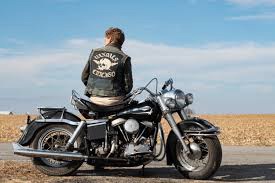
    The Bikeriders is a surprisingly tender slice of life film and an update both on all those b movie motorcycle flicks from the 60s.

    It’s based on book by Danny Lyons who photographed and interviewed the group in the late 60s and 70s.

    Tom Hardy plays a dad who starts a motorcycle club cause he wants to hang out with some guys. Jodie Comer plays the nice girl who falls in love with a bad boy and Austin Butler gets the rebel role usually associated with the late James Dean. The essential tension in the movie is not the rise and fall of a biker gang (although that’s there) but who Butler loves more Comer’s Kathy or Hardy’s Johnny.

    The movie is based on a real life club but the names are likely changed to protect the innocent. Here they are called The Vandals.

    I don’t claim to know how true any of the story is but it has the aura of truth behind it simply because the movie resists every urge to have standard Hollywood plot.

    There are some crimes, sure, but it’s low key part of their lives (until it isn’t). Which means this isn’t a Scorsese gangland epic even though it probably could have been.

    Instead, it’s a character study, a drama and a bit of a comedy as a group of guys with day jobs who decided they wanted to live like they walked out of a Marlon Brando movie.

    In real life they’re mostly losers who find something to cling to in each other and the rules they come up with to make the club function.

    Michael Shannon does excellent work (as always) with some speeches to explain their loserdom. Also, I’m pretty sure at one point I could smell just how dirty and drunk Shannon’s Zico must have been in real life.

    The movie goes out of its way to point out how innocent the early years of the club are. At one point after a gnarly fight two gangs hang out and have beers together. Other incidents like this I will leave for you to discover.

    But the golden years end mostly how you would expect with the club moving far beyond even the wild lives they had made for themselves just a few years earlier.

    Hardy and Comer carry the thing as the dad who gets in over his head and the woman who shoulders the exposition while also getting a chance to explain some things with just a smile and a nod.

    Butler, as I said earlier, is doing a James Dean thing and he somehow makes that work. A simpler movie would have given Butler a revenge moment near the end but he does something else.

    And when it happens it’s a bit of both great filmmaking and acting. I imagine there was a temptation, especially here, to turn this into more of a crime film, or an action film or something else.

    Instead, Writer/Director Jeff Nichols makes the right call.

    Ok, there’s one bit else I want to say but it’s super spoilery so please stop now if you don’t want to know how it ends.

    So the final bit is Comer and Butler having left the gang and living in Florida. And Comer goes to the window to see her rebel now completely domesticated and working a normal job. He looks up and smiles at her.

    And she smiles back.

    The look of a woman who’s victory is now complete.

  • Horizon: An American Saga

    Horizon: An American Saga

    Is Kevin Costner’s new movie, the first part of a tetralogy historically accurate?

    Yes, if the history of the American West was written by Howard Hawks and John Ford.

    There’s no Sergio Leone or Sam Peckinpah here, no cynicism or bitterness about America’s adventures into the frontier.

    The movie essentially begins with a brutal attack on white settlers by Apaches. This riveting filmmaking hooked me.

    The great screenwriter William Goldman wrote that Fargo unnerved him with its opening of horrible characters, a kidnapping and several murders until Police Chief Marge Gunderson shows up and correctly deduces what happened in a roadway killing all while being pregnant and nauseas.

    That how I felt after the attack, I’m in good hands here and Kevin is going to take care of me.

    The horizon then shifts to show the point of view of the Apaches and casually moves several more times to show the doings of an U.S. Army encampment, a wagon train, and a revenge story involving Costner’s character, a prostitute, a baby and a bloody minded family of villians.

    I was unbothered by the shifting story and unconcerned about any of these sections being more worthy of attention than the others.

    Unlike Costner’s last directing effort, Open Range, none of this drags or sags. None of it feels flat.

    Open Range is a great movie and Costner as a director is always a solid choice but Horizon may be the only one of his where I never threw up my hands at some point and shouted, “Can we get on with it please.”

    And while the dialogue doesn’t reach the heights of Lonesome Dove or Deadwood it’s still good enough to leave you with a strong story with lived-in characters.

    Now, I can’t say that it’s a perfect movie. And I can’t completely judge a planned tetralogy by the first part.

    There are some minor issues here.

    One quibble is some character choices late in the movie are not set up by previous parts of the movie. Why does one character run off? Why do a pair of lovers get together?

    I suspect some scenes were filmed here that were cut for time or because they didn’t work.

    Noticeable but not fatal. I could even argue unnecessary. You know the woman’s character so you know the likely outcome of her adventure. And the lovers seemed fated from the moment they meet.

    We cut some corners here, but it’s fine. And you can definitely argue that there isn’t enough of the wagon train section to justify its placement in this first movie.

    I liked these sections though. Classic western fun.

    Finally, the movie ends with a sizzle reel for the rest of the series. I enjoyed it but I felt like it robbed the film of a proper ending.

    As for as a review goes what I can ultimately say is that three hours flew by, I was thoroughly entertained and I can’t wait for the next part.

    Something like this! At a movie theater! In the year of our lord 2024!

    This is pretty much what I want out of a movie once or twice a year. One cool western to go with one cool crime movie and one cool action flick. Throw in a decent romantic comedy and call the year a success.

    I love the MCU, I love some of the big action franchises still roaming the earth like the last of the dinosaurs.

    But there ought to be room for this too.

    Now, there is this whole other discussion about the making of the movie and critiques about the movie we got versus maybe the movie we should have got. Little of it is actual criticism of the movie itself and you can just skip it if you want.

    Still here?

    Ok.

    So the narrative behind the movie is as important as the movie. Costner says he put up $39 million of his own money to get this made.

    I mean, that’s just legend material right there. An artist who is willing to sacrifice a lot to get his passion project made? We need more of them out there like Costner and Coppola who are willing to steer their lives towards the rocks in pursuit of great cinema.

    So I hate to criticize some things but shouldn’t this have been shot in IMAX? Don’t some of

    The sets lack depth? The army encampment in particular feels undercooked.

    Costner began work on this saga in the 1988. Given the age of the project you can see why Costner picked the role of a wondering hero who is seduced by a pretty young prostitute, gets involved in a shootout and then must protect an innocent child.

    The casting makes sense for Costner in the 1990s and in the 2000s but in 2024 it starts to look wrong.

    I don’t know if anyone would go to a Kevin Costner western if he was not playing this particular kind of character but I do know that he’s too old for it. A grizzled commander at the army camp or the leader of a wagon train might have made more sense.

    In real life Costner’s character should probably be in his 20s, in movie world the actor could be maybe in his 40s or even his 50s.

    Kevin Costner is 69-years-old.

    I chalk it up to Movie Star Brain.

    Movie Star Brain is also probably the reason a 12 hour narrative is going to be released in four parts in theaters.

    The most natural place for a 12 hour narrative is a tv mini series. Costner made one The Hatfields and McCoys in 2012.

    If not a miniseries then a television show that unspools these hours week to week or all at once on Netflix.

    In 2018, Costner found himself suddenly the star of the biggest show on television (streaming?) and making Paramount so much money that they built a whole extended television universe around his show.

    I find it shocking that Paramount didn’t just come up with the $100 or $200 million for Horizon just to keep their star happy.

    It certainly seems like they decided to spend all their money with Yellowstone showrunner and writer Taylor Sheridan. Costner will leave the show this year.

    I suspect Paramount offered a streaming/TV deal to Costner (I have no idea but wouldn’t you?) and Movie Star Brain probably demanded a theatrical release.

    Then there is this issue of completing the story. The second film has already been shot and will be released in August. That’s some more legendary behavior.

    But parts 3 and 4 have not been shot and are not funded. I had a buddy ask me if I will be upset if the complete story never gets told.

    And without the second part I just don’t know. Perhaps it ends with a pretty clean break and parts 3 and four concern the children of the characters in the first two parts. Or perhaps it will be a broken story that remains unfinished forever.

    That happens to great stories sometimes. No tomorrow is guaranteed.

    Which leads to questions about this release strategy. If the first one bombs you have the comfort of knowing the second one is still coming.

    My prediction is that the second one will actually do strong business after people find the first one on a streaming service. But now I’m worried that there is not enough time between the release of the first and the second flicks for people to find it.

    Which is not a normal concern for a movie fan. But we left normal back when we decided to release a western in theaters in 2024.

    So, my ultimate prediction is that all of this will work out. All four will be funded and released and eventually I will be a happy movie fan.

    Movie Star Brain is one of the most powerful elements in the universe. And faith can carry you to the end of the trail.

  • Willie Nelson in Nashville

    Willie Nelson in Nashville

    The world is full of miracles. One of them is how Willie Nelson survived Nashville.

    America’s greatest country music singer and songwriter moved to Nashville in 1960.

    He was 28-years-old had several children, a fiery wife who would beat him sometimes (Nelson always said he deserved it) and a work history that included DJ, band leader and door to door salesman of both vacuum cleaners and encyclopedias.

    He also walked in the door with demos of several songs that would go on to be eternal classics. Nelson tried to sell Crazy, Family Bible and Night Life around town for several months with no luck.

    Important lesson for any of you deeply involved and struggling in a creative field; sometimes the world is wrong.

    Anyway, Nelson’s friends and supporters got him and his songs in front of the right people and eventually he got the money and songwriting success he craved.

    Willie’s probably still getting royalties from Patsy Cline’s rendition of Crazy.

    Despite the money and the recognition Nelson was not even close to satisfied.

    So he signed with a Nashville label believing that these cats, the leaders of the most successful music machine in the world, could make him a successful singer.

    Now, in this part of the story everyone who talks about it casts the Nashville producers and managers as the bad guys. However, Nelson, in his autobiography, doesn’t paint it that way. Nelson, ever amiable and wishing to avoid confrontation, says that he did it the way they told him to because he thought it would work.

    He wanted fame and fortune and these guys seemed like they knew what they were talking about.

    Nelson was also never burdened with the strong convictions of how country music should sound that his friends and musical followers carried.

    If these Nashville bigwigs could make him a star or get him a chart topping song then Willie was ready.

    This thinking would lead him over the next seven decades to hand himself over to a host of different producers who would deliver both a mountain of hits in a variety of styles and at least one or two albums so bad I would use them as dinner plates before I ever listened to them again.

    If I was the kind of writer who could ever plan or edit or do anything else in the craft correctly this whole section you are reading would be a one or two paragraph opening to what I really intended to write about which is Willie’s golden era in the 1970s. But I am not that guy and we are going to keep plowing through the 1960s until we reach a satisfying conclusion.

    Anyway, what I find fascinating about this period is how Willie and his producers find unique ways to make terrible music.

    The songs themselves aren’t terrible. Many of them are huge hits not only for other artists like Patsy Cline, Ray Price, Rob Orbison, Faron Young and Elvis Presley.

    But if you listen to any of those songs or any of the other classic country songs he performs on the 1960s albums its … just … wrong.

    Why? Ok you might argue that the problem is The Nashville style at the time which included heavy strings, back up singers and a pop music sheen.

    Country music often chases trends and sometimes the people involved in it seem embarrassed about what they are doing. Some artists have crossed over into pop or country pop and been rewarded with success. Willie Nelson in the 80s was as close to the center of pop music as anyone. But plenty of artists wrecked themselves and their careers trying to be something they couldn’t be.

    The trend is even more dreadful is reverse when pop and rock people go country to boost sagging sales and flagging interest.

    But these songs, even the ones written by Nelson were absolutely hits in the Nashville pop of the 1960s. No one is ever going to accuse Faron Young’s version of Hello Walls of being honky tonk.

    Patsy Cline tried to sing Crazy just like Willie would sing it but it didn’t work for her and thankfully her producer convinced her that she had to make the song her own.

    It’s a stunning song but it’s an entirely different thing than what Willie makes of it.

    We can blame the production all we want. I snort laugh everytime the ooey gooey backup singers appear behind Nelson on these tracks.

    That’s the prevailing notion. Take away the strings and the singers and this Willie Nelson stuff in the 60s is secretly great.

    But brothers and sisters, that ain’t necessarily so. Mickey Raphael, Nelson’s harmonica player and sometimes producer, took the Nashville recordings and used studio magic to strip them down to the essentials. The project came out in 2009 and it was called Naked Willie.

    It ain’t great.

    Whatever he wanted, and whatever he says, Willie working in the Nashville way is miserable for everybody.

    Listen to those albums and even Naked Willie and you can almost hear the producer in Willie’s ear ordering him to sing on the beat.

    “Can we get a little more Faron Young in there?” You can imagine them saying. “Can you do this one like Ray Price would do it?”

    I don’t care what anybody says, Caged Birds can’t sing. Or they can’t sing the way they do when they’re free.

    Save for one album there isn’t anything of Nelson’s 60s output that I would recommend to the non-devoted. There are a few stray songs here and there that suggest what a great Willie Nelson would eventually sound like. But it’s hardly worth it.

    The one album from the 60s I do reccomend is any collection of his demo recordings for Pamper music. This is just Willie along with his guitar, singing in his preferred style. The songs were only meant to be heard by other artists and producers so they would buy them and record them.

    One version of this, which came out in the 2000s for Record Store Day might be my favorite Willie Nelson album of all time. It’s at least in the top five.

    One of Willie Nelson’s all time best albums is a collection of his demos from the early 1960s.

    They are beautiful gems. Willie Nelson’s singing and playing is by himself is always a joy and he never needed much to convey the heart of a song to his listeners. But it took a decade of beating his head against the wall to make music as beautiful as he made on his 1960 demos.

    While he was frustrated creatively financially Willie was doing well in Nashville. He had a big house in Ridgetop, Tenn. and his extended family and band members all came to live nearby. He was having success on the road. All things being equal it’s possible that he would have just stayed there, content to be a middling artist and a successful songwriter.

    But in 1969 as his Nashville contract was winding down Nelson’s home burned to the ground.

    He got there while it was burning pushed past the firefighters to save his famous guitar, Trigger, and a large amount of primo weed.

    Then he moved back to Texas, built a band and a sound that pleased the hippies and the cowboys and became a legend.

    Miracles appear in the strangest of places.

  • Hit Man

    Hit Man

    I think this is a solid little movie that really smokes in the last third when everything suddenly squeezes in on the fake hitman and his girlfriend.

    There was some complaining online about how this didn’t get a theatrical release but this does feel like a Netflix movie. It’s a laid back talky without action. It’s also neither a balls to the wall comedy nor pressure cooker thriller.

    Instead, it’s a fun character study about a nebbish guy who transforms himself into the kind of man (a hit man) that a beautiful woman really wants.

    Director Richard Linklater has made masterpieces like Dazed and Confused and comedies like Bernie and School of Rock.

    This one feels more calculated as if the writer and director designed it to show off Powell’s acting chops. Not really surprising when you discover Powell co-wrote it with Linklater.

    The movie first has fun with Powell getting to play a host of variations on a hit man and then has fun with Powell discovering that his fake hitman is the perfect boyfriend for the beautiful Maddy (Adria Arjona). The movie isn’t a sex comedy but does have several cute scenes with Powell and Arjona role playing in their relationship and in the bedroom.

    I laughed anytime Gary (the nebbish professor and ostensibly the real Powell) referred to his alter ego ‘Ron’ like he is someone else.

    There is a level of tension that builds into a finale that mostly worked even if I didn’t buy much of the proceedings. A note at the end of the movie confirms I was right to suspect that a lot of this was Hollywood hokum.

    If there is a problem with this movie and with crowning Powell as the next Tom Cruise it’s that Powell has not yet (except for Top Gun Maverick) picked the right roles for him.

    I don’t remember Cruise or Robert Redford playing guys who lived alone with their cats or were considered boring by their wives and the people around them.

    Powell played a lovelorn dude in Anyone But You. He wasn’t exactly a sad sack but that movie hinged on him still being single 6 months after a brief romantic encounter.

    I’m sorry but I just don’t believe that a guy who looks like Glen Powell has trouble with the opposite sex.

    If he’s going to do romantic comedies he needs to start leaning into his strengths and play the handsome but shallow guy who finally learns what love means when he screws up with a cute (but not supermodel attractive) girl next door.

    Or play a real cad.

    Hell, remake Dangerous Liasons (or as you know it Cruel Intentions) with Sweeney as the evil best friend.

    Just don’t ask me to believe that Glen Powell lives alone with his cats and has trouble dating. I’m not buying it.