• Anyone But You

    Anyone But You

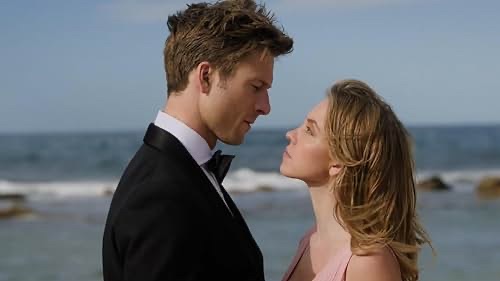
    Let’s take two of the most attractive people on the planet, put them in a beachy, summer setting and give them some reasons to fight and flirt and fall in love. 

    Then let’s go print money. 

    Easy to pitch it, somewhat easy to bankroll and film it. Damn hard to pull it off. 

    Anyone But You gets romcom summer movie just right. Screenwriter Ilana Wolpert deftly sets up the situation, breezily moves through the plot and arrives at an ending that any rom com fan should love.

    Taking the basic story of Much Ado About Nothing and modernizing it certainly gave her some help with the structure. But the biggest asset she and Director Will Gluck have is solid chemistry from leads Sydney Sweeney and Ben Powell.

    They are perfect looking people and that both helps and hinders the proceeedings. I have a hard time believing Sidney Sweeney’s life is a mess.

    But she and Glen Powell both have the goods here. I’m still not sold on the whole Powell is our next Tom Cruiseesque movie star but this movie makes a solid case to put him in the lineup.

    Anyway, I thought all the jokes worked, I thought all the call backs worked and I thought the movie looked fun and made me happy.

    If we lived in a different world they’d line up two more of these with different plots and characters like they used to do with Meg Ryan and Tom Hanks or Adam Sandler and Drew Barrymore.

    Chemistry is undeniable on a big screen. And if they got it they should flaunt it.

  • Fright Night

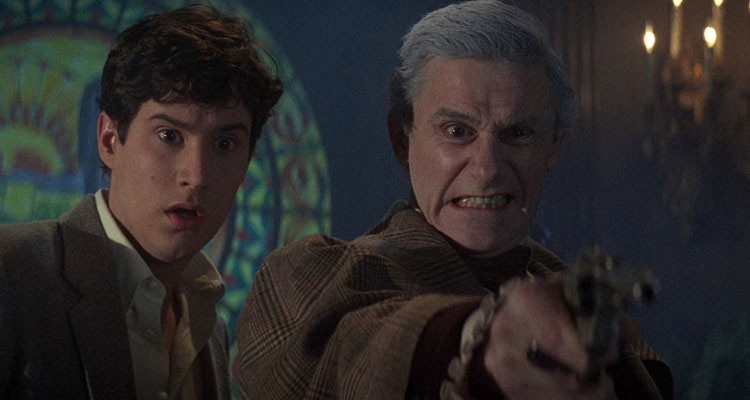
    Fright Night

    Sometimes things in movie land nag at me. 

    Like, did you know Steve McQueen was supposed to play Quigley in Quigley Down Under?

    So instead of affable Tom Selleck and a fun comedy (which I love) you would have had action star McQueen facing off against Alan Rickman’s bad guy. 

    Mannnn, I don’t know if that would have been a better movie but it is definetely a movie I would love to see. 

    In Fright Night, Roddy McDowell, plays Peter Vincent, a down on his luck has-been who once was the star of a host of Hammer Horrore-sque movies. 

    Now he hams it up on a television show where he introduces his own movies and gets paid almost nothing. 

    It’s a not bad performance in a not bad movie. 

    But it’s hard for me to watch when the whole time I’m wondering what Peter Cushing or Vincent Price would have done with the role. 

    McDowell in an interview somewhere said he chose to pattern his performance on The Cowardly Lion from the Wizard of Oz

    Absolutely right choice for McDowell, but I would have loved to see the gravity Price or Cushing would have delivered. 

    The character would have been less of a joke, the movie would have probably felt less scattershot as it moved from comedy, to straight horror to nearly erotic horror and back again. 

    But it would have been a different thing. And this is perfectly acceptable 80s horror. Chris Sarandon is maybe the sexiest vampire of the decade.

    Sarandon is also trying really hard to bring depth to a character that the screenplay would prefer to be as flat as cardboard. 

    I think that’s what’s I’m trying to articulate that this lacks just the amount of depth it needs to make it a true classic. 

    Here’s the best example of that: At one point Charley runs to his best friend, Evil Ed, to ask him what he should do about the vampire living next door. 

    But there is no reason given why Charley would think Ed has that answer. In fact, Charley is the horror movie fan. 

    The movie also doesn’t explain why Ed’s nickname is so unique. Sometimes mystery is a good thing. Most prequels suffer because creators and fans can’t let the mystery be. But calling someone (ostensibly your best friend) evil feels like it needs a footnote in the dialogue. 

    But what do I know. This romp in the suburbs was exactly what audiences wanted from their creature features in the Reagan years. 

    It was the second highest grossing horror movie of 1985. And it still has a strong fan base. 

    If I had caught it as a teenager I’m sure I would have loved it. As an old man I found it charming but not thrilling. 

    The Lost Boys remains the king of this particular decade in vampire flicks for me with Near Dark (which I only recently watched) being a close second and kindred cousin. 

    I also really liked Monster Squad when I was a kid. But that movie is great when you are young and then you watch it again as an adult and you realize it’s a dog. 

    IMDB trivia suggests that this movie owes much to the vampire relationship in Salem’s Lot and the human relationship in the same Stephen King book. Then it goes on to point out all the similarities to Bram Stoker’s Dracula

    It’s probably fairer to say say that Fright Night is a genre piece and follows most of the conventions and cliches of the genre. 

    At one point one character tells another character that a plan will work because everything else they learned about vampires from the movies has worked so far. 

    It’s that kind of film. Not exactly a guilty pleasure but certainly a mild pleasure all the way around.

  • Furiosa: A Mad Max Saga

    Furiosa: A Mad Max Saga

    Director George Miller’s Mad Max: Fury Road stands as one of the best films of this century. 

    A bombastic epic with a lean story and constant action that is thrilling and hilarious in nearly every propulsive moment. 

    Furiosa: A Mad Max Saga is not that nor is it necessarily trying to recreate that. 

    It’s dips into the well but is also concerned (as a prequel must be) with giving you the origin of its titular character. 

    How did she get that way? How did she get that injury? What happened to her hair? 

    Prequels rob filmmaker of one of their biggest weapons — the threat of death for the main character. You might argue that heroes never die in action movies but if you watched Fury Road you could believe all the good guys were gonna bite it at any moment. 

    And even if you don’t think a character will die you can still wonder how it ends. But we know where almost all of the characters in Furiosa will be when the credits roll. 

    They’ll have to be there because Fury Road awaits them. 

    As the pattern emerged this dimmed my enjoyment slightly. However, this movie is still another helping of Fury Road madness. 

    What that means is unbelievable action scenes filmed in spectacular fashion. Also, can we please film every night scene the way Miller does? He tints it blue and you can still see everything you need to see while also knowing it is night. Simple effective and unlikely to frustrate you when you watch this 20 times on a cheap TV. 

    Here’s what’s undeniable though Chris Hemsworth deserves an Oscar nomination. His work creates, in Dementus, perhaps the best villain of this decade. Vain, brash, conniving and usually a step ahead of his enemies he is a joy to watch. 

    I’m not kidding about that Oscar nom. This is up there with Heath Ledger’s iconic Joker. There are a million ways a story this ridiculous can go wrong but Hemsworth becomes the fun center of a wild story. 

    Two amazing actresses step into the role Charlize Theron originated in Fury Road

    Alyla Brown plays Furiosa as a child (and an hour of the movie) while Anna Taylor Joy plays her as a young woman. Both display the strength of the character and she remains the strong silent type. 

    The movie even has a Mad Max type ally for Taylor-Joy with a game Tom Burke playing one of her wasteland teachers. 

    Fury Road was one long chase scene. This can’t be that, instead it’s a series of vignettes that takes us to the doorstep of the next movie. 

    However, there are plenty of sequences that are as thrilling as Fury Road. If you wanted more, this is more. 

    And I’ll tell you something I found interesting, as the movie came out there was some talk about how few lines Furiosa has in this movie. 

    Miller even had a quote about how dialogue slows things down in action movies. I was offended when Villeneuve said something similar (but more insulting to writers) as Dune Part 2 was released. 

    But I am not insulted here. Villeneuve was adapting a book and owed everything he had to the writer who dreamed it up. Miller is making action extravaganzas that follow in the tradition of westerns. 

    But the whole argument was moot, cause this thing ends on a pretty good conversation.

    Also, most Western heroes don’t talk. They ride into glory. 

  • Minari

    Minari

    Why does a movie enter your life when it does?

    Sometimes it’s a gift from God or if you don’t believe in such things then it is the universe bending your way.

    When you are broke and suddenly an card arrives in the mail with just enough to get you through.

    Sometimes a movie arrives exactly when you need it.

    So I’m going to tell you what is going on in my life and then tell you about Minari.

    After about 20 years of marriage and work life in my hometown, I took a new job across the country and have moved my wife and children from Florida to Indiana.

    And it’s hard. The job is great and challenging. And my wife is working every day with little help and two autistic sons and a baby.

    Our lives aren’t for the weak. They weren’t before we left and they especially aren’t now.

    But we needed to take a risk and we needed to see how far this career could take us and we couldn’t do either of those things by staying in place.

    So here we are facing new struggles and trying to fit into a new community and working towards a goal that may be closer but presents a whole new set of challenges.

    Minari was on Netflix. I noted it was well regarded and put it on my list and mostly forgot about it.

    It surfaced again with a warning that it was leaving Netflix last night and so I made it my evening entertainment.

    Here’s the plot: A young father (only slightly younger than me) moves his family to Arkansas to pursue his dreams of becoming a farmer and being a success in America.

    This causes strife with his wife and the drama and humor is doubled when his mother-in-law comes to live with them and help out.

    My description is poor as it sort of sounds like a sitcom set-up. But it’s a natural and biographical story written (I assume) by the now grown up child of the parents in the picture.

    The story moves with the rythyms of real life. The characters outside the family have their own separate wants and dreams that make them more than writer’s props.

    I especially enjoyed how it handled the Korean family attending an all white church. If there was prejudice towards them it seems mild.

    But it’s hard to be different in a place like that no matter how much people want to welcome you.

    One of my favorite scenes is the morning after a sleepover when the young Korean child watches his new friend and his father hug and interact at a breakfast table.

    The dad tells the kid he loves him. Then adds, “Don’t tell your mother I was out all night.”

    That’s a scene with so much truth and sand you could plant a flag in it.

    Religion and each character’s connection to it is explored. A worker with strange religious habits and a tendency to pray all the time helps the father with his farm. Why? Maybe because God told him to, but also (most assuredly) because he needs the money.

    The conflict centers on the parents who have pushed themselves into a breaking point. He won’t relent in his pursuit of his dream. She feels betrayed by a man who has taken her away from her home (twice) and is now asking her to live in a trailer in Arkansas and pretend like it’s a castle.

    When they arrive at the new home and she sees the trailer she stops him.

    “This isn’t what you promised,” she says.

    (I don’t take notes while watching a movie so if that’s not exactly what she said that’s close.)

    How do you fix a marriage that faces that kind of problem? She wanted a life with other Koreans in Los Angelos. You took her to Arkansas.

    I don’t want to give away their decision but I can tell you I was moved by it and was moved especially now given the massive changes in my own life.

    Movies, books, songs and television are like that sometimes. Something so real that you can find yourself connected immensely and emotionally to a young family from Korea who worked as farmers 40 years ago in a state you have never visited.

    But the connection is real and the film is a gift from on high.

  • Near Dark

    Near Dark

    There is a moment that kicks off the final section of Near Dark that hit me hard.

    It was just two characters meeting. One of them invites the other to watch TV. Nothing much happens initially.

    But if the story is honest, and you believe in the danger presented by the horror inside the movie, then two characters meeting can knock you out. 

    Near Dark is a cult classic from 1987.

    The Lost Boys came out the same year and got all the attention. Comparison is a mug’s game but watching this you can see why The Lost Boys is the one that passed into legend.

    It has a sense of humor about itself and better special effects and one of the funniest endings of all time.

    What Near Dark has though is a stronger metaphor and deeper emotions. Its got a decent romance element and some of the greasiest, most repugnant vampires you have ever seen.

    Near Dark’s western elements are a ton of fun and there are some action/horror scenes that are both thrilling and disgusting.

    Also, it dodges a lot of vampire lore in favor of a more simple take. No one ever says vampire in this thing and no one ever makes a stake or uses a cross.

    So if you are stuck in a bar with a vile vampire family you are out of luck.

    That scene suggested a group of ragged thrill killers way more than a pack of vamps.

    What does work in Near Dark is sunlight. You definitely sense that Director Kathryn Bigelow and her special fx crew really liked working with fire and explosions. Lots of explosions in this one’s

    Several story points and that one vampire weakness leads to an amazing shootout with the cops where sunlights bursts through bullet holes in a building endangering a bloodsucking gang.

    It’s the most famous part of the movie but there is much to admire here for horror fans.

    Ultimately, Near Dark’s story gives it something I don’t think I have ever seen before or since — a vampire western. 

    Wait, in 1996 Robert Rodriquez directed a script Quentin Tarantino wrote in high school (with more work provided by Robert Kurtzman) that had a bit of western style to it. It was called From Dusk Till Dawn

    That was an experiment where the first half of the flick was a crime movie and the second half was a horror film with vampires. 

    I could never make it through the sequels but I think they embraced the west a little harder than the original.

    Near Dark is no doubt a western from the start. But I’m not sure it successfully mixes the genres.

    However, when the hero of the movie rides a horse into town to confront an evil gang and certain death … that’s a real cowboy right there.

  • Point Blank

    Point Blank

    It begins with the protagonist in darkness. Is he dead? He’s been shot, he’s nearly gone, it’s almost over. 

    But he’s not dead yet.

    Point Blank then gets on with its grim business as Walker seeks out the man who betrayed him and charges through a host of middle managers in a criminal organization to get back the $93,000 that was stolen from him. 

    Based on the Donald E. Westlake book The Hunter this is a gritty, greasy tough guy flick. 

    Director John Boorman and star Lee Marvin apparently conspired to make the movie they wanted to make in the face of studio pressure and other problems. 

    Boorman was so new at this that Marvin (allegedly) faked a raging alcoholic spree in order to give Boorman more time to figure out his shots.

    IMDB quotes Boorman on this.

    “One night while filming the finale’s Alcatraz-set scenes, an exhausted and spent Sir John Boorman realized he had no idea what he was doing. Lee Marvin realized it too and asked if the director was in trouble. He told Boorman to leave it to him, and ‘suddenly he was drunk, he was shouting, laughing, and screaming,’ and the production manager approached Boorman saying there was no way they could keep filming. ‘Soon as I was off the hook, the pressure was off; it took me ten minutes to work out the shots, and Lee made this amazing recovery.’”

    Wouldn’t it be great if these trivia quotes were sourced from the news articles or whatever they came from.

    Given where Boorman was in his career I want to note that the first 20 minutes of this are weak. If the movie had gone on like that I would have given up. 

    But something turns inside it, Boorman and Marvin get into a groove and the action sequences kick in and Marvin starts growling at people about his money and the thing becomes a blissful time in crime land. 

    There is no extra toppings on this meal. No garnish, if you will. Marvin just starts beating up and threatening guys as he goes up every rung on the criminal corporate ladder. 

    My fave part is that at every level whoever he is harassing tells him what he’s asking for is impossible. The next guy up the line won’t pay you either, they say. 

    Walker, never wavering in his rage and disgust dutifully responds, ‘someone’s got to pay.’

    And then Walker convinces whoever it is that they should reconsider. 

    It’s crime movie fun. And there is a lot of fun in watching Walker outsmart his enemies and create situations that lead them to their deaths. 

    Walker takes a car dealer for a wild ride but other than that he mostly just threatens and cajoles until someone else delivers the killing stroke. 

    Now, we should talk briefly about whether or not Walker is a ghost as this has been a topic of discussion connected to this movie. 

    Walker is not a ghost. 

    There, I hope that helps. 

    Boorman and Marvin’s Point Blank is (I think) to crime movies what Kurasawa’s Seven Samurai is to action films or John Ford’s The Searchers was to the 1970’s directors. A touchstone film that defined a genre. 

    If you as the type of movie fan who tracks these things back then I think you will see the connections to later flicks.

    You won’t have to go far to find a dozen crime movies and crime movie directors (notably Steven Soderbergh but there are plenty of others) who found inspiration out of this. Check out The Limey it’s amazing. 

    And I also enjoyed the criminal up against the soulless corporation parts of it. Every empty suit would just give him his money, they want to give him his money but they can’t find a spot for it on the ledger. 

    Killing Them Softly nails this bit of American corporate life perfectly with its final speech from Brad Pitt. 

    “America is a business” indeed. 

    Some of you might find the ending cryptic and it’s certainly part of the reason why the ghost theory came to prominence. 

    Walker’s choices in the final moments don’t seem to line up with his goals. 

    But I thought it made perfect sense. 

    Walker began this journey in darkness and to the darkness he returned. 

  • Body Double

    Body Double

    As I watched Body Double a particular exchange from Aaron Sorkin’s The West Wing kept running through my mind. 

    President Bartlett, having been caught up in a minor controversy about an upcoming movie, is discussing a Hollywood director. 

    “It’s not that Larry Posner’s movies have gratuitous sex and gratuitous violence. It’s that they suck. They’re terrible. But people go to see them because they have gratuitous sex and gratuitous violence. Now, if we could just get people to stop going to see crappy movies, Posner would stop making them. I promise you.”

    That is, of course, too harsh an insult for the great Brian DePalma who has made at least six films that are untouchable in their quality including: The Untouchables (sorry), Scarface, Carlito’s Way, Blow Out, Mission Impossible and Carrie

    However, the West Wing insult may not be too over the top for Body Double which is a leering tour through sexual obsession and the porno scene in the 1980s. 

    It’s not quite porn, although IMDB claims DePalma had hoped to be the first mainstream film to show real sex on screen until the folks at Columbia nixed it. 

    It’s not quite Hitchcock either although DePalma is the old master’s greatest disciple. And say what you will about his choices, DePalma understands maybe more than most of his contemporaries how to create Hitchcockian tension on screen. 

    Because of the times he lived in Hitchcock was forced to suggest more than he could show. And much of his movies exist in subtext. 

    DePalma just ignores all that subtext nonsense and shows you all the text you can handle. 

    To be fair DePalma lived in a world where adult theaters competed with regular theaters for audiences who would, seemingly, go to both kinds of spectacles. 

    Still, as mashup of Vertigo and Rear Window this had some fun moments. If you enjoy horror movie kills there is a gnarly one here. 

    When it happened I thought, “Well, I’ve never seen that before.” 

    And I chuckled, the way you do at ridiculously gruesome things that happen in the movies. 

    There is definitely a reason why you have probably never heard of the poor lead actor in this film. Meanwhile, Melanie Griffith built a whole career off this first turn as a porn star with a heart of gold. 

    She has some matter of fact dialogue that was shocking for its time but not so much in a world where Kevin Smith movies exist. 

    You will not be surprised to find out who the bad guy is, nor to discover the shocking secret of the henchman who shows up midway through the thing.

    It’s not a mystery, it’s a thriller and the shocks aren’t in whodunit but in other gratuitous realms. 

    DePalma had so much talent as a director that he could literally take almost anything and make it into something visually appealing and fun. 

    It’s not his talent I question in this instance but I certainly have questions about his taste. 

    This was the last DePalma movie I wanted to see. Of his great ones I probably love Carlito’s Way the most. But even his failures are always visually striking and worth checking out. 

    A film buddy of mine was upset that I gave Snake Eyes such low marks but the short version is that I’m a story guy and while the visuals are once again amazing the story in that film takes place in a world unbound by logic or reason. 

    Here too, a lot of the film lives and dies by how much coincidence you are willing accept. By how much of your disbelief you can suspend to just sit back and enjoy as the flick unspools. 

    I let a lot of the nonsense slide on by (really) even when the struggling actor managed to make his way immediately into a porno film. 

    Even when the porno film turned into something like an MTV music video. 

    Sure.

    Other than those mentioned above I’ve seen a lot of DePalma’s output and this was a flick I couldn’t find for a while. 

    I guess seeing it explains why the streamers shied away from it.

    Sadly, my DePalmathon has gone out with a whimper instead of a bang. 

    There are a few left though. Unwatched by me and still out there in the universe. 

    Have any of y’all seen Black Dahlia? Is it any good? 

  • Days of Heaven

    Days of Heaven

    You know a masterpiece when you experience it. 

    Think of a great performance of Shakespeare or Beethoven or yes, Days of Heaven

    In some ways this is the exact sort of thing I usually can’t stand in cinema. It meanders, and it’s underwritten. Director/Writer Terrance Malick wrote a script and gave up on it. Instead, he encouraged his actors to improvise. 

    And then he discovered he had real story problems (because it was underwritten and improvised) and spent two years editing it. He only solved his story problem by giving a child character a voice over narration.

    That narration is not great. It’s a child with a deep, distinct Chicago patois. At times it made me giggle and I don’t think that was Malick’s intention. 

    But it does what it must and connects the disparate parts of the story together. 

    The story matters, the story always matters, but this is a visual experience first. 

    We get a factory on the front door of hell, traveling by train, and then life and work on a farm in the Texas Panhandle. 

    It feels like a pretty great nature documentary. Then it feels like a Cecil B DeMille biblical epic. 

    And then it just feels like you are living through some of the actual things that took place in the Bible. 

    It’s arresting and amazing.

    It’s one of the few movies I have found that I would seek out a theater experience if one ever became available. It truly needs to be experienced in a big screen.  

    For the rest of this I require spoilers so please go watch this movie first and then come back. 

    Richard Gere’s Bill commits several crimes in this movie but his biggest is having Brooke Adams’, Abby, by his side and giving her away to another man. 

    It seems like a solid plan, Sam Shephard’s rich farmer is dying anyway. If she marries him the wealthy farm will be theirs.

    Malick presents this not as a horribly betrayal but rather as desperate people finding a way to a better life. Bill and Abby aren’t greedy con artists they’re just on the last rung of society and desperate to hold on. 

    But it’s wrong. And eventually the farmer discovers that something is undone in his home. 

    And then … there is a plague. 

    In Shakespeare the weather often reflects the internal state of the characters. 

    Certainly you can think of Shakespeare as the plague of grasshoppers destroy the farm shortly after the farmer learns he’s been betrayed. 

    Then a second plague is visited on the farm as a great fire begins to destroy everything. 

    And, for a movie that was underwritten I have to give it credit for one line. Abby turns to Bill in the middle of a firestorm and says, “He knows!” 

    The line and the delivery and the visuals … perfect. 

    So the plagues can represent internal strife but in the Old Testament these things were a punishment from God. 

    Whatever their motivations Abby and Bill have committed a great crime. They must pay for their sins. 

    Days of Heaven comes from a phrase in the Bible. 

    You will recall that Abraham once gave his wife away to Pharoh by saying that she was his sister. 

    In response, God visited a plague on Pharaoh’s house that made Pharaoh understand what happened and return Abraham’s wife. 

    Here too, Bill and Abby pretend they are brother and sister. 

    It all works out pretty well until Bill realizes what he has lost and the farmer seeks a reckoning.

    Of course, in the Bible, Abraham got away with it.

  • Terms of Endearment

    Terms of Endearment

    I think we should talk about the difference between movie stars and everyone else in the world (including television stars, broadway stars and regular people.) 

    Movie stars can make the whole thing work through sheer force of personality. Why? No one knows. 

    Would Terms of Endearment work without Jack Nicholson playing a randy, arrogant, astronaut who seduces and then comes to love his high strung neighbor? Yes, of course it would. 

    It’s based on a novel by one of Americas greatest writers, Larry McMurtry, and features an Oscar winning performance by Shirley MacLaine and should have won an Oscar performance from Debra Winger. 

    Also, it’s Directed by James L. Brooks who brought us The Simpsons and produced a ton of fantastic features. Here he’s just getting started and is at the height of his powers. He’s also responsible for one of the great final Nicholson features As Good As It Gets

    Back when I bought Simpsons season box sets you could listen to commentary tracks from the writers and directors. And, in multiple cases they would talk about how Brooks would look at a story, immediately identify a story problem and then make it better.

    That show works (or did in its first 20 or so seasons) because of a lot of incredibly talented and funny people but Brooks was near the top. 

    Before we get to Jack you must credit MacLaine and Winger who envelop the prickly, loving, enraging relationship between a mother and a daughter. 

    Every part of their stories will make you laugh and then cry. And this movie is very much their stories, I don’t want you to mistake this for a Nicholson vehicle. He’s important but he’s not the movie. 

    But he’s also a star and when he shows up, it’s all fireworks. 

    He plays an aging astronaut who has spent his life chasing young women and continues to chase them well into his 50s. No, there is nothing new in the sun, not even the DiCaprio dating method. 

    But he and his neighbor keep sort of orbiting each other. And then there is a disastrous date and isn’t it wonderful when two people who shouldn’t can’t help themselves. 

    There were a host of actors in 1983 who could have made a line like this sizzle on the screen: 

    “I’ll tell you, Aurora. I don’t know what it is about you, but you do bring out the devil in me.”

    A host of actors, I say, would have made a meal out of that. But there is only only one Jack. 

    This is a movie designed to make you cry. And cry I did. MacLaine earns that Oscar in a scene in the hospital when she’s at her wits end. 

    I’ll tell you one other moment, that blew me up.

    Towards the end, when their romance is supposed to be over MacLaine’s Aurora is at her lowest moment and then she looks up and there is Jack’s Garrett Breedlove. 

    I actually heard myself say, “he showed up.” 

    And then I cried again.

  • Leap of Faith

    Leap of Faith

    Who is this movie for?

    Certainly not devout Christians who were certain to shun it when it became clear that the preacher at the center of the story is a conman.

    Nor atheists, who would likely revolt when the movie shows an active God who (SPOILERS) not only heals people but also brings rain when the faithful need it the most.

    Perhaps, it was meant for a select group of bemused agnostics.

    Steve Martin plays faith healer Jonas Nightengale (great name!) who ends up stuck in a small farming community and uses his revival show to part the marks with their money.

    I can’t speak for movie audiences in 1992 but I know I watched Leap of Faith because of distribution systems.

    You see kids, in the before times, we had to watch whatever was on cable television. You would scroll through and then pick something. And on more than one day in the 1990s Leap of Faith was the best of all available options.

    I have a lot of affection for this movie which moves me, has a lot to say about true faith and the wicked people who exploit it but isn’t quite funny enough to be remembered as a great Steve Martin film nor dramatic enough to work on that level. 

    Early Liam Nissian and early Philip Seymour Hoffman and Meatloaf all do a lot even when they ain’t given much to do. 

    And Debra Winger has fun playing the conman’s gal pal and the Sheriff’s love interest.

    I like Steve Martin’s cowboy hat a lot and his cowboy boots. Someone should have given him a real western right around this time. He could have made it work.

    A lot of the Steve Martin as fire and brimstone preacher stuff plays well. It’s very easy to lose your way here but Martin mostly finds the right note.

    There is a miracle of sorts at the end of the film. It happens as Jonas is casting himself out of town because … well it’s never spelled out but I would say it’s because something inside Jonas is changed.

    When you get to that ending you might recall that in the Bible Jonah had an encounter with God. And that he too ended up in a heavy rain storm.