• El Conde

    El Conde

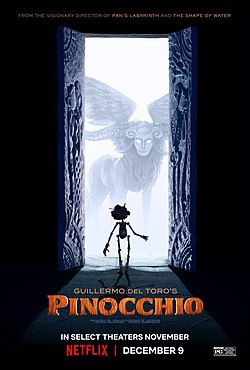
    I … probably should have read a book about Pinochet before watching this. 

    Writer/Director Pablo Lorraine’s previous flick Spencer was a beautiful and well written drama. It was also a miserable time. 

    This shoots for some misery mixed with black comedy. And there were definetly a few lines that got to me. 

    This is the best moment in the thing (so don’t read on if you don’t want to be spoiled) is that vampire Pinochet long believed to be dead frequently goes to the presidential palace expecting that sooner or later there will be a bust of him like all the other ex-presidents.

    There never is. 

    “They’re so petty.” 

    But the middle section is a bore. It’s saved by a fun revelation and decent final chapter that pays off most everything Lorraine set up. 

    This is an angry film and you can tell how much joy the filmmakers get from insulting their loathsome real life subjects. 

    I’m not sure that this is a great film but it is a great warning to all the politicians, dictators and other vampires roaming the halls of power. 

    Your evil does not go unseen and the artists will have the last word.

  • Fences

    Fences

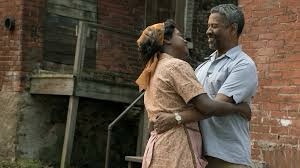
    Denzel Washington directs and stars in a movie that is mostly a filmed version of August Wilson’s play. 

    Washington plays a certain kind of father and husband. A man trying to communicate his values to his sons. Before the play is over it is clear that he failed on both counts. 

    Those values turn out to be mostly talk as Washington’s Troy Maxson has already made a massive mistake that will blow up his happy home life.

    Through the nature of it, you hear mostly from Maxson, as he defends his life and his choices and tries hold his world together. He talks of fighting with death and meeting the devil. He talks of money and of what young men are required to do when they decide to start families. 

    I could hear echos my own father when Maxson explains to his son that he made sure there was food on the table, a roof over his head and clothes on his back. 

    I heard him again when Maxson takes a drunken fight too far. 

    Maxson is eloquent, and I couldn’t help thinking how, in other families displeasure and approval is done not through speeches but through a series of grunts. 

    A pat on the head could mean far more than a lyrical turn of phrase. 

    But the language here is beautiful and the story is strong and heart wrenching. Viola Davis is transcendent. Washington remains the best actor of his generation. 

    If you are in the mood for a stage play masquerading as a film then this is a great one.

  • A Haunting in Venice

    A Haunting in Venice

    I watch westerns and baseball because of my grandfather but I love murder mysteries because of my mom. 

    Back in the before times we entertained ourselves every night around the television. No internet and no cell phones and there was, in middle class homes at least, only one television. I got a television for my bedroom and a Nintendo in middle school and it was a very big deal. 

    But before that my entertainment choices were directed by my parents. Playoff basketball or baseball if it was on and my dad was home and if not, the night would mostly be filled with mysteries.

    There was Murder She Wrote, Magnum PI, Simon and Simon, Spenser for Hire, Matlock, and, of course, Columbo. Mom, with a wry smile, would note that everyone in Hawaii wore long pants except for Tom Selleck, who wore short shorts. 

    We marveled at how the most dangerous thing in the world was to be Jessica Fletcher’s friend. And, finally, how nearly every episode of Matlock began with an innocent person discovering a corpse and immediately grabbing a bloody knife or a smoking gun so they could leave their fingerprints on the murder weapon and be wrongly accused of evil. 

    We teased these things because we loved them. We loved the genre. On those nights where a sporting event was on mom could be found sitting in the tv room reading an Agatha Christie novel or J.A. Jance or James Lee Burke if she wanted a mystery with New Orleans flavor. 

    I grew up to be a reporter and have spent quality time with real police detectives and sat in jailhouses with murderers. Real life, and real detective work is of course, nothing like it is on the screen. 

    In my adulthood I generally can’t watch the “realistic” ones. You know, where the murders are plausible and the detectives are broken. 

    I’ve seen too much. 

    But a detective story like this? Where the detective is as realistic as Sherlock Holmes and Tina Fey gets to play a conniving mystery writer and for reasons that don’t make any sense everyone has to spend a night in a haunted house in Venice while the bodies pile up? Sign me up! 

    Kenneth Branagh has now directed and starred in three of these Agatha Christie films. He plays the silly, Belgian, genius, detective Hercule Poirot with just the right amount of seriousness, and sly style. Branagh never breaks the fourth wall but he’s not above winking at the camera once or twice.

    The first two in Branagh’s series (Murder of the Orient Express and Death on the Nile) were straightforward murder mystery movies. This one brings in horror movie elements and far too many jump scares. 

    Branagh’s style as a director is usually to fill the frame with lush city scapes and scenery. These things always look good in a way that is classic and formal. On the downside, the movies might actually be better if he broke a few rules. On the plus side they have the benefit of ignoring current trends. You could release these to the cinema at any time in the last 50 years and they would not feel out of place. 

    I don’t know if that means they will stand the test of time but they will not embarrass their director or their actors 20 years from now. 

    I figured out most of it before the end (not because the movie gave away a ton of clues but because if you have seen and read as much of this as I have you can generally know where it is going. There was at least one twist I missed though.

    Regardless, you don’t go to these things for the murder mystery plots anyway. You go to marvel at Branagh’s mustache and watch the guest stars (Michelle Yeoh! Yellowstone’s Kelly Reilly! Tina Fey’s mouth scar!) ham it up. 

    And you go because you know your 72-year-old mother will love it. The tickets and the popcorn were my birthday present to her.

  • Red River

    Red River

    I like old westerns for several reasons. 

    First, they remind me of the time I spent in my grandfather’s living room. He held court in a t-shirt and slacks and spent his afternoons watching whatever was on TBS.

    In those days Ted Turner’s folly was known as The Superstation and you could count on either a Braves game, a war movie or a western.

    I still watch Braves games too. 

    Second, the Western is of course, the myth America tells about itself. We (umm some of us) conquered the west and made it safe for civilization. America is such a good thing that we gave it to the west and we will give it to the rest of the world too.

    That’s the tale you get until the revisionist westerns that came along in the late 1960s and 1970s.

    What your ancestors did was not evil as long as you are the one telling the story. 

    Red River is the kind of movie where Native Americans show up to kill cowboys and settlers without any explanation given other than, that’s what they do. One character laments that he doesn’t understand why they always have to burn the wagons.

    After a quick opening and a quick ending (off screen) to a wagon train the movie moves on to setting up it’s rancher/cattleman mostly main character.

    At one point Thomas Dunson (John Wayne) announces to two Mexicans that he now owns all the land north of the Rio Grande for his ranch. 

    The Mexicans explain that the land is owned by someone else and that it was granted to that person by the King of Spain. 

    Dunson replies that the land is owned by the person who takes it and keeps it. Then he kills one of them just to prove his point. 

    And there you go, America’s complicated relationship with Mexico as told by Hollywood in one scene.

    Dunson spends a decade rounding up all the cattle in Texas and Mexico, branding them and getting them ready to sell.

    But beef prices in Texas are close to zero so a cattle drive will be required.

    One more thing, this is the kind of movie where the hero can shoot a gun out of bad guy’s hand rather than kill them. America was never that innocent, but it was that innocent inside the movie theater.

    Anyway, the flick is mostly concerned with the cattle drive and it is as interesting a cattle drive as you could hope for from a movie made in 1948.

    The greatest cattle drive on film remains the mini series Lonesome Dove.

    But Howard Hawks was one of the best directors of his generation and this film is a nice showcase. Other critics point to his craftsmanship with the scene of the cowboys celebrating when the drive begins and the stampede. Sorry that’s a spoiler but if you do a cattle drive movie without a stampede you have done it wrong.

    Walter Brennan plays the same craggy, comic relief character he always plays on these things. 

    And Montgomery Clift delivers a nice bit of early James Dean/Marlon Brando energy as Dunson’s adopted son. 

    This is supposedly the movie that left John Ford impressed with Wayne’s acting ability. Ford, of course, had already made a bunch of movies with The Duke. 

    “I didn’t know the big son of a bitch could act,” he said. 

    Red River delivers a compelling narrative as the men battle the elements and then battle each other as they struggle to complete their difficult task.

    Wayne plays a man who slowly loses his grip and then eventually turns to villainy before the final showdown. 

    The ending wimps out considerably. That is, I suspect, a reason why Red River isn’t in the same conversation as The Searchers

    The rest of this is fun cowboy stuff.

  • Save the Tiger

    Save the Tiger

    Harry Stoner wakes up screaming. 

    For the next 24 hours we will follow him as cajoles, begs, and pleads with the people around him on a critical day for the life of his clothing company. 

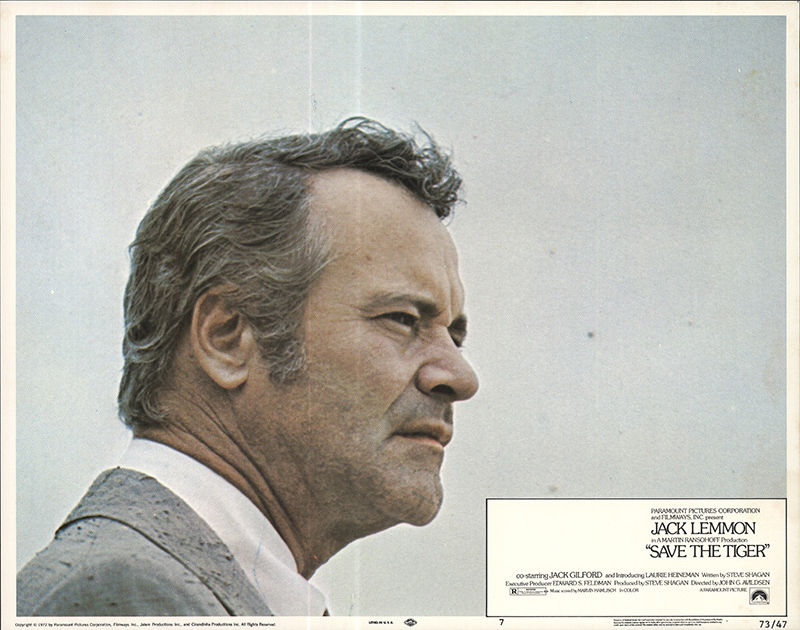
    Stoner (Jack Lemmon) has achieved the American dream, a successful business (as long as the IRS doesn’t look too close), a happy marriage (as long she doesn’t look too close), with a big house, a fancy car, a maid and a daughter in a European boarding school. 

    “I miss the kid,” Stoner says in one of the many complaints he will make about his life. 

    Stoner is upset at how hard it is to make a semi-honest buck, how America has changed in some undefinable way (it has to do with how hippie kids are just giving sex away, how banks won’t loan out money like they used to and professional ball players used to be tough guys and now they are all wimps. 

    I’m not sure they understood PTSD in 1973 but the World War 2 veteran is also clearly going through an episode. In another complaint he points out that the beaches of Normandy where so many boys gave their lives are now filled with vacationers wearing bikinis. 

    Stoner spends his day having what looks like familiar arguments with his wife and his co-workers. Jack Gilford turns in another of his great crusty performances as Stoner’s accountant and business partner. 

    Before we meet him Stoner tells his wife that Phil Greene (Gilford) is worried about the business. 

    “He’s always worried,” she replies. 

    And indeed he is. But it’s clear that the business is only half of his concern, his other headache is Stoner who has not yet met a line he won’t cross to make the business succeed. 

    You would give up on all this, if it were coming from a different actor, but from Jack Lemmon it’s something close to poetry. 

    Lemmon used his star power and two years of his own cajoling to get Save The Tiger made. He performed in the movie for scale after the studio gave them a tiny budget ($1 million) and a shot. He was rewarded with his second Oscar and one of those performances that stands the test of time. 

    Great actors know which roles will work for them and this war vet in the midst of an emotional and moral decline is the perfect Lemmon vehicle. 

    I watched this movie fifty years after it was released and it is has lost none of its power. Even its concerns remain. Apparently, a movie about an America in decline will always be relevant. 

    Spoilers below:

    The moral question of the story is whether or not Stoner will hire an arsonist. If he burns down one of his factories he can have what he really wants (the money he needs to fund one more season). 

    Now, naturally I assumed that the arsonist (Thayer David) would return with news that the arson went bad and someone died. 

    But the screenplay is too smart for that. Instead, the arsonist does return and Stoner makes a choice that sells the last bit of his soul away. 

    None of this is heavy handed. There is no denouement where a judge or a cop points a crooked finger at Stoner and shouts, “Crime does not pay.”

    Stoner is surely doomed but what form that doom will ultimately take is left up to the viewer to imagine. 

    As the movie took its final few turns I kept thinking about tigers. And how, so few of them exist in the wild. 

    The ones who survive live in cages.

  • Oppenheimer

    Oppenheimer

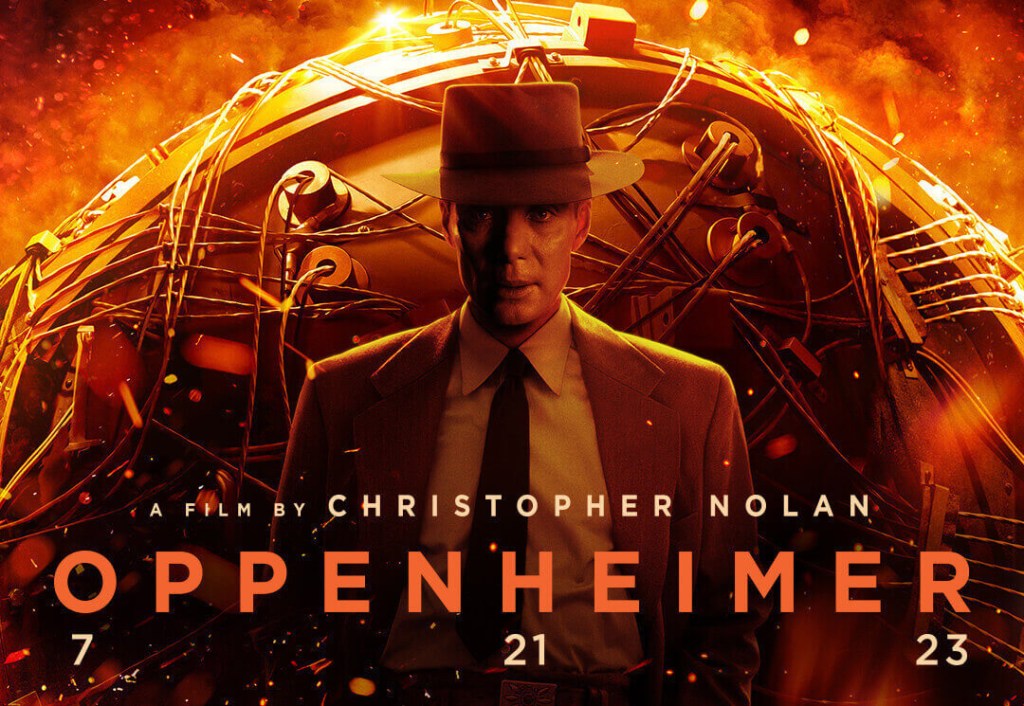
    Not only the movie of the year but most likely the movie of the decade. 

    Instantly up there in the high reaches with Apocalypse Now, Godfather II, There Will Be Blood and the best of Scorcese. 

    Although spiritually and visually I think it’s close to Apocalypse Now the other touchstone movie is Titanic. The audience knows the ship will sink and we know what will happen when the scientists at Los Alamos test the bomb. 

    And yet, it is almost unbearably tense. It’s the mark of a director who can absolutely own an audience and do anything he wants. 

    Here’s a filmmaker at the height of his powers delivering important material that acts as a lecture and a magnificenty entertaining biopic.

    A movie that contains multiple arguments and can carry several opposing views. Oppenheimer suggests that America is the greatest country ever and is simultaneously the most dangerous civilization in existence. So dangerous that we may someday be responsible for the end of humanity. 

    It argues that the left wing radicals and the conservatives who opposed them were both correct. 

    It argues that the bomb must be built to stop the Nazis, that ultimately using the bomb on Japan was necessary and that everyone involved should feel great shame. 

    The movie is not shy and refuses to give anyone easy answers. Nor does it turn Oppenheimer into a hero. It argues both that Oppenheimer was calculating and naive. That he felt pride in his work and real shame and suffered psychological damage over the deaths he caused. It also argues that he publicly martyred himself so that history would look more favorably upon him. 

    I have quibbles. It’s races so hard through every section that more than once I wished it would stay with a scene instead of cutting away. 

    And it feels like it is always cutting away, either to another interrogation in a different time period or to Nolan’s special effects. The explosions, rumbling sound, shaking and star device is ever present and perhaps a symptom of not trusting the audience to sit through the material. 

    I write that because I felt it but I also freely admit that those issues are the equivalent of turning to Picasso and asking him why all his lines are cube shaped. 

    Nolan is a master and this is his masterpiece. Any argument any of us make is just personal taste and not legitimate. 

    After all, it’s a three hour movie that keeps its audience enthralled not only at every minute but at every second. If it’s visually akin to Apocalypse Now, and materially similar to Titanic then in its rhythm it’s like Goodfellas. Which is, this is another movie that swiftly covers an entire life. 

    The difference may be that all of Oppenheimer is the equivalent of the final third — cocaine addled — section of Goodfellas

    Every actor is right for every role, every actor gets at least one scene to make their case and every performance is flawless. There isn’t a false moment even among the people who are largely required to stand in the background or look with awe and wonder on the great man. 

    Here let me list some of them for you: 

    Cillian Murphy, Florence Pugh, Matt Damon, Emily Blunt, Matt Damon, Rami Malek, Kenneth Branagh, Gary Oldman, and Robert Downey Jr. 

    It’s the casting equivalent of getting the 1927 Yankees. 

    Finally, Oppenheimer is the concluding argument that Nolan and other filmmakers have been making about the theatrical experience. 

    I would argue that a great film is great whether you see it in IMAX or on an iPad. But there is no doubt that if you can, you should see Oppenheimer in the biggest and best movie theater you can find. 

    It will set your world on fire.

  • Past Lives

    Past Lives

    This is a movie that declines anything resembling a Hollywood hook. 

    Audiences will find neither a broad comedy, a horror or a a special effects spectacle. Instead, it’s about a woman navigating her life, rationalizing her decisions and dealing with the emotional fallout of her choices. 

    It’s romantic, a little, and deals honestly with the immigrant experience of a Korean woman who immigrated to Canada as a child and is trying to make it in America. 

    I figured I would be the only one in my theater to show up. But a young couple (possibly teenagers) sat a few rows behind me. So, it was just the three of us grappling with writer/director Celine Song’s film.

    In the first section of the movie shows us Nora and Hae Sung who have a puppy-like hand-holding romance at 12. 

    12 years later they find each other over the newly formed Facebook. They are worlds apart but still connected. And they begin to speak every day and share their lives with each other. 

    And then, spoilers, they essentially break up. Neither will leave their career behind to move across the country for the other. Each of them say it will be a year before they could even get their heads above water enough to get on the same continent. 
    Nora (Greta Lee) tells Hae Sung (Teo Yoo) she needs some space. Then, she meets Arthur, marries him and moves to New York City.

    The movie shifts again to 12 years later. Hae Sung comes to New York City to visit. Nora agrees to spend a few days with him. They have deep and meaningful connection, still. But Nora is married. Hae Sung allegedly has a girlfriend (although the movie never shows her and I think she does not exist). Arthur is a good guy and a good husband. Although, I’m docking points because he apparently wrote a book called Boner. 

    Arthur and Nora have a conversation in bed that many couples will recognize. It’s the, “Why are you with me conversation.”

    Why me, why is, why now, why here? 

    If this were a story, Arthur explains, Hae and Nora would run off together. Nora makes a joke, explaining how this couldn’t be possible. She would never leave her work. 

    Instead of anything resembling emotional pyrotechnics everyone involved has a series of conversations. Each of them deep, meaningful and carefully considered. 

    No one wants to hurt anyone, no one wants to be hurt. 

    The ending is inevitable but the movie suggests something, in an alley, in its final scene. Nora never says a word, it’s all done in looks. It’s the best bit of acting I’ve seen this year. 

    And then it’s over. 

    From behind me I heard one of the kids say, “Is that it?” 

    But to me it was more than enough. I was locked into every moment and couldn’t look away. 

    And here’s what I want to say to you. If you are young watch this movie. Give it a chance. I know it’s not the usual fare. Then I want you to watch it again in 12 years. 

    I’m in my 40s and I felt every emotional choice, every conversation and every tear. But what will it feel like when I watch it again in my 60s? 

    You can’t enter the same river twice. And people change so much, so quickly in some ways. 

    And sometimes we remain completely the same. The people we were when we were 12 or 24 or 36 are still there. Our past lives moving with us through the years. 

  • Asteroid City

    Asteroid City

    What if Charlie Kaufman wrote a Wes Anderson movie?

    This is it, more or less, a movie that’s thrilling and confounding and moving in equal measure. 

    As I was going in the teenager at the concession stand asked me what movie I was watching. After hearing it he furrowed his brow and said, “a bunch of us watched it, none of us know what happened.” 

    That is a hell of an endorsement. 

    But it isn’t correct or it’s not correct for me. I know exactly what happened but I can’t tell you why any of it happened, what it means or what Anderson was referencing for this one. 

    This movie gives us the usual Anderson visuals and story and then does a black and white documentary (I think?) that purports to show us scenes of the playwright, the director and the actors who first brought the original play of the movie we are watching to life. 

    In the movie there is definetly a story unfolding that follows from A to B to Z. But the documentary sections aren’t telling a story, instead they are commenting on it or maybe riffing on the themes of it. 

    At one point the actor playing the alien says, “I’m going to play him as a metaphor.”

    Someone then asks, “A metaphor for what?”

    He responds, “I don’t know.”

    And if that bit if business didn’t just give you an immediate need to go see this movie then you should probably stop reading this review and move on with your life. 

    Wes Anderson makes movies for like 10 people and weirdly given my background and education I happen to be one of them. 

    Anderson’s main influence on his last movie was The New Yorker and I spent the whole movie like the Captain America gif: “I know that reference!”

    Here, fraid not. I wanted to write this before I looked up the trivia and find out exactly what Anderson is up to. I would not want you, dear reader, to think I am smart enough to get it when I clearly didn’t. 

    And while I don’t know the references it didn’t dampen any bit of my love for the film. 

    Like, I’m sure if I took creative writing at Brown at any time in the last 50 years I would have studied the 1950s era playwright who is likely satirized in this movie. 

    Certainly, given how the movie begins and the subject matter you might think of the Twilight Zone but Anderson rejects any lessons and the comparisons don’t hold for long. 

    Anderson and Tim Burton remain the only directors of the last 50 years where production design is ever present in every film. You can take any frame of any of their movies and recognize the director like they handed you a business card. 

    And there is definetly several elements that felt like this was Wes Anderson does Mars Attacks. Those are the setting, the music and the alien itself. Oh, and someone has a disintegration ray. 

    Someday Anderson will do a movie based on comic books from the 1960s and I will be able to tell you all about it. 

    I’ll tell you something else I find interesting about Wes Anderson films. He gets the greatest collection of actors in the world and then prevents them from doing anything close to emoting or capital A acting. 

    It works so well because anytime something close to an emotion shows up on screen is moves the audience. But it remains funny that nearly every actor, many of whom make their living playing characters that are permanently at a 10, are only allowed to play their characters at a 2 and then if they get an emotional denouement at all it will be a 3. 

    There is a moment here where Tom Hanks grandfather character has a discussion with his son-in-law (Jason Schwartzman) about the death of his daughter and Schwartzman’s wife.

    And in the scene Hanks gets frustrated with Schwartzman and pantomimes grabbing him and shaking him.

    But he pantomimes it, he doesn’t actually touch him. And here’s the perfect encapsulation of every Wes Anderson character ever. They are constantly frustrated with each other and they are forever unwilling to fully show their emotions or reach out and take hold of each other. 

    Two other things that struck me. Schwartzman has three small daughters who learn of their mother’s death and then grieve in their own weird and amusing way. Every scene with them is heartbreaking and hilarious.

    If the whole movie had been more of this? Perfect. If the whole movie had jettisoned the Charlie Kaufmanesque meta story? Sure I would have loved it.

    Second thing I keep thinking about. 

    There is a scene in the documentary section where Schwartzman’s actor character is discussing a speech he is going to give in the play. And now I wonder if I remembering this right. Maybe it was Scarlett Johanson’s character or both of them together. Regardless, the discussion is about a speech which is given in the documentary that clearly sums up the themes and emotions of everyone in the main plot.

    And when it happened I thought, “oh, they are gonna do this again, in the main story, with everyone finally playing some emotion and it is going to be amazing.” 

    And then, something else happens. And that scene doesn’t get a repeat. 

    It’s so audacious that they don’t go back to it and it felt so brilliant and (please forgive me) it’s CINEMA! 

    And as I write this it’s entirely possible that I just missed it. Maybe it happened and I missed it in the maze that is this movie. 

    But I don’t think so. 

    Instead, near the end Schwartzman leaves the movie, has a discussion in the documentary section of the movie with the actress who was supposed to play his dead wife in the play (but her scene got cut for timing) and misses his cue.

    I think that scene was supposed to happen there and instead we got a different (equally brilliant) scene. 

    Here’s a fun aside.

    I just called my friend who sees every movie and asked him if I was remembered all this correctly and he said, “Man I’m still trying to piece it together.”

    When I pushed him he said, “I took an edible remember?” 

    “Ohhh shit. Yeah.” 

    “Yeah, when it opened with a black and white documentary the whole crowd heard me go, ‘Fuck me.’ 

    Bwah ha ha. 

    He wanted one of Anderson’s candy colored delights. Instead, we all got a movie that doubles as a maze mixed with a crossword puzzle. 

    The lack of that scene reminds me of The Big Lebowski where several of the characters discuss a big bowling tournament. And given how movies work the audience thinks, ‘man, that bowling tournament is gonna come back and be important later.’

    And then that just never happens. Nor does it need to happen. In that era The Coen Brothers were working on a different level making movies that never needed anything close to convential closure. 

    One other connection I made was to Goodfellas. That film cruises along with normal movie logic and then in the final five minutes the main character turns to the audience, breaks the fourth wall and explains the brutal truth of his world, our world and how the rest of his life is going to go.

    It’s the move of a filmmaker who knows he has you in the palm of his hand. 

    We’re long past the point where I could tell you which of Anderson’s movies is his best movie. I’ll let someone else tell you which one is the best one. 

    What I can say, safely, is that this one may be his most unique movie in a career full of singular creations.

  • The Verdict

    The Verdict

    The way I do this, or did this when I was a young cinephile, is by picking someone and working through all of their films.

    Well, not all of them, usually if the reviews all stink I’ll avoid the thing. But this method is how I ended up seeing almost all the Clint Eastwood flicks, and Scorsese’s cannon and most of the Spielberg entertainments. I’ve grown up with Kevin Smith and Quentin Tarantino so I’ve watched all of those (well I skipping some the Kevin Smith stuff.)

    It’s, theoretically, a director’s medium, but in several cases there are writers I try not to miss, David Mamet and Aaron Sorkin especially.

    Along the way I tracked down most the highpoints of director Sidney Lumet’s career. So Serpico, of course, and 12 Angry Men and his last great work (Before the Devil Knows You’re Dead) I think I caught in a theater in 2007. Lumet is one of the great directors of his generation but his style is grounded in documentary and realism.

    He doesn’t draw attention to himself.

    Dog Day Afternoon certainly has its directorial flourishes but Lumet is usually content to let the story work on its own terms.

    There are directors I mostly dislike precisely because they won’t ever let me forget I’m watching a movie and that they directed it.

    Anyway, The Verdict is one of those all-timer Lumet movies that should be up there with the best of his work. Paul Newman, playing an old, drunken, failure of a lawyer is given a case by his former law partner.

    The movie will eventually explain why Newman (Frank Galvin) is so down and out and then Galvin will, of course, break all the rules in order to win this thing as he finally shakes back to a sober and productive life.

    It’s a movie where a lawyer goes to the hospital, sees his pitiful client, and essentially vows to himself that he will cross heaven and hell to see righteousness prevail.

    Material like that shouldn’t work. But Newman and Lumet make it work. Apparently, there were several versions of this script but Lumet went back to an older version written by a playwright who had only one other movie credit to his name.

    That playwright was David Mamet and the other credit was the Jack Nicholson version of The Postman Always Rings Twice.

    I didn’t realize it was Mamet until I got to a scene where Newman meets with the opposition. They want to buy him and his clients off. Which is exactly what a good lawyer should do. The whole point of the thing is to take a settlement.

    But, as I said earlier, he met the client and made a vow and now, even to his own shock, he can’t take the blood money.

    The opposition then points out that Newman doesn’t have a lot of options.

    “How’s your law practice?” one of them asks.

    “Not too good. I only got the one client,” Newman responds.

    And, that’s when I knew this was a Mamet script. Witty but with dialogue that can cut straight to the heart. There’s a betrayal in here too about midway through the movie. And the way it is presented, and the dialogue around it, is unique.

    Mamet and Lumet come from the same school of movie making. Show it and don’t tell it and whatever you do don’t overwrite it. The beauty of poetry, haiku, street magic and filmmaking is in doing as little as possible to get a powerful response out of the audience.

    Anyway, if you are in the mood for a lawyer picture then this is a top notch lawyer picture. If you want to make a night of it I suggest A Civil Action, which has John Travolta and Robert Duval, and teaches the opposite lesson about lawyers and empathy.

    And The Rainmaker which is the best of the John Grisham adaptations and has Matt Damon being earnest, Danny DeVito being sleazy and John Voight being haughty. It might be the best lawyer movie ever made.

    The Verdict stands with them. It’s a great one.

  • The apps that keep my tv and movie life organized

    The apps that keep my tv and movie life organized

    Once upon a time oh God he’s doing that thing where he talks about how old he is again we had three channels and no remote control.

    You knew what was on television because you flipped between the channels to see what was happening. As the only child I was the resident channel flipper. Only fancy households had TV Guide. Also, what do I need a TV Guide for? There are only three channels.

    Yes, they were in color. Shut up.

    Anyway, with the advent of cable but before the internet there were about a hundred channels and we had a remote control. My ability to control the VCR became as important as my previous duties to get up and change the channel.

    But even with all this new technology we still missed things. And if you missed an episode of Magnum P.I. then you were just out of luck. Hope you catch the rerun in the summer Jack.

    Of course, back then, television shows were not serialized all that much and if you missed one it was not all that big a deal. This did not become a problem for me until Babylon 5, which was one of the first great shows of my generation to be heavily serialized. It was syndicated which meant that it often appeared at weird hours and was a struggle to track down.

    And then, glory of glories, we got the DVR. First it was known as a TIVO and like the TV Guide it was only for rich people. But it eventually became part of every cable set up. Now, you could tell the tv computer what shows you liked and it recorded all of them, the good ones even recorded syndicated episodes on other channels. You could, over the course of a few months, get every episode of The Simpsons or Buffy The Vampire Slayer or some other classic show.

    What I didn’t know then that I know with certainty now, is that a lot of technology can actually make life worse. Much worse.

    For instance, the TIVO and the DVRs let us skip ads. What has the streaming era brought to many of us? Unskippable ads.

    Ugh.

    The other thing that has happened is that the television and movies you might want to watch are buried in a hive of different services that don’t talk to each other or talk to whatever computer box you use to watch shows.

    It’s so bad (both how the stuff is presented and my television addiction) that I have to use several apps to keep it all straight. Here are some of the ones I like:

    Letterboxd:

    For good or bad this blog exists because of Letterboxd and Twitter. Letterboxd is a place to catalogue movies you have watched and the review them. You can follow other people and read their reviews. It’s fun and I was having a fun time with it and then one day I said to myself, “Hey, what happens if an absolute schmuck buys Letterboxd and all these things you wrote on there just disappear.”

    Or say, the cheapo new owner wants to start charging for the previously free services? After watching Stop! Or My Mom will Shoot do you have the perfect essay on how it fits into Stallone’s mid-career choices? That will be $8 please.

    Letterboxd is wisely (I think) dedicated to film. But as a serious TV watcher it leaves a lot of room for me to use other services.

    Sequel:

    A tracker for nearly everything. It lists movies, series, games, books, and audiobooks. I don’t much care for the layout or the (I’m struggling for the right word) the way it feels, I guess. The way it works? Intuitive. That’s the word. This is not intuitive to me. I would be nice to have everything in one place. It also gets bonus points because it has home screen widgets. If you don’t know what those are then don’t worry about it. If you do then know what they are then know that Sequel is the only one, I think, that has them and they are cool.

    I haven’t tried the book or audiobook sections of Sequel. Also, for me, if I was going to have one app to rule them all, then it would need comic books as well.

    Speaking of Comic Books.

    I use CovrPrice and CLZ Comics. I think CovrPrice is the best of the various comic book tracker things I’ve tried. No one has gotten this right yet though. And it’s a hard one to crack. If CovrPrice had an interface as easy to use as TV Time (coming up in a minute) it would be a real winner.

    Reelgood:

    Reelgood is the first one of these tracker things that I used with any regularity. It’s solid and it did what I wanted it to do in terms of keeping me up to date on where I was in various television shows. The movie section was underwhelming though.

    TV Time:

    This is the one I’m using the most now, has the best interface and does everything I want. I really enjoy the upcoming section to help me keep track of which new episode will show up when and where. This one for me is the winner so far.

    Callsheet:

    I ended up in a beta test for Callsheet, a new app that was released today. Think of it as IMDB but optimized for your iPhone. Callsheet actually helped me find the Sarah Silverman comedy special I was looking for yesterday. It wasn’t Netflix it was HBO.

    I like Callsheet, I’ll probably pay the $9 a year the developer is asking for it. It’s a good little resource to help you keep actors and movies and shows straight. It isn’t really competing with TV Time or any of the rest of these other apps. It’s not for keeping track of things (at least not so far). But it does what it does well, and you can stay away from the gunked up internet to get a movie or TV answer.

    Apple TV:

    The app is actually one of the first places I go to figure out where I can watch a movie or a tv show. It does a great job of pointing you to the right streamer. And I skipped Blu Rays and bought a ton of movies and some TV directly from Apple over the years.

    I’m mostly happy with my life choices.