• Kill Bill: The Whole Bloody Affair

    Kill Bill: The Whole Bloody Affair

    “You’re not a bad person. You’re a terrific person. You’re my favorite person,” — Bill

    Chapter 1: The Intro

    When people ask me if I went to film school I tell them, ‘no, I went to films.’ — QT

    Deep breath … focus … center your Chi … Ready? Let’s do it. 

    In all the ways a movie can be a masterpiece Kill Bill formerly split up into Parts 1 and 2 and now joined back together and dubbed The Whole Bloody Affair is a masterpiece. 

    And if I were some other man, and this were some other movie I could stop right there. There’s no need to get chatty. Except that like Writer/Director Quentin Tarantino I have a lot I want to say and when you have something to say it is better to say that thing than it is to keep the thing you have to say unsaid. 

    Costumes, set design, action choreography, story, dialogue, cinematography casting, acting, direction, score and song selection are most of the things we must have to make a movie. In Kill Bill each of them is perfect. 

    I’d have to go back and look at the contenders but I’m certain that each volume would have been my top movie of the year in the years they were released. Re-cut and re-released together in 2025 it may be my favorite film of this year as well. 

    So, if you decide to keep going with this review at least you know who you are dealing with.

    Chapter 5: My Bloody Backstory 

    My movies are painfully personal, but I’m never trying to let you know how personal they are. It’s my job to make it be personal, and also to disguise that so only I or the people who know me know how personal it is. ‘Kill Bill’ is a very personal movie. — QT

    Tarantino has been part of my cinema experience for my whole life. You know how you have a favorite band in high school (Guns n Roses for me) and they are your favorite band for the rest of your life? 

    That’s me on Tarantino honey bunny. 

    Reservoir Dogs came out when I was in middle school. I did not see it in theaters. Pulp Fiction came out when I was in high school and it was a sensation. Everyone saw it. And then we heard about Reservoir Dogs and went back and watched it.

    I had a card to Blockbuster and Movie Gallery so I could generally find anything (I thought). 

    Jackie Brown was next and I liked it but didn’t get it initially. It took four or five rewatches to love it. But I eventually loved it and not only loved it but understood why Tarantino felt he had to make that movie after the unique experience of making something like Pulp Fiction being outrageously honored for it and then feeling what I can only imagine is enormous, unthinkable pressure to make a follow up. 

    It is a great movie and it is decidedly and purposefully not a sequel or a remake of Pulp Fiction

    In all these years Tarantino’s unique personality was certainly part of the package. I didn’t not come here to defend whatever he’s said or done lately that has upset a bunch of randos on the Internet. I spend a lot of time with the work. I spend a lot of time watching movies. I spend almost no time concerning myself with the politics or opinions of people I am never going to be around in the rest of my life. 

    You may feel different. When you hear about some awful or evil thing someone has done that may be your limit. I certainly have my own. 

    But as Neil Young once said, “they do their thing, I’ll do mine.” 

    Also, children, life was different back then. For one, there was an infant web and no social media. Everyone in the whole world was not constantly shouting their opinions at you. And if a director said something ridiculous it almost never became a big deal. 

    Go watch interviews with Tarantino in this time period. He hasn’t changed. I distinctly remember him slagging some master director or another on Charlie Rose. He was always this obnoxious.

    It’s just that most of the world ignored it, or couldn’t profit by being mad it, and the rest of us thought it was fun to hear non diplomatic answers (for once) from a great director. 

    And for all of Tarantino’s bluster and ego and penchant for saying ridiculous things there is one constant about him: He’s the greatest director of his generation. 

    Or as we say down south, “It ain’t bragging if you can back it up.” 

    Chapter 3: The Second Half of Kill Bill

    I come from a mixed family, where my mother is art house cinema and my father is B-movie genre cinema. They’re estranged, and I’ve been trying to bring them together for all of my career to one degree or another. — QT

    Having taken us to the Promised Land and the apex of his movie with the Blue Leaves sequence the second half of Kill Bill sets a more leisurely pace. 

    When it was initially released there were those (idiots mostly) who claimed Part 2 was a let down. 

    But the whole movie can’t just be The House of Blue Leaves over and over again. Hollywood would eventually do just that sort of thing with the ever diminishing sequels and spinoffs of various franchises. 

    Oh you liked this? Here is a lot more of this. 

    Instead, the second half of Kill Bill follows it’s revenge plot and genre exercises down several distinct paths. So we get a Western, a horror film (“so that’s a Texas funeral”), a kung fu training sequence, a kung fu boss battle, one scene that suggests an adult oriented exploitation film, and then a final confrontation. 

    Meanwhile, this part of the movie explicitly shows us something that the first half only hinted at. The Bride is not just killing a group of nameless, faceless enemies who did her a bad turn. She is systematically murdering the people who were the closest to her in her life. 

    Bill was her first true love. Oren was like a sister. Budd was Bill’s brother and was always around. Vernita was a co-worker and not much more. And Elle was her work rival for jobs and (you would suspect) Bill’s affection. 

    When they talk about one another (which I grant you they do a lot) it’s with love and admiration. Budd agrees that she should have her revenge but he loves his brother (even if he’d never say it) so when he tells The Bride he’s killing her because she broke Bill’s heart it hits just as hard as the nails in her coffin. 

    Even Elle, who hates everything and everyone, talks about The Bride with a grudging respect that borders on as close to friendship as Elle could ever get with anyone. 

    The Bride trusted all of these people with her very life. She had to. Could some of them betray her? Sure, Elle almost certainly and Vernita. Budd too, if the price was right. But Oren? That one clearly hurt. And Bill? Well, as she tells him herself. The thought of Bill betraying her would have been at the top of her list of things that would never happen. Her list of impossible things. 

    And yet, it did happen. And now they all must die. 

    It’s a ridiculous story but my God is it satisfying and magical to watch. 

    Addendum: The Whole Bloody Affair eliminates the only scene in the two part movie that I don’t like. The one that opens the second movie with The Bride summing up the first movie. She’s driving and talking to the camera about how she roared, and rampaged and now she will get bloody satisfaction and Kill Bill

    It was always stuck out like a sore thumb to me. And now it’s gone. And the world is better for it. 

    Chapter 2: The Apex

    “Violence is one of the most fun things to watch.” — QT

    When Tarantino showed Kill Bill to his producers (let’s ignore which ones in particular because I don’t want to get into that real life horrific backstory) they urged him to cut it into two movies.

    The first part would end at The Showdown at the House of Blue Leaves. And then Tarantino would get a year to tinker with the second part. 

    Ultimately, Tarantino agreed and made some necessary changes. 

    He also switched part of the bloody Blue Leaves sequence into black and white. Essentially, this was forced on him by the MPAA which threatened the movie with an NC-17 rating. In America that would have meant death at the box office. 

    The Whole Bloody Affair gives us that sequence in color, adds a long animation section as part of Oren’s backstory (it’s a section between what was already there) and an intermission where the original release ended at Volume 1. 

    For a lot of reasons this seems like a superior experience. First, because this is Tarantino’s take on the big third movie in historic trilogies. It’s his The Good, The Bad and The Ugly. 

    It’s an epic that is meant to be an epic. I can hear your kidneys growling. A four hour run time. To which I can only paraphrase Roger Ebert: a terrible movie is never short enough and a great movie can never be too long. 

    It didn’t feel long to me but I adore every sequence in the film. You can say a lot of things about Kill Bill but you can’t say it’s dull. It’s amazing at every turn. 

    Finally part of one four hour movie Blue Leaves becomes what I think it was meant to be — the Apex of the movie. Each sequence following it is meant to ease us down from that extraordinary high. 

    It is an amazing section that is part of an amazing film.

    Do you know when you know than you are about to watch something special? You might guess it’s when the Bride is stalking them while wearing Bruce Lee’s jumpsuit and riding a motorcycle. 

    But no, it’s earlier than that. It’s when she’s on that fake looking plane and she is flying under a red glow to Japan. If you haven’t noticed it before check out how she is carrying her katana on the plane with her. 

    It’s a helluva funny joke and a line in the sand. This world is not the world you are familiar with. Our characters are part of an insane universe where people just carry instruments of death through security and on a plane.

    In this moment Tarantino cranks it up to 11. Get ready, keep your arms inside the ride and make peace with your chosen diety The Bride is coming and bloody vengeance and hell is riding with her.

    Chapter 4: Music and Hijinks

    I’ve always thought my soundtracks do pretty good, because they’re basically professional equivalents of a mix tape I’d make for you at home. — QT

    It’s almost a given that any year with a Tarantino movie in it will mean that he also has the best soundtrack/needle drop/score of that year. 

    Kill Bill is the standout. 

    You could play elevator music over Blue Leaves and it would still be the best sequence of any move that year but pair it with Battle without Honor or Humanity and it’s just like the movie and the audience have ascended into higher plane of existence. 

    I hope the 5.6.7.8’s got rich off this because the deserve it. Anyway, not a lot needs to be said here, you know it, you hear it and it either moves you or it doesn’t. 

    Also, Kill Bill is outrageously funny. Yellow Haired Warrior will forever make me laugh. Or the moment where the Bride tells dozens of men that if they are alive they can leave the carnage filled battle site but they can’t take  their limbs with them. 

    “Those belong to me now!” 

    Kill Bill is a spoof, made by a guy who sincerely loves and takes seriously the dozens of movies he’s referencing. I remember an interview he did, probably on one of the dvd’s, where he hit the roof with his hand and said essentially, “This is about finding my limit.” 

    Or my ceiling. I don’t remember which. 

    But what I think he discovered is that there was no limit. That he could chase his passions where they may lead. 

    After the 2004 release of part two we would get five more movies from Tarantino. I adore them all. Yes, even Death Proof. 

    He says he will make one more and then hang it up. 

    Of course, he says a lot of things. 

    Chapter 5: The Actors

    There is such a thing as my kind of actor, and how well they pull off my dialogue is a very, very important part of it. — QT

    What do you say when every person in every role is note perfect? 

    Sonny Chiba and the sushi scene is always a highlight. 

    He goes from a good time jokester to the most serious samurai master who has ever lived. 

    He makes that perfect sword and then summons every bit of aura and says, “If on your journey, you should encounter God, God will be cut.” 

    Unbeatable man. Undeniable. 

    But it’s perfect casting all the way down from Michael Madsen to David Carradine to Lucy Liu and even Julie Dreyfus. She’s got almost nothing to do except look smug and then remorseful. But she does smug and remorseful like a champ. 

    Carradine, the snake charmer, exudes menace and authority and humor and seduction. Would a bunch of women go through hell to become the deadliest assassins in the world just to make him happy? You bet friend. 

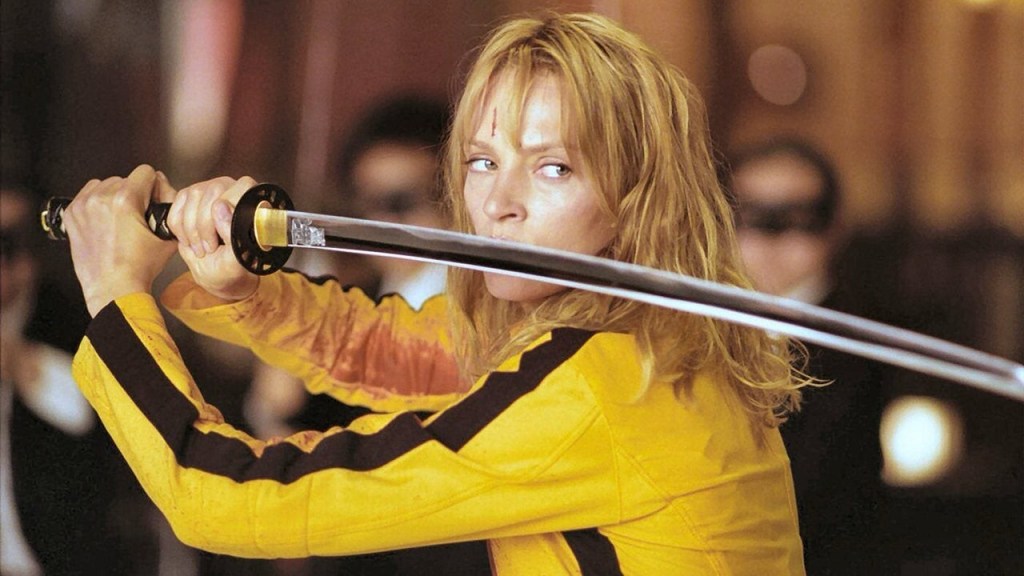
    Uma Thurman has to play everything from ditzy blond (she’s pretending) to the ultimate samurai, kung fu killer and revenge and rage fueled hero. Like Tarantino this movie showed there was nothing she couldn’t do. 

    Chapter 6 The Bloody End

    I’m probably only going to make 10 movies, so I’m already planning on what I’m going to do after that. That’s why I’m counting them. I have two more left. I want to stop at a certain point. What I want to do, basically, is I want to write novels, and I want to write theatre, and I want to direct theatre. — QT

    His whole career Tarantino has talked about movies that he will never make. All the way back in the beginning Tarantino fans were anticipating The Vega Brothers. Essentially a presequel to Pulp Fiction and Reservoir Dogs starring Michael Madsen and John Travolta. It never happened and it never will. 

    He’s promoted a Tarantinofied Star Trek movie and a Godzilla flick. 

    He’s even talked about a sequel to Kill Bill with Vernita’s daughter all grown up and seeking out The Bride for her own revenge. 

    If he ever made it I would buy a ticket for it. But as the magic eight ball might say, “reply hazy, try again.” 

    Now, near the end of what he says will be a ten film career he was almost about to go into production on The Movie Critic. But he pulled the plug, ultimately deciding that it wasn’t the right film to end his career on. 

    And in maybe the wackiest moment of career filled with wacky moments David Fincher is directing a sequel to Once Upon a Time in Hollywood staring Brad Pitt from a script written by Tarantino. 

    I guess that doesn’t count in the 10 movie limit? Unbelievable nonsense but I’m still thrilled. 

    I’ve written this before but Tarantino doesn’t owe me, or you or anyone else anything. Unless you are one of the very few people in the world to actually do it you have no idea what it costs, emotionally, physically, or mentally to make a film. And not just a film but the kind of film that movie studios are betting on. 

    We got 9 films from this guy over three decades. Maybe, we will get one more. Maybe we won’t. Maybe he’ll do that decrepit old man roll Gene Wilder did in Willy Wonka and The Chocolate Factory and hop up after the tenth film and shout, “just kidding. I’m going to make 10 more!” 

    I certainly hope there’s one more coming. And if he made 10 more and I could get there from The Old Folk’s Home I would watch those too. 

    But studio budgets are guaranteed to no one. Every champion who has ever lived was eventually undone. Time remains undefeated. 

    Or to put it another way: 

    Bill: How do I look? 

    The Bride: You look ready. 
  • Jay Kelly

    Jay Kelly

    I’m shocked at how much I enjoyed this. 

    From the trailer I thought, no way will this one be for me. And yet, it absolutely was. 

    Clooney and Sandler and everyone else putting in monumental work. Or actually, given their skills at this point of their lives, maybe not monumental work but because they are so good at what they do it feels extraordinary. 

    Every game LeBron James was just putting in another day at the office he just happened to also be for a decade or two the best player in the league. You know? 

    Meanwhile, Noah Baumbach and writer Emily Mortimer squeeze all the juice from this particular kind of story. It takes one or two side trips that should have been avoided but it also is funny and emotional and occasionally truthful. 

    And it has two of the best running jokes in the movies this year. 

    Early on I thought, “oh man, this is just Clooney doing an Entourage riff.” But nope, it finds an emotional core, moves though all the parts, and then satisfies at the end. 

    What I’m pondering now, as I think about Jay Kelly is the casting. 

    I am often fascinated with casting. One of my favorite westerns is Quigley Down Under, a comedy adventure that pits Tom Selleck’s noble good guy against evil Australian (or Englishman I dunno) Alan Rickman. 

    Originally, Steve McQueen was supposed to have the Selleck role and that would have been a completely different movie. Something much more serious, I think, and most likely wonderful and fascinating in its own way. 

    Or think of Die Hard, now think of Sly or Arnold playing John McClain. Disturbing right?

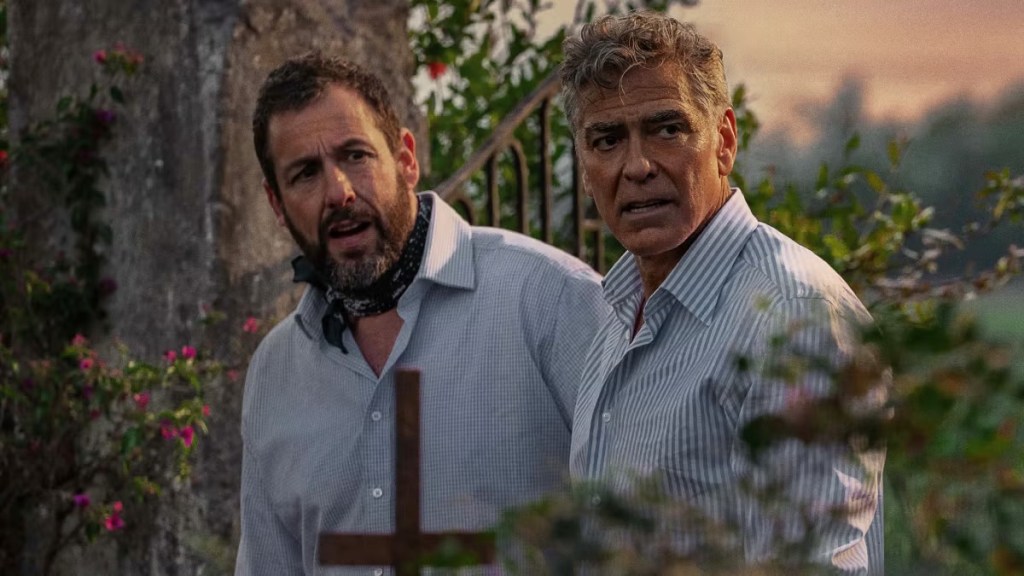
    In Jay Kelly George Clooney plays a fictional version of himself, an aging movie star who has all the money and servants he wants but no familial love. One of his daughters wants nothing to do with him because he abandoned her during his salad moviemaking days.

    The other, newly 18, wants to build a life for herself outside of his shadow. She’s not mad, necessarily, she’s just (as Jay Kelly frequently repeats) 18. 

    “You remember what that was like.” Kelly says at one point. 

    The character as played by Clooney is just the right mix of depression, arrogance, need and obliviousness. Originally, Brad Pitt was supposed to play Kelly. 

    And, well, that wouldn’t work, would it. Pitt doesn’t really play vulnerable or needy. And he already took a shot at this sort of thing in Babylon

    So who else is there? Tom Cruise? No way he’d play someone who had second thoughts about being a movie star. His whole persona is now tied into how awesome life is when you are movie star. 

    Leo’s too young and his off screen life choices wouldn’t lead you to believe his character ever had kids he cared about. 

    Matt Damon could pull it off but I’m not sure he or Ben Affleck could do the wink, wink nudge, nudge this is really close to how my life actually was that Clooney pulls off here. 

    So, that leaves Clooney.

    And it works beautifully because of him. 

    Stacy Keach has a meaty little part as Kelly’s dad. Jim Broadbent is magnificent as always playing the now elderly director who gave Kelly his big break. 

    The only person I’m mixed on is Adam Sandler playing Kelly’s long suffering personal manager. He knocks some scenes out of the park, especially one where he has an uncomfortable client meeting in Italy. 

    But the role calls for whatever the modern equivalent of either Woody Allen (if you want nerdy and nebbish) or Rip Torn (if you want protector/ pal). 

    Sandler almost gets to one of those and then the other but not quite. 

    The issue may not even be Sandler’s acting but my reaction to him. When I see him I see the guy who was once the biggest comedy star in the world.

    Watching him play a different kind of character than the one he plays in “Adam Sandler” movies is strange.

    His role in Uncut Gems suggests it’s possible but it’s still a difficult thing — for me at least.

    If you are like me and you saw the trailer and thought, “the last thing I want to watch is another Hollywood movie where everybody gazes at their own navel for two hours,” all I can tell you is that this movie is exactly that, and it’s still great.

    In the end, there is a tribute to Jay Kelly, and I wondered if Baumbach would be cheeky enough to handle it in a certain way. 

    Reader, he was just the right amount of cheeky. 

  • Bullet in the Head

    Bullet in the Head

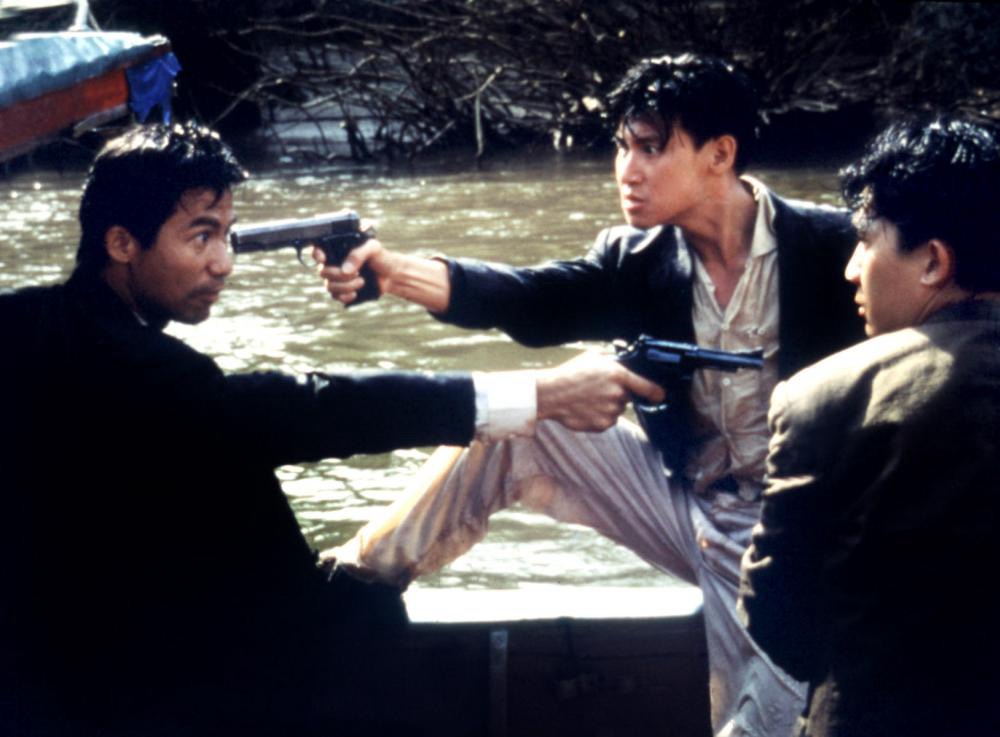
    John Woo’s The Good The Bad and The Ugly. Or Apocalypse Now. Or his Once Upon a Time in Saigon if you like. 

    Couple of thoughts. 

    You know how that gun fight at the end of Scarface is the greatest thing you have ever seen? Woo does like three or four of those per movie. At least he did when he was on his near 30 year hot streak that began in 1986 in Hong Kong. 

    This one was on my list for a long time but I could only watch it now that Woo and the films of his Hong Kong contemporaries have been rereleased in America. 

    You can see all of them and more great stuff on the streamers. Don’t miss out. 

    I didn’t think much of the first hour but everything from the POW sequence onward is some of the most insane moviemaking you have ever seen. 

    Even the story, usually Woo’s weakest work (for me at least), got to me towards the end. Or at least it wound up getting somewhere I cared about after too much dithering with side characters and storylines. 

    It definitely hurts that Chow Yun Fat did not choose to be in this. You will recognize which character he was supposed to play immediately after he shows up. It’s not subtle. But there is a reason why Chow Yun Fat was the man and lots of other people never got there. 

    Finally, if you ever see an explosion go off near someone in a John Woo picture and wondered, how did he make it look so real? The answer is that it was a real explosion that was probably set off way too close to a real actor or their stunt double. 

    And there are a lot of guys out there with the scars to prove it.

  • Wake Up Dead Man: A Knives Out Mystery

    Wake Up Dead Man: A Knives Out Mystery

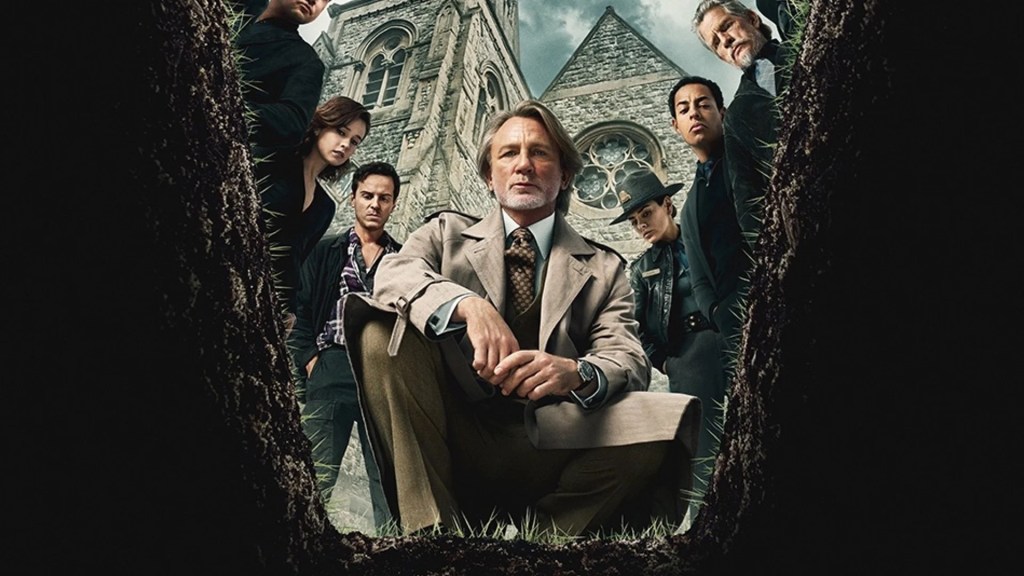
    Benoit Blanc is an American original. 

    Sherlock Holmes by way of the American South. Poirot with charm. Columbo with style and wit. 

    His adventures force him to face off with venal representations of the worst our country has to offer. In his first outing he confronted different forms of racism, his second had him railing against the lords of big tech and here he takes on the “whitewashed tombs” of hypocritical Christians. 

    In each film Writer/Director Rian Johnson makes his particular points, but he does it with humor and joy. These aren’t sermons, they’re somewhere between Looney Tunes and the good parts of Murder She Wrote

    So this is a perfect Benoit Blanc movie. Which is not the same as a perfect movie. Can there ever be such a thing? What it is is the best example of what I (and I suspect most of you) want out of Benoit Blanc murder mystery movie. 

    Someone references Scooby Doo in this movie and it was not out of place. Just part of the fun. 

    In another section someone asks, “Did I see you on The View?” 

    And check out how Glenn Close keeps appearing out of thin air. 

    Delightful. 

    My mom (who lives for tv detectives and fictional crime novels) loved it. Your mom (if that is her thing) will too. 

    The secret, if there is one, is that Daniel Craig’s performance as Blanc constantly suggests that he is a rascal. A hunter searching for “Wicked Wolves’ who lives for the thrill of the chase. Or a fox in the henhouse. 

    Or put another way, he’s Bugs Bunny with Foghorn Leghorn’s accent. 

    If you can see this in a packed theater listen to the audience when Blanc makes his appearance midway through the flick. It wasn’t quite a cheer but everyone in the room settled in knowing that all would soon be right in the world. 

    The other secret of these movies is stunt casting. Look, if you can hand off parts of your mystery to Kerry Washington, Josh Brolin, Andrew Scott and Glenn (freakin) Close 80 or 90 percent of the hard work is already done. 

    I have been a fan of Ryan Johnson since 2005’s Brick. He is a sharp writer and an inventive director. In a better world The Mouse would have handed him the Star Wars franchise and let him run with it. 

    Instead, he’s got a franchise of his own and, having finished a huge contract with Netflix he can take it off in a new direction. 

    There is a temptation here though, that must be resisted, as Frodo resisted the one ring and the characters in Wake Up Dead Man should have resisted this flick’s Macguffin. 

    There will be those who say they want Blanc’s backstory. His first case. The tragedy that made him a detective. The section of the novel titled Who I Am and How I Came to Be. 

    That way lies damnation. 

    Never explain him. Never show why he is famous for being a detective. Can you name any real life famous modern detectives? I suspect not. 

    Never give away the mystery, never play an ace when a two will do. It is almost always ruinous.

    The audience will examine the clues and search for answers and meaning with no help from the author. 

    The joy is in the hunt and finding meaning in our own way.

  • Springsteen Deliver me from Nowhere

    Springsteen Deliver me from Nowhere

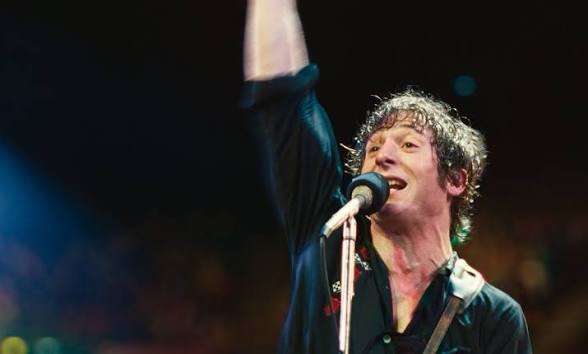
    Springsteen Deliver Me from Nowhere is not a movie for everyone. I read the book and it is a slog. 

    And before I even watched this thing I had my argument all worked out. That it is Michael Mann’s Ali all over again. That the creatives had picked the worst time in the famous person’s life and depicted that instead of giving us all the good times we really wanted. 

    Making a movie about the most famous and entertaining boxer of all time and choose the three years where he doesn’t box because he is being persecuted by the federal government is a hard ask for an audience. 

    Ali doesn’t work for me but this does. Would I have been thrilled with the usual assortment of music movie riffs where we see Springsteen leaving his poor background and becoming a superstar? A movie where his then girlfriend says something to him about an olympic athlete being a born runner and then it hard cuts to Springsteen writing Born to Run? You bet. Sign me up! 

    But Springsteen would probably never authorize that movie. That’s too easy. Instead, we get a film where he is already a star and is going through an existential crisis as he creates one of the greatest albums of all time. 

    I give it five stars with an asterisk. 

    Here is a litmus test though for if it might be for you. 

    Do you think The Boss is one of the greatest musicians of the 20th Century? 

    Do you think Nebraska is his best album? 

    Do you have all of his songs memorized and most of the lore behind each album and song catalogued in your head? 

    Will you be satisfied with a movie where there is precious little conflict and is instead filled with tone poems that give you visual cues and signposts for various things that happen in the lyrics on Nebraska

    Can you handle a movie that, just like its inspiration, isn’t designed to be a crowd pleaser? 

    I mean seriously, which movie can you think of that gives you a relationship just to show it fall apart and in falling apart makes the titular hero of the piece look like a schmuck? There are certainly plenty of those kinds of movies but I doubt any of them made any money. 

    My dad served in Southeast Asia during the Vietnam era. It was always important (to him at least) to note that he had not served in country in Vietnam. 

    However, wherever the hell he was over there he managed to survive two helicopter crashes and come back alive. 

    He married my mom, got a job at a factory, had me and ignored his PTSD for 40 years through a combination of Jesus and Bourbon. 

    I’m not saying Bruce Springsteen has been singing about me and my father and our lives for his entire career. But I will say that I recognize all the people in his songs even if I have never set foot in New Jersey in my life. 

    There is a song on Nebraska called Used Cars about a husband and a wife buying a new to them family vehicle. The song hints at a dark and troubled marriage. Something I watched myself in my own seat in the car as a child. 

    “Now mister the day the lottery I win
    I ain’t ever gonna ride in no used car again.”

    There are certainly other joys here than personal connections. Watching Springsteen’s band and studio guys react to a rendition of the rocking version of Born in the USA is wonderful. Everybody hears it and understands how much money they are all going to make. 

    Watching the horrified reactions to the Nebraska songs and Springsteen’s decision to put them out as is when any other artist would write them off as unreleasable demos is also a fine running joke. 

    I’m not sure the movie conveys how much of Nebraska was also a smart marketing move. Springsteen knew what he had with Born in the USA and the rest of the songs on that album. 

    He knew what that path would entail. From then on it wouldn’t just be stardom but superstardom. The kind of place where the President of the United States mentions you in his speeches as what is right with America and completely misinterprets your song. 

    But if he released Born in the USA then it was probably it for him as an artist. When he did eventually release it, it basically took Bruce a decade to make something as creatively (though not commercially) successful as either Nebraska or Born in the USA. That was the very Nebraska-like Ghost of Tom Joad. 

    Releasing Nebraska allowed Springsteen to take the different step before superstardom hit him like a freight train. He would always be thought of as a serious artist who made and released music that had something important to say to his audience. Springsteen was surrounded by a bevy of heartland rockers. Some of them were straight up imitators and some were real artists chasing their own sound and vision. 

    But there is only one Springsteen and Nebraska is a big reason why he broke through amongst the critics and fans and isn’t considered just one of those guys. 

    The Boss continues to make albums that range from good to great and recently released five albums that he had made but never unleashed. Critics, astonished, have said that many of these albums are as good or better than what was officially released over the decades. 

    Springsteen’s response is simple. They didn’t convey what he wanted to say as an artist at the time. 

    Nothing counts so much as your integrity. If you won’t keep your word (or in this case your bond with your audience) nothing else matters. 

    Although the romantic side of the movie doesn’t have a happy ending Springsteen does make peace with his turmoil over his father. 

    My father and I fought like hell towards the end of his life. But we did reach a mutual understanding. 

    He called me crying and happy after my mom told him we were going to have a second child. I had planned to surprise him but my dad, forever the wheedler, had coaxed it out of her. 

    The last conversation I had with him ended when he told me how excited he was for this second grandchild and that he loved me. I told him I loved him too. A few days later he he was gone. 

    How did I feel about that? About him going before the baby got here but at least that our last words were of affirmation and love? 

    “Struck me kinda funny
    Funny yeah, indeed
    How at the end of every hard-earned day
    People find some reason to believe.”

  • Frankenstein

    Frankenstein

    Gather round children and I shall tell you of the before times. 

    For you see we also did not do our homework. But with no Chat GPT to guide us we were forced to cheat in other ways. Some purchased Cliff notes – which presented some problems. There is a Cosby episode about it and you should check it out. 

    The rest of us watched the movie. To Kill a Mockingbird is a classic book. The movie is also a classic and if you were so inclined as to skip the book, well, the movie hits all the highlights. 

    And so it went. Francis Ford Coppola gave us Bram Stoker’s Dracula in 1992. It’s both a masterpiece and faithful enough to get you a B. 

    Franco Zeffirelli gave us The Taming of The Shrew and Romeo and Juliet. I don’t know if you are allowed to watch Romeo and Juliet now because of the (redacted) but I’m pretty certain my English teacher showed it to us in high school. Times have changed my friends. 

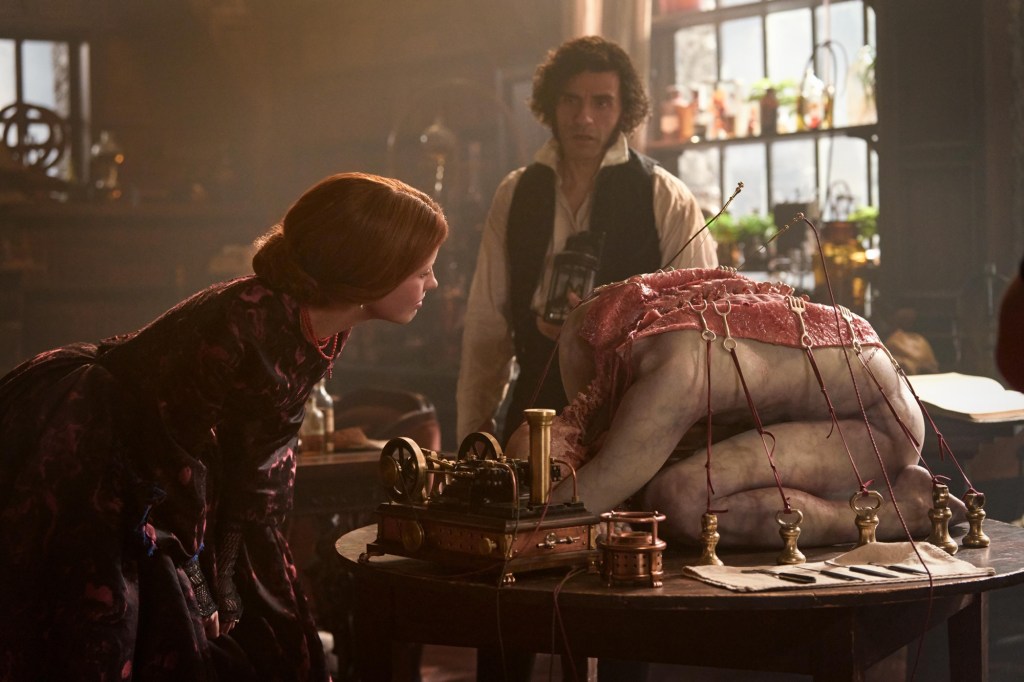
    Guillermo Del Toro’s Frankenstein belongs in this category. Sadly, the fact that you could safely show this to a room full of ninth graders without getting in trouble is not necessarily a compliment. 

    Before I criticize it though let’s talk about what is great. The cast, the set design and a lot of the story. 

    Mia Goth is the truth. Christoph Waltz, Charles Dance, and David Bradley get to bring their particular gifts to the screen. Waltz is the greatest movie character actor of his generation and he takes another wonderful turn here even if the story gives him almost nothing to work with. 

    Oscar Isaac is really good when he is allowed to ham it up and be a villain. But he doesn’t get those opportunities enough. He and Waltz really should have been let loose to see who could cook the most bacon on screen and neither got it until their final moments together. 

    I will say, during that scene, Isaac simply saying the word “No,” sent me into a fit of laughter. A brief glimpse of what might have been. 

    Goth is notable for taking a character that is cut from most tellings of Mary Shelley’s story and making her into something interesting and human. Jacob Elordi has a thankless task of being a monster but he’s a gamer and I think he mostly pulled it off. 

    So what’s bad about it? 

    Ultimately, this movie is like a sports car that never gets on the track. Del Toro revs the engine more than once and you feel like it might squall the tires and take off. (Ed. Note: No I don’t mean squeal. In the south some of us say squall.) 

    I noticed the music and didn’t like it. That’s never a good sign. I kept noticing that Netflix sheen that they do where everything looks 4k shiny but also bland as hell. 

    There are several moments where blood and other colors should pop on screen and instead it looks dull. I don’t know if that was a censorship thing (so that this could be played in classrooms), my theater, or a Netflix thing but it sucks. 

    Also, you watch this and you can see why in 1931 Director James Whale and writers Peggy Webling and John L. Balderston set fire to most of Mary Shelley’s book and did their own thing. And why everyone mostly agrees that the sequel, Bride of Frankenstein (1935), is the superior movie. 

    Del Toro made classics before his work with Mike Mignola on Mignola’s Hellboy adaptation made him a big deal. I remain interested in what he does because it’s usually incredibly unique and because I have an affinity for that comic. Del Toro made a masterpieces with the first Hellboy and a really good movie with the sequel. 

    I hold out hope that whatever happened there will get mended and Del Toro will get a chance to make the final flick in what should have been a Hellboy trilogy. 

    However, I will also accept a big production of H.P. Lovecraft’s At the Mountain of Madness

    I haven’t read that classic either but I’m betting Del Toro can get his swing back.

  • Cloud

    Cloud

    Just to be safe let me warn you that this review contains spoilers for Cloud and for some reason Light Sleeper.

    Often I cackle at great movies. 

    There is the laugh/whoop I let out when a a director and his stunt team pull off an amazing action set piece. Think John Woo or the first Die Hard or some of the better sections of Tom Cruise’s filmography. 

    Or the bit of testosterone fueled joy when a cowboy says something incredibly bad ass to a villain. 

    “Fill your hands you son of a bitch!” Comes to mind. 

    Or just a moment when a hero, or sorta hero, delivers righteous vengeance to the scum who deserve what’s coming.

    During Light Sleeper I shouted at the screen, “Now go kill that last bastard.” And was well satisfied when that revenge fantasy played out like I’d hoped. 

    When I got to the climax of Cloud I let out a completely satisfied dark cackle. Here was a great joke told at the gallows. Or more accurately a joke told at the gates of hell. 

    Masaki Suda plays a reseller who is really good at what he does and very oblivious to anyone he might hurt, anyone in his life and anything at all other than profit. 

    Writer Director Kiyoshi Kurosawa clearly got taken at some point because he is creatively taking revenge on the whole enterprise. I am reminded that the Coen Brothers wrote Fargo and made one of their sleaziest characters a used car salesman after a bad experience at a dealership.

    The flick starts very slow and I was worried I had stumbled, again, into Evil Does Not Exist territory where the entire flick is very dull and then something happens and then that’s it. 

    Thankfully, after a half a movie of set up and hints of troubles to come Cloud takes off spectacularly with a tense kidnapping and a unique showdown. 

    One of the big innovations of Akira Kurosawa’s Seven Samurai was that most of the samurai and bandits fought like they had not been well trained or been in battle before. They fight like they really do not want to get cut. 

    And during a lengthy shoot out in a warehouse (the kind of thing any movie fan has seen a million times before) Kiyoshi wrings a ton of interesting, funny and strange moments by recognizing that almost none of his characters have ever been in a gun fight before. 

    There is a moment during a dangerous thing happens when Masaki, who should be running for his life, calling the cops or checking on his loved ones, stops to check his sales.

    At that moment I cackled and said, “You are so dead.” 

    Instead, Kurosawa gives him a fate worse than death. If you have ever tried to buy a Christmas present or a concert ticket, couldn’t and wanted to strangle a scalper then this movie is for you. 

    One of the year’s best.

  • Mishima: A Life in Four Chapters

    Mishima: A Life in Four Chapters

    There is a deep temptation here, to deal with this movie in a review, to make a joke. 

    This is how Americans in my generation deal with this level of sincerity. After all this is a movie about a guy who was so committed to his beliefs that he killed himself over them. 

    As I consider my joke I’m thinking of screenwriter William Goldman who wrote that he regretted the ending of Butch Cassidy and the Sundance Kid. 

    The movie famously has one of the greatest endings in cinema as Butch and Sundance face down the entire Bolivian Army and go out to certain death with their guns firing and with their cowboy boots still on. 

    Thats’s the western version of the samurai decision to commit seppuko. In the movies American men kill themselves for their beliefs too but they always take some evil bastards with them. 

    So what was Goldman’s problem with the ending he wrote that everyone else thought was perfect? There were too many lines between Butch and Sundance in their final moments, too many quips. He wrote in Adventures in the Screen Trade that he wished he had just let them go out without all the verbal turns. 

    That is not a problem the writer and director Paul Schrader has ever encountered. If you told me Schrader had ever heard a joke, much less laughed at one, I’m not sure I would believe you. 

    Mishima is both deeply outside of Schraders normal fare and also well within his normal themes. 

    The true story of one of Japan’s most famous writers who is deeply committed to a set of beliefs about Japanese society and ultimately determines that he must follow those beliefs into death. 

    Schrader and his brother Leonard and Leonard’s wife Chieko wrote the screenplay. It infuses Mishima’s stories and philosophy into the movie while also giving us glimpse of elements that Mishima probably didn’t want us to see. It’s visually inventive and it has a unique (for Schrader) story structure.

    Schrader wrote Taxi Driver (1976), wrote and directed American Gigolo (1980), Light Sleeper (1992). Taken together they’re the God’s Loneliest Man trilogy. I previously joked that he invented the male loneliness epidemic. Schrader’s next trilogy Man in a Room consisted of First Reformed (2017), The Card Counter (2021) and Master Gardner (2023).

    I think they’re all fantastic but they should also come with warning labels. Schrader movies are an acquired taste that delve deeply into depression and suicide. I think as a writer he only considered redemption for any of his protagonists recently.

    I need to watch Mishima a couple of more times to really take it all in. I got lost a few times as the movie weaves between real life and Mishima’s stories and what was happening in the final sequence. Elements of that final section are sprinkled throughout the movie. Some of my issue was just the chaos of watching it at home and getting pulled away from time to time.

    But some of it is that the material is dense and meant to be closely examined. It’s like that sometimes when you deal with a masterpiece. 

    Anyway, here’s my little joke. 

    Two samurai watch as a third commit seppuku. As he screams and blood splatters and dies the first samurai leans over to the second. 

    “What was his problem?” he asks. 

    “Yeah,” the second one replies. “He was too committed to the bit.”

  • Hard Eight

    Hard Eight

    An older man for reasons known only to him takes a young man who is on his last leg under his wing. 

    He shows him how to live the life of a gambler. It is not, let’s say, very romantic. But the old man (Philip Baker Hall) has a certain style and gravity and presence that’s lacking in young men everywhere. 

    A cocktail waitress calls him Captain. That name is a lot closer to the truth than his given sobriquet of Sydney. 

    We see the young man, (John C Reilly) respects this new mentor and begins to emulate him. 

    And then, well, life can take some turns man. 

    Hard Eight was written and directed by then first time director Paul Thomas Anderson in 1996. It really doesn’t suggest what Anderson’s movies would become.

    The deep pain and longing and need for connection is there, certainly. But they are wrapped in low rent and low budget sort of crime film. 

    I wonder if he could have gotten the budget if the setting would have been more glamorous. I doubt it because none of these players are meant to be high rollers.  

    I watched Hard Eight years ago and watched it again tonight as I psych myself up and get ready for One Battle After Another

    IMDB claims that Anderson doesn’t talk about this movie all that often except to say that he didn’t understand back then how he needed to make the relationships between a director and his producer work to get what he wanted. 

    The movie was allegedly taken from him and the producer was going to cut it shorter. But Anderson won out when the flick got accepted into Cannes. 

    From the outside and knowing what we know now it’s hard to argue that anyone but Anderson should have the Final Cut on his movies. But consider that Anderson really wanted to call this flick “Sydney.” 

    That’s maybe the correct name for this film while also being a terrible name for a movie you want people to pay money to see. 

    This is probably the definition of a slow burn or maybe the first half of it is just required to be slow. The second half picks up nicely and features several violent crimes and at least one or two all timer “tough guy” lines. 

    But don’t misunderstand because this is not what I would call a tough guy flick. Even back at the beginning Anderson would never let a character be anything other than a rounded human being. That rules out most of the archetypes required to make a revenge picture or a crime picture actually work. 

    What we end up with is unique people placed in a few extraordinary circumstances. 

    A crime picture that doubles as a character study. 

    It works. I liked it. But I’m also very glad that Anderson found his groove on his next go round.

  • AKA Charlie Sheen

    AKA Charlie Sheen

    I don’t know what to make of this.

    It seems to exist as a way for Sheen to announce that he’s fine now and for him to praise his father who never stopped trying to save him.

    There are plenty of drug stories (including one I don’t quite believe about him rescuing a damsel in distress). But there’s nothing really about his work. 

    The people around Charlie all get to have their say but Heidi Fleiss is the only one who seems to tell the whole truth. Sean Penn seems a little too enamored with Charlie’s exploits.

    My dad was a serious alcoholic and I see a little too much of my mom in Denise Richards who stays a caretaker long after she probably should have done what was best for herself. 

    The documentary leaves us with a new revelation about Sheen’s sexual exploits that isn’t as shocking as everyone in the documentary seems to think it is. And with the idea that after decades of addiction that Sheen is now a good father. 

    I am reminded of an old Lewis Grizzard joke about a preacher who called the faithful to confess in front everyone all their sins. 

    “Tell it all brother, tell it all,” he exhorts. 

    And then when one guy tells one sin too many he replies, “Damn brother I don’t believe I would have told that.”