Category: Uncategorized

  • The things we lost in the streaming wars

    The things we lost in the streaming wars

    We all have to walk through the past to get to the future. Please indulge an old man for a moment.

    We need to start with the iPod and Netflix. Netflix happened first in 1997 which happened to be the year I graduated high school. The original company, for those of you who don’t know, delivered these things called DVDs by mail.

    What that meant, functionally, is that nearly every, single DVD was suddenly available to anyone, anywhere in the world. I have always lived in small to medium towns with small to medium DVD rental stores. Movie Gallery I miss you. But now, I could see the movies Roger Ebert was writing about.

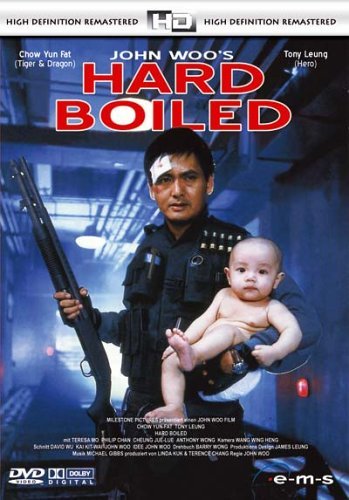
    I’m gonna mention two, Twilight Samurai and Hard Boiled.

    Hard Boiled is one of the greatest action movies ever made. Director John Woo invented a new action style of incredible movement mixed with gunfire. If you were an American you had never seen anything like it before.

    It came out in 1992. I’m fairly certain that even though I was aware of it I never could get a copy of it until Netflix in 1997 and forward.

    Twilight Samurai was a 2001 flick and is child of the Akira Kurasawa school of samurai films. I’m not going to pretend to be an expert for you on samurai films but most of the time Kurosawa’s characters were very close to actual human beings and their sword fights were messy affairs of real people trying very hard to hurt their opponent without getting cut or stabbed.

    They are movies about people, extraordinary people, perhaps but even with the action there is also real drama and heart at play. Twilight Samurai is one of the best of these kinds of movies from the 2000s.

    So, here’s what happened next. The iPod came out in 2001

    Here was a typical weekend for me before the iPod came out. I would get paid, then I would go to a bookstore, the CD/DVD story and spend a not inconsiderable portion of that paycheck. I also went to the comic book store (and still do) but lets ignore that for now.

    When the iPod came out and I eventually could afford one, the lightbulb went off.

    “Oh, we are definitely not going to be buying CDs or DVDs anymore,” I thought.

    The summer I got an iPod was a great summer. I had a massive CD collection that I was burning to a hard drive and putting the music on an iPod. FYE would give me cash for those old CDs — which I no longer needed — and I could then spend that cash on dates, movies in the theater, and gas for my green Ford Ranger.

    That was fine dining indeed.

    Next, Netflix starts to get on board with streaming television and movies, we get Hulu and Apple eventually cracks Hollywood and you can buy all the shows and films you want, digitally, at a reasonable price.

    For the purposes of this article, I’m ignoring that the internet was always a place where you could illegally get whatever you wanted. Without going too deep into the weeds on this I want to say that as a writer I’m sympathetic to anyone (writers, musicians, directors, assistants, and a host of others) whose livelihoods depend on people paying for the things they create.

    But by the late 2000s you could see the future and the future was that for a reasonable amount of money, you would be able to buy anything you wanted or subscribe to a service and get anything you wanted. And it would all be in “the cloud” waiting on you.

    And the very first thing all of us were going to do? Kill our cable bill.

    Ben Thompson, a brilliant business writer who founded Stratechery, wrote about this several times over the last decade. And what he wrote was constantly confounding to me.

    His writing is much deeper and more insightful than this but if I can boil it down it was this:

    1. The cable bundle is a great deal for consumers, companies, and creators.
    2. Killing the cable bundle is going to lead to a worse and more expensive outcome for everybody.

    It turns out he was correct. I don’t think he had to be correct but he ended up being correct. It’s important to note — which is what I think is missed in these conversations — the future we live in now is not what those of us who believed in streaming and ending cable thought it was going to be.

    At the time we were paying $50 or less for internet and another $100 for cable. A little more than that for cable with premium channels like HBO. What we thought or foolishly believed was going to happen was that consumers would be able to get everything they wanted with $50 for the internet and another $10 for Netflix.

    Anyone with an MBA is pointing and laughing at me right now but I promise you a lot of us believed this.

    What actually happened was that the cable companies with no fear that the US Government would regulate them in any way just raised the price of the internet to the point where it no longer mattered if you had cable or not. They were going to get their $100 or more regardless.

    Then, every entertainment company in the world (except Sony, God bless you) determined that they needed their own streaming services.

    Here are the things I am currently subscribed to; AppleTV+, Disney+, Peacock, Amazon Prime, Paramount, HBO, Netflix, Hulu, MUBI, and Showtime.

    I think I also have an ESPN+ account because it is bundled with Disney and Hulu. I also am seriously considering an MLBTV subscription because I want to watch the Braves.

    To be clear, some of these are free trials (MUBI) that will run out. Others I got temporarily for one or two things and will probably cancel sooner rather than later.

    So the price is more or less the same as what we had before. If you get everything it’s substantially more expensive but who really will get everything?

    I am that dad in his forties who probably would have for the extra channels and the TIVO if Cable were my only option but there are limits.

    But what sticks in my craw is how in some cases, we’ve gotten a much worse outcome, is than what we envisioned.

    To be fair, there are a lot of cool and unique television and movies out there. Some of it is being created just for nerdy dads like me. Paramount+ gives us Star Trek, Disney delivers Star Wars and Marvel and even Peacock, yes Peacock, managed to deliver a unique mystery show that old school tv mystery fans (like my mom) will love in Poker Face.

    But I am struck by two things.

    First, it remains a real hassle to keep all of this straight. I dearly miss my cable-provided TiVo clone. That box knew what I wanted and I had one place to go to watch what I wanted.

    I’m an old man and I forget things. More than once I watched the first or second episode of a show and then weeks or months later realized that I had not gone back and finished it. Apple’s television box has an interface that wants to help me but I have kids and a wife, so the interface is constantly clunked up with their stuff, and some streamers like Netflix don’t want to play along.

    I use an app called Reelgood that usually helps me keep track of these things and reminds me when a new season of a show begins. I can’t tell you how many shows suddenly reappear, and I had no idea they were coming back.

    Here’s my second issue: How many great television and movies are simply gone? You can’t legally stream Hard Boiled or Twilight Samurai. As a streaming customer, I expect that might happen from time to time. But, I also can’t buy either movie digitally. At least, not that I have found so far.

    Here’s two more: To Live and Die in LA and Dracula: The Series. To Live and Die in LA was a pretty big action movie in the 1980s. I’ve never seen it. I want to and … nope.

    Dracula: The Series was a syndicated show from 1990 when I was 12. It was, essentially, The Lost Boys tv show. It was also European and only ran for 21 episodes. I really want to, for a bit, go back to that show and see if some of the unique dialogue that I recall was real, or just something I dreamed up.

    And, in a world with near-infinite servers bringing us an unlimited cloud, the answer is: Nope. At least not legally.

    When nearly every major entertainment company in the world has a streaming service and the two or three biggest and most successful technology companies promise to sell digital television and movies and I still can’t legally buy the things I want to watch something is wrong.

    This future is a promise unfulfilled.

  • Ant-man and The Wasp: Quantumania

    Ant-man and The Wasp: Quantumania

    Better than the second one. And there are fewer awkward, non-funny moments than the first one. Although I would say the first one is still the champ for the series.

    Has the funniest death scene since Paul Ruebens bit the big one on the original Buddy The Vampire Slayer movie.

    Plenty of weird Space/Cosmic Marvel. The quantum realm looked cool and interesting to me. And every little creature is strange and wonderful. 

    Ultimately, they secretly made a Fantastic Four movie and called it an Ant-man movie. I am pretty happy with that. 

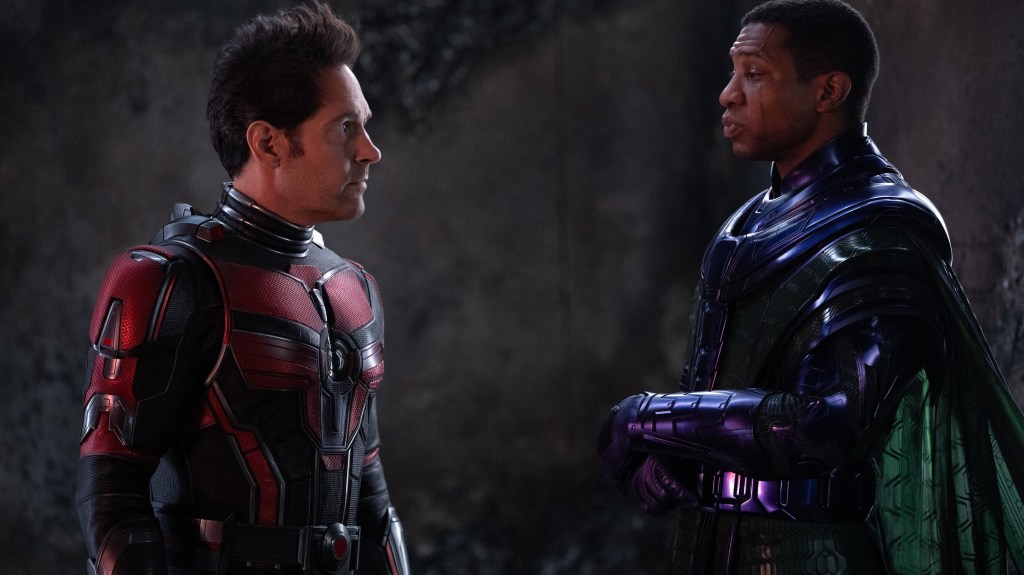
    Kang is not yet what he will one day be but as villian turning to someone and saying: I’m going to kill your daughter and then manipulate time so that you live that moment over and over again until you crack is maybe one of the most evil things I’ve ever heard. 

    Marvel has a not-so-secret secret weapon in Jonathan Majors and they clearly plan to let him explore all the possibilities of a time traveling multi-dimensional villian.

    It’s wonderful to live in a world where I get to say time traveling multi-dimensional villian.

    As a long time comic fan I don’t think Kang would have been in my Top 10 for Avengers bad guys but as his story unfolds you can see how Majors is going to start paying dividends.

    Bill Murray gets to be gloriously smarmy for one scene. He still brings it, no matter what he’s doing. 

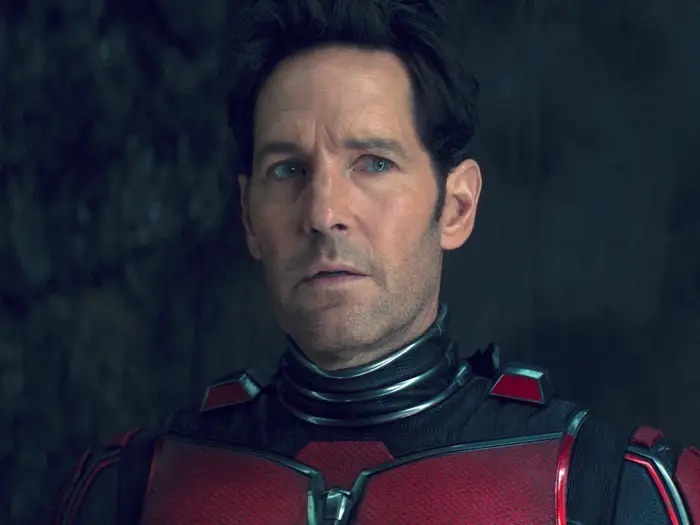
    Paul Rudd, as usual, can carry this thing with ease. I love how his Scott Lang still has a lot of reverence for certain people. 

    “I fought with Captain America.”

    The thing I truly love about all of this is that we are moving into a world where all the original heroes age out and get replaced by their spiritual and sometimes actual children. We’ve never been this far before. 

    What didn’t I like? 

    1) The ending was a cheapieh cliffhanger. 

    2) What could have been a really great surprise (the identity of MODOK) was ruined by one of the trailers. 

    3) The Ant cast is too big. Which is funny because the biggest thing this movie might be missing is Michael Peña as Scott’s friend and the movie’s narrator. 

    But it’s a laugh-out-loud action comedy in the Marvel manner. If this is what you like then they made something you will like. 

    The people who did not like it did not want to like it. 

    They keep going to westerns and complaining about all the cowboys and the horses.

  • When will the superhero movie era end?

    When will the superhero movie era end?

    I know there are many of you out there in movie fan land who wish for superhero movies to burn.

    As phase five of the MCU begins and James Gunn and his team get to work on a new DC strategy some of you are dreaming a different dream.

    You want their capes to be torn from their backs and their smiling goofy faces to be brought down from the heavens.

    Brothers and sisters I have good news. I believe that will happen. And I even have a date for you. Place it on your calendars in glorious anticipation.

    I predict the superhero movie will no longer be a relevant force at the box office in the Year of our Lord 2052.

    Now, before I explain how I arrived at this number let’s chat a bit about box office numbers, movie trends, and two of my favorite Hollywood creatives.

    I forgot a bunch of things in my post on screenwriter William Goldman’s book Adventures in the Screen Trade.

    Here’s one of the gems: Hollywood is a gold rush business. When the powers that be see something is successful they mimic it.

    There is now a generation that doesn’t remember a world before the superhero ruled the box office. But take it from your elders, in the before times what ran the table had no more depth than the superhero movie.

    I lived through the Sylvester Stallone and Arnold Schwarzenegger action era. That was followed by a million sequels and rip-offs of Die Hard. And what came after the Die Hard rip-offs were mostly Tarantino wannabes and failed attempts to be the next Scream.

    It was always better back then, no matter when back then happened to be.

    Case in point: In the early 1980s Goldman was lamenting the direction of Hollywood. His gripe?

    All the sequels. Those pesky kids Steven Spielberg and George Lucas were gonna ruin everything with all their special effects-driven sequels.

    Star Wars was going to have 8 sequels! They were going to keep pumping out Indiana Jones movies.

    And the studio heads, who once upon a time would make two or three movies just for love of the game were tying up all their budgets to keep up with what Goldman described as ugly, naked cash grabs. Sequels are movies made by (ahem) prostitutes, Goldman wrote.

    To his credit, Goldman admitted he was as guilty of this as anybody. After all, he signed off on a prequel to his biggest hit: Butch Cassidy and the Sundance Kid.

    ‘Oh, but it hasn’t always been this way,’ you might lament to yourself. Let me point out something else I found interesting. This comes from Quintin Tarantino’s Cinema Speculation. The book focuses almost exclusively on the 1970s and mostly on the grimy, pulpy, violent crime and revenge dramas that Tarantino loved.

    What caught my attention was something he wrote about Stallone’s Rocky.

    When Rocky came out movie audiences had lived through years of cynical 70s movies where the hero always failed and the closest they ever got to “winning” was by killing a whole bunch of bad guys on their way out the door.

    Tarantino recalled someone (his mom maybe?) seeing the trailer for Rocky and lamenting, “oh it’s just another movie about a man and his problems.”

    Tarantino said audiences today just can’t understand how happy movie crowds were when the match started and Rocky knocked down Apollo Creed. They roared! And he didn’t even win the match. But still, it was so different from what they were used to that everyone went home happy and the movie was a massive hit.

    Which is to say, that yes, crowds will one day turn their backs on superheroes just as they once abandoned disaster movies and musicals and tough-guy revenge flicks. One day they will find something else to love. I’m hoping for more Mel Brooksian comedies.

    So, when will this happen?

    Here’s my figuring on the subject. Say what you will about the quality of these films — and you say a lot — the MCU is the most astonishingly successful (franchise, shared universe, collection of sequels) movie series in the history of cinema.

    The only thing that comes close to it? The Western. So how long did Westerns rule the roost? I’m gonna peg it at 40 years. The 1930s to the 1960s featured straightforward westerns that dominated movies and then television. The sun began to set in the late 1960s. But starting in the mid-60s we had a decade of revisionist westerns where Goldman, Sam Peckinpah, Sergio Leone, and others questioned the values of their father’s movies.

    You could argue that the western continued far after that. Dirty Harry is just a cowboy in the city after all. And of course, Yellowstone is a lot of things but it’s core is the cowboy myth. Which would mean on television at least, the Western is back.

    But for clarities sake let’s call it 40 years.

    So if you say that the superhero dominance really began with Avengers in 2012 that gives us till 2052 for this thing to run it’s course.

    At that point, I’m guessing movie audiences will be swept away with a new movie trend: Surgeons in Space? Nursing home romances? You scoff but it’s been done. Twice.

    Or maybe they’ll do westerns again.

    Of course, Ant-Man Quantumania could bomb. And maybe everything else Marvel and DC releases for the next few years bombs too. Maybe this will be wiped away by 2025.

    It’s Hollywood man. Nobody knows anything.

  • A Man For All Seasons

    A Man For All Seasons

    When something is great, I can’t shut up about it.

    So when I was talking to a co-worker this morning about how I don’t understand why certain very rich people feel that they must continue to share their hair-brained political opinions with the world.

    “Man, hand me a million dollars and I promise you will never hear from me again,” I said. “Beloved, old, rich, and quiet man dies on a beach somewhere. That’s the next headline I will make.”

    I added that I would be … and then I struggled for the man’s name. It was Sir Thomas More who in real life died for his Catholic faith in the 16th Century when King Henry VIII broke with the church and a pope who would not grant him another divorce.

    Robert Bolt, the screenwriter behind Lawrence of Arabia and Doctor Zhivago wrote the Tony-winning play A Man For All Seasons. He then wrote the screenplay and it was adapted by director Fred Zinnemann.

    If great and expressive dialogue is your jam you will likely be thunderstruck by this flick. More is presented as an honest and well-known man in a country that has too few men of character.

    King Henry VIII wants another divorce and sons. The pope says no. Henry declares that he is the Supreme Head of the Church in England. More could support his king publicly but stays silent, risking his life, but he hopes that English law will save him.

    He has not publicly criticized the king and therefore his head should be perfectly safe.

    I do none harm, I say none harm, I think none harm. And if this be not enough to keep a man alive, in good faith, I long not to live.

    Sir. Thomas More

    More’s reputation has forced him into a scenario where he can’t see his way clear.

    Because you’re honest… and what is more to the purpose, you’re KNOWN to be honest. There are those like Norfolk who follow me because I wear the crown; and those like Master Cromwell who follow me because they are jackals with sharp teeth and I’m their tiger; there’s a mass that follows me because it follows anything that moves. And then there’s you…

    King Henry VIII

    As the movie moves on, tension continues to slowly build, and More verbally spars with the king’s men who wish to either get him to betray his conscience and confess the King or to get him to publicly admit that he believes the King’s marriage is an abomination before God.

    “You threaten like a dockside bully.” – More

    “How should I threaten?” – Cromwell

    “Like a minister of state. With justice.” – More

    “Oh, justice is what you’re threatened with.” – Cromwell

    “Then I am not threatened.” – More

    Again, this is a feast of great dialogue and each scene is magnificent. However, it is very much a play Zinnemann filmed and its low budget is manifest in each scene as well. IMDB says the cast took salary cuts to keep it under $2 million in 1966 money.

    In the end, that was a wise gamble. The movie won every major award that year including taking home Oscar wins for Paul Scofield as More, Bolt for his screenplay, and the best picture prize.

    I always put this together with Becket and The Lion in Winter. That’s a fantastic three-night run of movies about power and English kings and dialogue that cuts bloody and deep.

    I wish we could have good luck all the time. I wish rainwater was beer! I wish we had wings! But we don’t.

    Matthew
  • A screenwriter had Hollywood’s number 40 years ago

    A screenwriter had Hollywood’s number 40 years ago

    Nearly every time there is movie news, I connect it back to the great William Goldman.

    After a decade of being one of the most in-demand writers in town, Goldman peeled back the curtain with an autobiographical tell-all called Adventures in the Screen Trade.

    By that time Goldman had written Butch Cassidy and the Sundance Kid, and Marathon Man. Both of those were original works. And he wrote Butch and Sundance as a screenplay because if he wrote it as a novel he would have to write about horses and he didn’t know anything about the critters. Which is, if you think about it, a legendary reason to write an Oscar-winning screenplay.

    Then he wrote the screenplays for The Stepford Wives, All the President’s Men, and A Bridge Too Far. He also wrote the book and the screenplay for my favorite piece of fiction of all time The Princess Bride.

    But Screen Trade, and I’m doing this from memory cause I can’t find my copy of the book, offers several insights that I often ponder when checking out what’s coming out of Hollywood.

    1. Nobody Knows Anything

    The people with the power to greenlight movies like to believe they know what is and what will not be a hit. But, in fact, nobody knows anything. Consider Avatar 2. Would you give James Cameron an essentially unlimited check to do a sequel to a movie about aliens and space marines? Maybe. But many folks online certainly thought they knew there was no way the movie would make what it needed to, reportedly $2 Billion, to make it a hit.

    And then, $2 billion later, everyone has to bow down. Avatar 2 may not be for you, but it was a money machine.

    Babylon is another perfect example of this. Writer-Director Damien Chazelle has three previous hit movies including La La Land, a movie about how great Hollywood is, and he nabs two big stars to be in his fourth outing. Brad Pitt, Margot Robbie, and a movie about Hollywood in the 1930s.

    ‘How can this miss!’ the poor soon-to-be-fired executive must have thought.

    And while I think it was one of the most creatively interesting and well-made movies of the last year it was also an undeniable box office bomb.

    I think there is far too much emphasis on the box office but I don’t create the world I just live in it. Forget it, Jake, The Shawshank Redemption was a bomb too.

    2. The new regime cancels all projects

    To be fair I don’t think before Batgirl that the new regime ever canceled quite as aggressively as David Zaslav at Warner Bros. Discovery. But Goldman wrote that one of the things that made making movies so hard was that every project greenlit by the previous studio head would be canceled when that guy, inevitably, was fired.

    Why?

    Well, if the project is a failure the new regime is still on the hook for the lost revenue. If the movie is a huge hit the studio head will have everyone in the business making fun of him because they will know it wasn’t his project. He’s not the genius behind it.

    James Gunn, as the head of DC Studios, did exactly what a good executive should do. He cancelled everything he could and he’s doing his best to separate what will be his DC from anything he doesn’t have the authority to eliminate.

    He’s going to be on the hook for all of it, he might as well make sure what does go forward is something he believes in.

    3. Dealing with Producers

    Goldman was actually blackballed after the first book came out. It was a little too truthful and he wasn’t afraid to smack around his collaborators who he felt behaved badly. Dustin Hoffman allegedly made an ailing Laurence Olivier walk around multiple times on swelling ankles during a rehearsal for Marathon Man. Hoffman and others were also connected to his withering critique that movie stars will always refuse to play weak.

    One of the main characters in Babylon pisses himself and begs for his life near the end of the movie. I don’t think I’m giving too much away by telling you it is not Brad Pitt.

    But sooner or later someone with clout will need a good writer for a project and they will turn to someone like Goldman because they know he’s got the goods.

    The second book opens with Goldman in a producer’s office. The producer is on the phone for some time while Goldman waits. Then, suddenly, he stops, puts his hand on the receiver (which is how we used to mute the analog things) turns to Goldman, and says, “Which Lie Did I Tell.”

    I thought about that a lot while watching The Offer. The Offer was a prestige show about the making of The Godfather. It was based on the memories of the movie’s producer, Albert S. Ruddy.

    Would you be surprised to find that Ruddy was a stand-up guy who bluffed and outsmarted the mob, the studio bosses, and the creatives to get the movie made? Some of the show comes straight from the on-the-record remembrances of Director Francis Ford Coppola, writer Mario Puzo, and Studio Head Robert Evans.1

    Those parts I mostly believed. The Ruddy stuff? I liked it, but I didn’t buy a word of it.

  • The DC film slate

    The DC film slate

    Hang with me and there’s a nice little surprise for you at the bottom of this one.

    James Gunn, the head of DC Studios announced some of the planned film and tv projects yesterday.

    In case you missed it:

    It is entirely too early to judge these things. I generally try to avoid trailers when I can so I can walk into a movie as open to it as possible. That sometimes leads to awkward moments.

    There was a joke in Infinity War that I howled at in the theater that no one else chuckled. The reason? It was the first time I had seen it and everyone else saw it dozens of times in a trailer I skipped.

    Gunn announced some things I’m very interested in and some things I have no connection to. Just like Marvel stuff, Star Wars stuff, and the Oscar nominees, I’ll probably watch them all when I can.

    One of the most hopeful things out of the slate is that Gunn is a guy who reads the comics, loves the comics, and will likely ask his collaborators true to the spirit of the books he is adapting. It’s one of the reasons I semi-seriously suggested he be DC’s Kevin Feige long before the announcement was made.

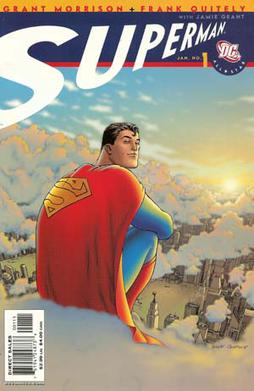
    He also pointed out at least some of the comic creators who did the stories his team plans to adapt. He showed off comics like Grant Morrison and Frank Quietly’s Batman and Robin, the pair’s All-Star Superman and Tom King, and Bilquis Evely’s Supergirl: Woman of Tomorrow.

    He’s already brought Tom King aboard, it seems like Morrison is working with the group as well and I suspect the Gail Simone announcement will happen sooner, rather than later.

    I think it’s great that DC has a guy who is pointing to the source material as inspiration instead of people who always seemed embarrassed to be doing comic book movies. We all have to make a living but if you are gonna take that sweet comic book movie check please at least pretend for me that you care about the work other people did that gave you that opportunity.

    Also, pay the writers and artists who supplied the vision that then turned into a billion-dollar blockbuster.

    Gunn describes the other DC projects that he was left with — The Batman and Joker — sequels as Elseworlds. If you know DC comics you know those are sometimes fantastic (and sometimes not so fantastic) tales set in alternate universes.

    Superman’s rocket lands in medieval England and he takes on evil nobleman Lex Luther. Or Superman’s rocket lands in England during the American Revolution and he crushes the rebellion. Or Superman’s rocket lands in Russia and he becomes a hero for the communists.

    Yeah, a lot of them have to do with when and where Superman’s rocket lands.

    I doubt Gunn would have gone with Elseworlds if he wasn’t already tied to two successful franchises but it does give the studio a chance to experiment with other things down the line. It’s not gonna happen but you could literally make everyone happy and give certain people their own little Elseworlds corner with the particular slate of actors and directors they want. I mean, I don’t know that you should … but you could.

    There is no point, really, in arguing about these projects until some of them start releasing. This means some corners of the internet will debate them every day from now until they are released and continue to argue about them forever after.

    Gunn has the keys to the car for now and it’s unclear how much leeway he has. Marvel became Marvel because the studio stayed with the plan despite setbacks. Will Warner Brothers Discovery tough it out if things get off to a slow or rocky start?

    Anyway, I hope it works out. Cause if not I may have some explaining to do.

  • Tár

    Tár

    Lydia Tár is a genius composer and orchestra conductor at the top of her field. She is also a cad.

    These two things are at the heart of Todd Field’s Tár.

    The movie opens with a fawning interview in front of a live audience at The New Yorker Festival. And Cate Blanchett is perfect at playing that particular kind of celebrity. She says all the right things. She is smart, yet humble and she pushes back, in a polite way, when she disagrees with the interviewer. She charms the journalist, she charms the audience and she surely charms the people listening to the podcast of this interview on their way to work.

    Someone has spent quality time with their publicist and gone to interview school and is incredibly well prepared.

    I was lost in the weeds in a lot of this because I know absolutely nothing about the world of composers and symphonies and New Yorker festivals. But it was exciting to get immersed in this world even if the movie declines to give you much of a foothold. The screenplay never lets you sink into the bog though and Field deftly moves on from tuning up the band and into the deep interesting notes he wants to play.

    So, we learn that Tár has already committed a great crime. And, even having done so, she is incapable of accepting responsibility for her actions, and if given the chance, she will continue to use her power over the women she works with to extract … personal performances outside of the workplace.

    I did not expect the first great movie about the #MeToo movement to be about a woman and the Berlin symphony but here we are. As the movie continues we see that Tár is haunted. By her past? Certainly. By the consequences of her actions? You bet. By something even more supernatural in nature? Quite possibly.

    Tár hears screaming in the woods while running. She wakes multiple times in the night. She thinks someone is doing something in her office. But who and why? The movie shows her running over and over again. It’s apparent that she’s not just running for her health.

    For this part of the movie remembering Edgar Allen Poe could be instructive. This is not a remake of The Tell Tale Heart but the screenplay is imprinted with its themes.

    It is a funny film too. In its way.

    At several points while in charge of the orchestra, Tár makes moves that she thinks can be explained as something other than for her own desires. But her co-workers are not fooled. Field gets laughs with their looks of disgust. Our protagonist doesn’t know it, but Lydia Tár is finished long before the final note plays.

    In 20 years as a director, Field has only made three films. When I looked him up I was delighted to find that his first feature was In the Bedroom. I saw it when it came out that year. There is nothing showy in that picture and no flashy or extravagant actor excesses. Sissy Spacek gets one grand scene where she is allowed to explode and everything else, including much of the plot, is kept under the surface.

    Field gives Blanchett a whole lot more here and she chews every scene down to the bone. Then she sucks out the marrow and comes back for more.

    And Field proves himself, once again, to be at the same level as anyone else in the movie business today. I sincerely hope he can now get the financing for more than two films over the next two decades.

  • All Quiet on the Western Front

    All Quiet on the Western Front

    There is a unique industrial music drone the soundtrack does frequently in the 2022 version of All Quiet on the Western Front.

    The filmmakers maybe rely on it a bit too much and every time I heard it I thought of oranges in the Godfather films.

    Soundtrack: Chu chnng

    My brain: Welp, this next bit won’t be good.

    I kept thinking of a man being ground down by a machine. Which meant that it was the perfect selection for music in this now Oscar-nominated German film about World War 1.

    I haven’t read the book. And you haven’t either so shut up. But 20 years ago in film studies class, I watched the 1930s version of All Quiet on the Western Front and was struck when watching this that I kept thinking of that final, beautiful shot of Paul reaching for a butterfly.

    Today’s version has scenes of similar power and beauty and horror. If this is your first war film then I am hopeful that the message about the cost of war will move you.

    If this is not your first war film then you, like I, will likely appreciate a strong story, well told with a message you have seen many, many times before.

    Still, the movie finds inventive ways to make its point. This is a movie that shows you the cost of the war (and wars) in all sorts of ways. Even going so far as to follow the laundry.

    Its battle scenes are appropriately graphic and gory. It examines the trenches, it examines what it’s like to watch your friends die. It examines what it is like and how terrible it is, and how hard it can be to kill a man. Even a man who is presumably your enemy.

    This version adds scenes of generals and other leaders, safe in their towers, making foolish decisions that will cost the lives of hundreds, thousands, and millions of men. Those scenes make the point as effectively as the horror on the battlefield. Perhaps more so.

    Nothing makes the case quite so well as the emaciated look that actor Felix Kammerer delivers at Paul. He is as competent as a man can be in these extraordinary situations but he is also starving, damaged, and suffering from mental scars that will never heal.

    Those of you who served may connect with this. Those of you with family who served may know, in some small way, what war does to the men and women who see it close and try to go on.

    Some of you don’t have those connections. Some of you only know war through video games or through the yammering of politicians, preachers, and others who have never set their boots on foreign soil.

    I hope you will see this.

    Look close.

  • Spencer

    Spencer

    Misery. 

    Misery on top of misery, on top of misery.

    That’s what we are presented with for most of this flick. Princess Diana’s time as wife to Charles is coming to an end. A Christmas court takes place in a castle.

    Diana is tortured and tormented by her own mind and by the family who wants her to live her life in the very strict parameters that a princess of Wales is allowed. 

    In real life, it ends with divorce and Diana dating other people, living a life free from the royals, and then tragically dying in a car accident. 

    But this movie suggests that Diana came very close to dying while in the tender care of her husband’s family. The movie plays somewhere between a psychological horror flick and an actual horror flick. 

    Diana is haunted and not just by her own mind. The score is oppressive, the ideas are oppressive and if you feel bad through nearly all of it then the filmmakers have what they wanted. 

    I gotta say I prefer The Crown or The Queen. Those present the royals as flawed human beings. This movie suggests that they are monsters on par with a Universal Horror flick or aliens unable to exist in a world of human beings. 

    Anyway, I hated this claustrophobic, gothic thing and then I really liked it. It almost became bearable when the movie relents, just a bit, and suggests that Diana and the audience will make it. 

    I am reminded of an old Jerry Clower joke.

    Two men go hunting and one of them climbs a tree. While high in the tree the hunter is attacked by a wildcat. 

    As the man in the tree struggles to fend off the beast and stay in the tree he calls down for the other hunter to shoot. 

    The second hunter says he can’t shoot into the tree cause he might hit his friend and not the wildcat. 

    The man in the tree replies, “shoot up here amongst us. Cause one of us has got to have some relief!”

    One the one hand the ending doesn’t seem to fit with everything else the movie did in the preceding two hours.

    On the other hand, after surviving this movie that little bit of sunshine at the end at least gave us some relief.

  • RRR is everything a great movie should be

    RRR is everything a great movie should be

    It’s three hours and every minute is amazing.

    A story about friendship that also manages to make time for the beginning of the Indian revolution, kung fu fights, amazing songs, unbelievable dance scenes and insane battles. 

    I cackled with joy over and over again. 

    The only close comparison I can think of in terms of this high level of movie-making is Mad Max: Fury Road. Because you watch it and you just can’t believe what you are seeing. 

    Here are a couple of things that happen in this movie: 

    Two men manage to save a boy in a burning river using a motorcycle, a horse, a rope, a flag, and the power of their friendship. 

    A man wrestles a tiger barechested. 

    Just when you forget about that tiger it returns and it is mind-blowing. 

    Ray Stevenson manages to be one of the most despicable villains on-screen with like one line of dialogue. 

    And as evil as he is I wanted the good guys to kill his evil wife, Alison Doody, even more. 

    The movie takes like two or three musical breaks and even though I only understood it through subtitles I can confirm that the music is nothing but bangers. 

    Anyway, you owe it to yourself to watch this. How many times did you cackle with joy at the movies last year?